
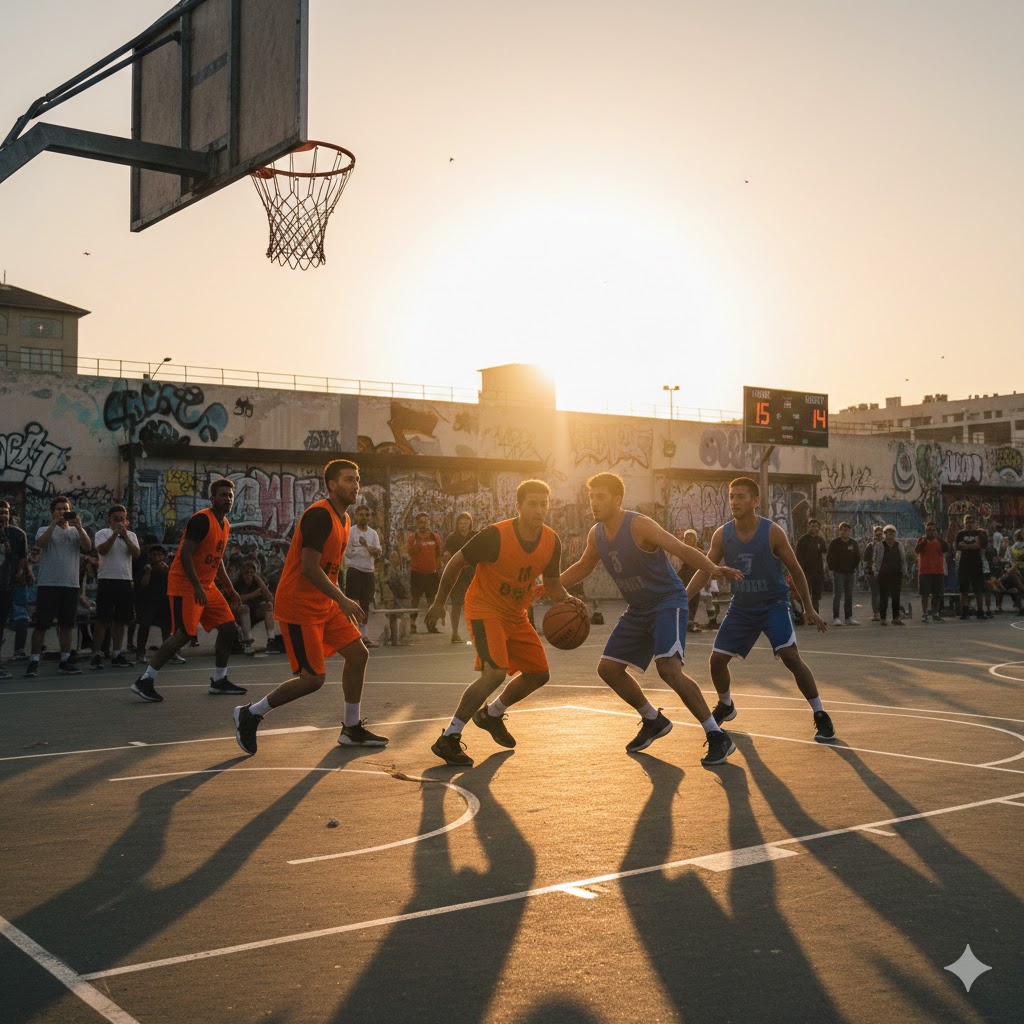
3 On 3 Basketball: A Deep Dive into the Fastest-Growing Sport in the World
3 On 3 Basketball has exploded onto the global sports scene. This exciting and fast-paced version of the traditional game has become a cultural and athletic phenomenon. It combines the essence of street basketball with structured competition. Today, it is played in urban courts, school gyms, and professional arenas. From humble beginnings, 3 On 3 Basketball has grown into a worldwide movement.
The Origin and History of 3 On 3 Basketball
The roots of 3 On 3 Basketball trace back to the playgrounds of urban America. During the 1980s, it became popular in city parks. Players would break from full-court games and compete in shorter, half-court matchups. These games were intense, physical, and demanded quick decision-making. Over time, the format developed a strong following.
By the 1990s, organized tournaments began to appear. One of the earliest and most influential events was the Hoop It Up tournament. Founded in 1989, Hoop It Up traveled to cities across the United States. It showcased the talent and competitive spirit of amateur ballers.
The turning point came in the 2000s when FIBA (the International Basketball Federation) recognized the format. In 2007, FIBA organized the first international 3×3 event. By 2010, it had launched a structured competition system. This included world championships and international rankings.
In 2017, the IOC (International Olympic Committee) made a historic announcement. 3 On 3 Basketball would debut as an official Olympic sport at the 2020 Tokyo Games. This recognition boosted its legitimacy. It also increased investment and participation around the world.
Global Popularity and Where It Is Played
Today, 3 On 3 Basketball is played in over 180 countries. Its popularity spans continents, from North America to Asia, Europe, Africa, and Oceania. Its urban appeal and simplicity have made it accessible to all.
In the United States, it thrives in community leagues and national events. Tournaments such as Red Bull 3X and Hoop It Up continue to attract talent. Streetball culture, especially in cities like New York and Chicago, has fueled its popularity.
In Europe, countries like France, Serbia, and the Netherlands have embraced the sport. Serbia, in particular, dominates international rankings. The nation’s teams are known for their skill, strategy, and discipline.
Asian countries have also jumped on board. Japan, China, and the Philippines have national leagues and grassroots programs. The Philippines, with its deep basketball culture, has especially seen a surge in 3×3 participation.
Africa has seen rapid growth. Nations like Nigeria and Senegal have begun investing in youth programs. These initiatives focus on using 3×3 to promote education and social development.
In Oceania, Australia and New Zealand have developed strong national teams. Their commitment to sports development has helped grow the game quickly.
Amateur 3 On 3 Basketball in Youth and Schools
Youth involvement is critical to the sport’s growth. Schools and youth programs now incorporate 3 On 3 Basketball into their athletic curricula. Its smaller team size allows more players to participate. That’s ideal for schools with limited resources.
In the United States, the format is popular in middle and high schools. It serves as a developmental tool, helping players improve spacing, passing, and shooting. Many school districts hold annual tournaments. These events build community and promote healthy competition.
In Europe, schools and clubs offer structured programs. These programs teach not only athletic skills but also life skills. Children learn about teamwork, discipline, and leadership. FIBA’s School Hoops program helps integrate the sport into school curriculums.
Asian countries like Japan and South Korea use 3×3 in youth academies. These academies act as pipelines to national teams. Young athletes receive training, education, and competitive exposure.
Africa has seen NGOs adopt the sport for social impact. Organizations run school leagues and youth camps. They use basketball to address issues such as poverty, gender inequality, and education access.
The simplicity of the format has helped in rural areas. With only a ball, a hoop, and a few players, schools can set up games. This ease of access makes it perfect for youth development.
Professional Leagues Around the World
Several professional leagues have risen to meet demand. Each league contributes to the sport’s legitimacy and visibility.
The FIBA 3×3 World Tour is the premier international league. It includes a series of Masters tournaments held in global cities. Teams accumulate points to qualify for the World Tour Final. The tour has helped professionalize the sport.
In the United States, the BIG3 league has made headlines. Founded in 2017 by rapper Ice Cube and Jeff Kwatinetz, BIG3 features former NBA stars. The league has drawn attention with its flashy plays and innovative rules.
Europe hosts the 3×3 Europe Cup and other national leagues. France, Serbia, and Lithuania have competitive domestic circuits. These leagues serve as a feeder system for national teams.
Japan has the 3×3.EXE Premier league. This innovative league blends basketball with entertainment. It holds games in shopping malls, festivals, and public spaces. Fans enjoy close-up action and energetic atmospheres.
China’s CBA has introduced 3×3 programs to its league structure. It offers contracts, training, and incentives for professional 3×3 players.
In Africa, leagues like the BAL (Basketball Africa League) are exploring 3×3 formats. Pilot events have tested interest. Future plans include full-fledged seasons and player development programs.
These leagues provide career paths for athletes. They also bring sponsors, media coverage, and fan engagement. As a result, the sport has a promising professional future.
Political and Social Significance
3 On 3 Basketball is more than a sport. It holds deep political and social significance. Governments and NGOs use it to foster unity, peace, and development.
In post-conflict areas, the sport brings communities together. Playing basketball becomes a way to heal. Countries like Rwanda have used it for reconciliation and youth empowerment.
The Olympic inclusion gave smaller nations a new avenue for representation. Countries with limited resources can now compete on the world stage. It has helped democratize global sports.
Social programs use 3×3 as a tool for inclusion. It provides opportunities for women and marginalized groups. Gender-balanced leagues and mixed-gender teams promote equality.
In urban areas, it reduces crime and boosts community spirit. Court refurbishments and public events turn neglected spaces into hubs of activity. Kids get mentorship and a sense of belonging.
Youth-focused organizations run 3×3 tournaments with themes like anti-bullying, education, and health. These events create lasting impact beyond the court.
The sport also supports diplomacy. Friendly matches between nations foster goodwill. International tournaments bring together players from different backgrounds.
Rules of 3 On 3 Basketball
Understanding the rules is essential. While the game mirrors traditional basketball, several differences stand out.
First, the game is played on a half-court. Each team has three players and one substitute. Games start with a coin toss or shootout.
Scoring works differently. Field goals inside the arc are worth one point. Shots beyond the arc score two points. The first team to 21 points wins. If no team reaches 21, the leader after 10 minutes wins.
The shot clock is 12 seconds. This keeps the pace fast. After a score or defensive rebound, the ball must be cleared beyond the arc.
Substitutions can occur during dead balls. Teams must call for them at the scorer’s table. There are no timeouts except for one per team.
Fouls follow a cumulative system. After six team fouls, the opposing team gets two free throws. Unsportsmanlike fouls result in possession and free throws.
Games are often part of larger tournaments. Pools, knockouts, and finals determine the champions. Each game feels intense due to the time limit and scoring race.
Officials consist of one or two referees. They ensure fast, fair play. Because of the pace, referees must stay alert.
The ball is smaller than standard basketballs. It combines the size of a women’s ball with the weight of a men’s ball. This design allows better control in fast play.
Conclusion
3 On 3 Basketball has transformed from a street game into an international sport. Its rapid growth, inclusivity, and exciting gameplay have captivated millions. From schoolyards to Olympic arenas, its influence continues to expand.
Countries around the world now invest in infrastructure and programs. Youth and professional leagues have found a sustainable model. Political leaders and social organizations recognize its power.
By understanding the origins, rules, and global impact, one can appreciate the sport’s value. Whether played for fun, career, or change, 3 On 3 Basketball offers something for everyone.
This is not just a trend. It’s a revolution on the court. As more players, fans, and nations embrace it, the future of 3 On 3 Basketball looks brighter than ever.