
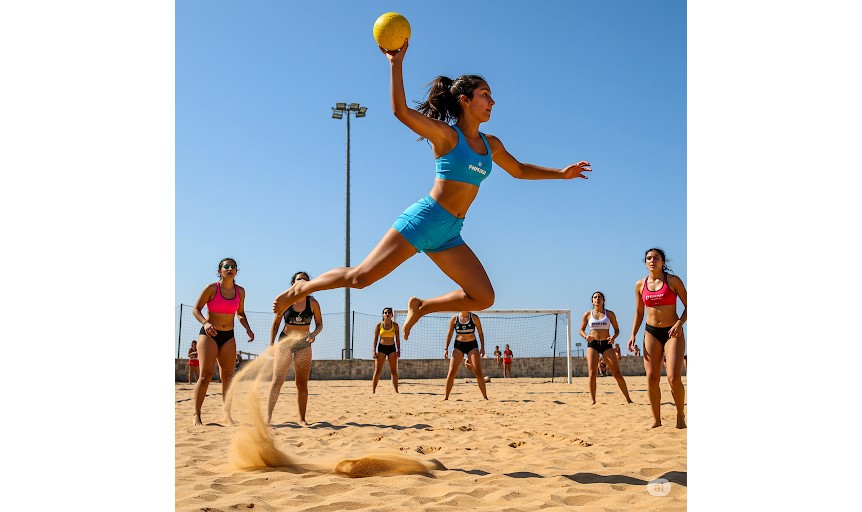
Beach Handball: A Dynamic Sport with Growing Global Appeal
Beach Handball is an exciting, fast-paced sport that has been steadily gaining popularity around the world. Its roots can be traced back to the early 1990s, and today, the sport has grown into an international phenomenon. From sun-drenched beaches in Europe to competitive youth leagues in Asia, Beach Handball has captured the attention of players and fans alike. In this blog post, we will explore the fascinating origin and history of the sport, its global presence, the way it’s played by amateurs, the structure of professional leagues, and its cultural and social impact. Finally, we will break down the rules that define this high-energy sport.
The Origin and History of Beach Handball
It originated in Italy during the early 1990s. Gianni Buttarelli, an Italian sports enthusiast and handball coach, is widely credited with creating the sport. His goal was to develop a summer alternative to indoor handball. He wanted a game that was fun, athletic, and suitable for beaches.
The first experimental games were held on the beaches of Gaeta, Italy. Soon after, other European countries embraced the idea. By 1994, the European Handball Federation (EHF) recognized Beach Handball as an official discipline. This move led to the establishment of standardized rules and international competitions.
In 2001, the International Handball Federation (IHF) hosted the first World Championships in Egypt. This marked a significant milestone. Since then, the sport has seen rapid growth across multiple continents.
Global Popularity of Beach Handball
Europe remains the epicenter of Beach Handball. Countries like Spain, Croatia, Norway, and Germany have robust programs. These nations regularly dominate international competitions. Tournaments in these countries draw large crowds and media attention.
In South America, Brazil has emerged as a powerhouse. Brazilian teams have won multiple world championships. The sport fits perfectly with Brazil’s beach culture and love for fast-paced action.
Asia is also seeing a surge in interest. Nations like Qatar, Thailand, and Vietnam have invested in training and development. The Asian Handball Federation now holds regular Beach Handball tournaments.
Africa and North America are catching up. Egypt and Tunisia lead in Africa. In North America, the United States and Mexico have active clubs and are increasing youth participation.
Australia and New Zealand have joined the movement as well. They are organizing national tournaments and promoting the sport through schools and universities.
Amateur Beach Handball: Youth and School Participation
Beach Handball is increasingly being introduced at the grassroots level. Schools and local clubs are using the sport to engage youth in physical activity.
In Europe, many schools include Beach Handball in their physical education curriculum. During summer, schools organize inter-school tournaments on local beaches. These events promote teamwork, fitness, and sportsmanship.
Community sports programs in Brazil and Argentina run beach handball clinics for children. These programs focus on skill development, fair play, and fun.
Asia has seen a rise in school participation as well. Countries like Thailand and the Philippines have launched junior leagues. These leagues serve as a talent pool for national teams.
In the United States, Beach Handball is being introduced through handball clubs and summer camps. College-level tournaments are now being organized, especially in coastal states.
Non-profit organizations in Africa use Beach Handball to promote gender equality and youth development. These initiatives combine sport with life skills education.
Professional Leagues Around the World
The professional side of Beach Handball is growing rapidly. Although not as commercialized as other sports, it has a loyal fan base and strong institutional support.
Europe hosts some of the most competitive leagues. The EHF organizes the European Beach Handball Tour (EBT). This league includes top clubs from over 20 countries. The season concludes with the EBT Finals, a prestigious event.
In Brazil, the national league is organized by the Brazilian Handball Confederation. Top clubs compete for titles, and matches are broadcast on television and online.
Asia has started to form professional leagues as well. The Asian Beach Handball Championship serves as a platform for clubs and national teams.
Egypt hosts the African Beach Handball Championship. It is both a club and national team competition. This event helps in talent identification and development.
The IHF is also pushing for a global league structure. This includes plans for intercontinental club championships. These events aim to showcase the sport on a global stage.
Sponsorship and media coverage are improving. Brands are beginning to see the sport’s potential for marketing to young, active audiences.
Political and Social Significance
Beach Handball has a unique role in promoting social and political change. It is more than just a sport.
The sport has been a platform for gender equality. Unlike many sports, it offers equal opportunities for men and women. International tournaments feature parallel male and female competitions.
Several countries use Beach Handball to promote inclusion. Programs in war-affected regions use the sport for rehabilitation and community building.
In Africa, NGOs use Beach Handball to educate young people about health, leadership, and peacebuilding. These programs have shown positive results.
Political organizations also recognize the sport’s value. Governments in Europe and South America support Beach Handball as part of national fitness strategies.
The sport’s visual appeal makes it ideal for raising awareness. Campaigns around beach cleanliness, climate change, and youth development often include Beach Handball activities.
Rules of Beach Handball
It follows a unique set of rules that differentiate it from indoor handball. The game is designed to be fast, fun, and visually exciting.
Each match consists of two sets, each lasting ten minutes. If teams win one set each, a tiebreaker called a “shootout” determines the winner.
Teams have four players on the sand: three field players and one goalkeeper. A team can substitute players at any time.
The court is smaller than an indoor handball court. It measures 27 meters long and 12 meters wide. The goal is 3 meters wide and 2 meters high.
Points are awarded differently. A regular goal is worth one point. A spectacular goal—such as a spin shot or alley-oop—is worth two points.
Goalkeepers can also score. If they do, their goal counts as two points. This rule adds a tactical twist.
Physical contact is limited. Players must avoid aggressive behavior. Fouls result in free throws or suspensions.
The game emphasizes fair play and creativity. Referees award points for artistic moves and teamwork.
Each team has one timeout per set. Coaches use this strategically to plan attacks or break the opponent’s rhythm.
The shootout is dramatic. Players run from the halfway line, receive a pass from their goalkeeper, and try to score in one motion.
Referees wear bright shirts for visibility. They use hand signals to indicate calls. The scoring table keeps track of points and fouls.
Spectators often sit close to the court. This creates an intimate, energetic atmosphere.
Conclusion
Beach Handball is a sport that combines athleticism, strategy, and community. Its history is relatively short, yet its impact is significant. From schoolchildren learning teamwork to professionals competing for international titles, it continues to grow.
The sport thrives on beaches across continents. It brings people together, promotes healthy living, and encourages fair play. With clear rules and high entertainment value, it is ideal for both players and spectators.
Professional leagues are expanding. Amateurs are joining in. Social initiatives are using it to make a difference. As it evolves, Beach Handball will play an even greater role in global sports culture.
If you haven’t watched or played it yet, now is the time to experience the thrill of Beach Handball.