
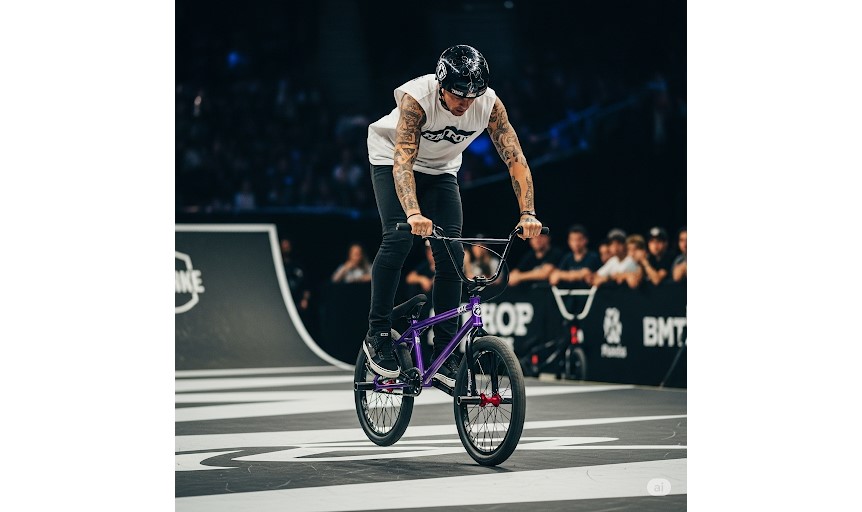
BMX Flatland: A Deep Dive Into the Art of Balance and Precision
BMX Flatland is more than just a sport; it’s a global movement rooted in creativity, athleticism, and cultural identity. Unlike other BMX disciplines that focus on ramps or dirt jumps, BMX Flatland emphasizes balance, control, and intricate bike tricks performed on flat ground. This unique discipline blends athletic skill with an almost dance-like flow, often compared to breakdancing on a bike. BMX Flatland continues to captivate audiences, grow in popularity, and carve its space in youth culture, professional leagues, and even educational programs.
The Origin and History of BMX Flatland
The roots of BMX Flatland trace back to the late 1970s and early 1980s in Southern California. During this period, BMX (Bicycle Motocross) was already gaining traction through dirt racing and vert ramp competitions. Riders started experimenting with tricks on flat pavement between races. These early sessions gave birth to Flatland riding as a distinct form.
Pioneers like Bob Haro, often referred to as the “Father of Freestyle BMX,” played a crucial role in shaping the sport. He and others began developing signature tricks that did not rely on ramps or jumps. Haro’s influence extended beyond riding; his company, Haro Bikes, produced models designed specifically for freestyle. These bikes eventually became the standard for Flatland performance.
In the mid-1980s, Flatland competitions began appearing in national BMX contests. The American Freestyle Association (AFA) started hosting organized events. Riders from across the U.S. gathered to showcase their original moves. As the decade progressed, BMX magazines and videos gave Flatland more visibility. International riders began replicating and innovating on the styles pioneered in the U.S.
By the 1990s, Flatland matured into an art form. Riders from Japan, Germany, and France started dominating the international scene. This decade saw the emergence of signature styles, more advanced tricks, and a shift toward individual expression rather than rigid competition formats.
The Global Popularity of BMX Flatland
Today, BMX Flatland enjoys a devoted following across continents. Japan, in particular, has become a powerhouse for the sport. Cities like Nagoya and Osaka are hubs where talented riders train daily. Japanese athletes consistently rank among the world’s best in international competitions.
Europe also plays a significant role in Flatland’s global presence. Countries like Germany, France, and the Netherlands host regular events and festivals. These gatherings not only celebrate competition but also emphasize culture and community. Riders travel from across Europe to attend jams, workshops, and contests.
In North America, Flatland remains deeply rooted in BMX culture. While it may not receive the same mainstream attention as other sports, its underground popularity is strong. Events like Flatland Voodoo Jam in New Orleans draw international talent and passionate spectators.
Latin America has also embraced the discipline. Brazil, in particular, produces several high-level athletes. The vibrant street culture in cities like São Paulo offers an ideal environment for Flatland to thrive. Similarly, Argentina and Mexico are developing grassroots scenes with increasing participation.
In Asia beyond Japan, nations like Thailand, Indonesia, and China have invested in BMX facilities. These countries now host regional contests and attract sponsors. Riders often use social media to showcase their skills, further expanding the sport’s global reach.
BMX Flatland in Youth and Amateur Programs
The growth of BMX Flatland among youth has been significant over the last decade. Community programs, nonprofit organizations, and local schools have begun to recognize the sport’s benefits. It promotes not only physical fitness but also creativity and self-expression.
In many countries, Flatland programs are offered in after-school sports curriculums. These programs introduce students to basic tricks, bike maintenance, and safety. In Japan, for instance, some high schools have Flatland clubs that compete regionally.
In the United States, community centers often offer BMX workshops for beginners. These workshops focus on balance, coordination, and bike handling. Coaches encourage kids to progress at their own pace, making the sport accessible and non-intimidating.
Europe has seen similar trends. In Germany and the UK, city governments fund skateparks and riding areas. These investments often include beginner clinics and coaching programs. Riders can start young and build their skills over time.
Social media has further accelerated youth interest. Young riders now have instant access to tutorials, performance videos, and global mentors. They use platforms like YouTube and Instagram to learn new tricks and share their own progress.
The rise of online competitions has also changed how amateurs participate. Riders from remote locations can enter video-based contests. These events increase exposure, provide feedback, and keep the global community connected.
Professional Leagues and Competitions Around the World
The professional scene in BMX Flatland is vibrant and highly competitive. Several global leagues host annual tours and championships. These competitions not only reward skill but also drive innovation within the sport.
The UCI BMX Freestyle World Cup is one of the most prestigious platforms. Sanctioned by the Union Cycliste Internationale, it features Flatland categories alongside park and street. Riders from over 30 countries compete in cities like Montpellier, Hiroshima, and Abu Dhabi.
FISE (Festival International des Sports Extrêmes) is another cornerstone of the professional calendar. Held in France, FISE brings together top athletes for a week-long event. The Flatland segment is a crowd favorite, known for dramatic showdowns and stylish performances.
Red Bull Circle of Balance is a unique invitational event. Unlike traditional contests, it emphasizes flow and originality. The best Flatland riders in the world compete in head-to-head battles. Red Bull’s global marketing ensures wide visibility for the sport.
In Japan, KOG (King of Ground) serves as a national league. It attracts elite riders and sets a high standard for competition. KOG has helped cultivate many of Japan’s top talents, who often transition to international success.
Other countries also host smaller but significant contests. Germany’s Fight the Winter, Brazil’s Flatland Cup, and Canada’s Revolution Jam provide platforms for local talent. These competitions keep the professional scene thriving and interconnected.
Sponsorship has improved significantly in recent years. Brands like Vans, Odyssey, and Flatland Fuel support both events and individual riders. Sponsorship helps athletes travel, train, and focus on their craft full-time.
Social and Political Significance of BMX Flatland
BMX Flatland holds social value far beyond sports. It serves as a tool for community building, personal growth, and cross-cultural connection. Unlike mainstream team sports, Flatland celebrates individuality. Riders choose their own paths, express themselves freely, and innovate without strict boundaries.
In urban environments, BMX Flatland provides a constructive outlet for youth. It keeps them engaged, motivated, and physically active. Riders often build strong peer networks, encouraging collaboration over competition. This supportive culture reduces barriers like age, income, and background.
In many underserved areas, Flatland programs promote inclusion. Organizations use the sport to reach at-risk youth. Through mentorship and skill-building, these programs teach discipline, patience, and resilience. Several nonprofits around the world use Flatland to inspire positive change.
Culturally, BMX Flatland bridges communities. Events and jams bring people together from diverse backgrounds. Language barriers disappear when riders communicate through tricks and body movement. This cultural exchange fosters mutual respect and global friendship.
Politically, some cities use Flatland as part of urban development initiatives. Public spaces are redesigned to include BMX-friendly zones. Local governments see the value in supporting action sports. These investments often rejuvenate neglected neighborhoods.
Flatland also raises environmental awareness. Riders prefer urban plazas and parks over large arenas or facilities. This low-impact nature aligns well with eco-conscious initiatives. It demonstrates how sports can coexist with sustainable living.
The Rules and Judging Criteria of BMX Flatland
While BMX Flatland appears spontaneous, competitions follow structured rules. Events are judged based on several key criteria. These include difficulty, originality, execution, style, and consistency.
Each rider typically performs a run lasting 2 to 3 minutes. During this time, they showcase a routine composed of various tricks. Judges score each performance on a point-based system. Higher scores are awarded for clean landings, smooth transitions, and difficult maneuvers.
Tricks are often classified by their type. Front-wheel tricks involve balance and spinning while controlling the front of the bike. Back-wheel tricks emphasize pivots, scuffing, and hopping. Riders blend both styles to maximize creativity.
Originality holds significant weight. Judges reward riders who invent new tricks or use unconventional movements. Repeating common tricks without variation usually results in lower scores.
Consistency also plays a vital role. Falling, putting a foot down, or restarting a trick reduces a rider’s score. A flawless run with moderate difficulty may outperform a risky run with multiple mistakes.
Flow and style are subjective but important. Riders who link tricks seamlessly score higher. Judges look for rhythm, control, and overall presentation.
In battle-format contests, two riders compete head-to-head. Judges select a winner based on who performs better across the criteria. This format adds intensity and entertainment value for audiences.
Competitions also feature qualifying rounds, semifinals, and finals. Riders must progress through each stage to reach the podium. This structure ensures fairness and maintains high performance standards.
The Artistry and Athleticism of BMX Flatland
BMX Flatland is often described as a blend of sport and art. Riders must develop incredible balance, spatial awareness, and muscular control. Training routines often include stretching, core exercises, and mental preparation.
The mental aspect is as crucial as the physical. Riders visualize routines before executing them. They rely on focus and muscle memory to perform complicated sequences. Progress requires hours of daily practice and constant refinement.
Creativity drives the sport forward. Riders invent new tricks by combining old ones in fresh ways. Innovation keeps the discipline dynamic and exciting. This constant evolution pushes the limits of what’s possible on two wheels.
The community respects both seasoned veterans and up-and-coming talent. Beginners often receive guidance from experienced riders. This mentorship culture sustains the sport’s values and ensures continuity.
Conclusion
BMX Flatland has grown from a parking-lot pastime into a respected global discipline. Its history reflects decades of innovation, passion, and resilience. Around the world, riders continue to push boundaries, inspire communities, and elevate the art of freestyle BMX.
The sport’s reach spans continents, youth programs, professional leagues, and cultural festivals. It serves not only as a competitive outlet but also as a medium for self-expression and social impact.
As more cities and schools recognize its value, the future of BMX Flatland looks bright. The community will continue to evolve, united by creativity, balance, and shared passion.
In this era of digital connectivity and urban innovation, BMX Flatland is more relevant than ever. It empowers individuals, strengthens communities, and brings people together—one trick at a time.