
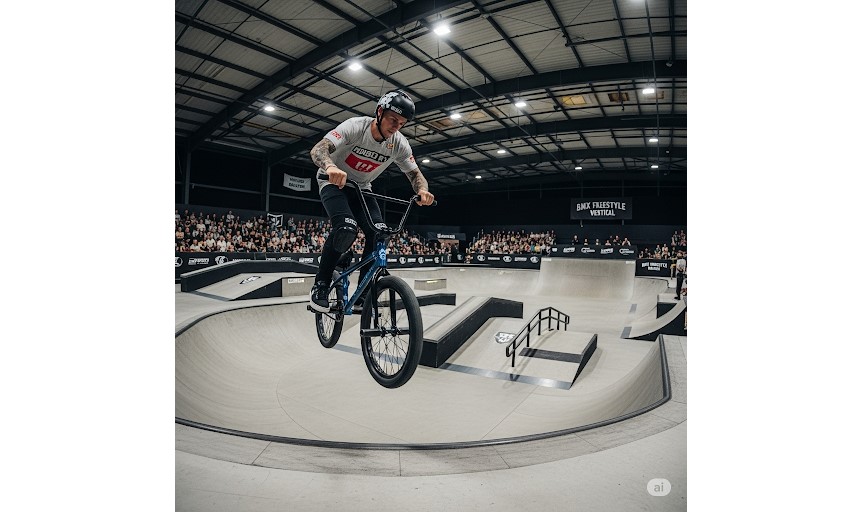
BMX Freestyle Vertical: A High-Flying World of Sport and Culture
BMX Freestyle Vertical is a thrilling sport that blends athleticism, creativity, and courage. Riders launch themselves into the air from massive halfpipes, executing gravity-defying tricks with style and precision. Since its emergence, BMX Freestyle Vertical has captivated audiences around the world. It has become a cultural phenomenon and a competitive discipline in the extreme sports universe. This blog post explores its origin, history, global reach, amateur and youth participation, professional leagues, social significance, and core rules. The key phrase BMX Freestyle Vertical reflects the heart of this entire exploration.
Origins and History of BMX Freestyle Vertical
BMX Freestyle Vertical evolved from the larger BMX (Bicycle Motocross) scene in the 1970s. Riders in Southern California started experimenting with tricks on their bikes. They rode in empty swimming pools, using the curved walls to gain momentum and height. Over time, riders sought more structure and began building ramps. These ramps mimicked the shape of pool walls but provided a more consistent ride. Thus, the vertical ramp, or vert ramp, was born.
During the 1980s, BMX riders gained influence from skateboarding. They began emulating aerial stunts seen in skate parks. BMX manufacturers responded by creating stronger bikes designed for tricks instead of racing. As the sport matured, competitions emerged. Prominent events included the American Freestyle Association (AFA) contests. These events fueled innovation and brought riders together. The vert discipline became one of the most thrilling formats.
By the 1990s, BMX Freestyle Vertical achieved mainstream appeal. Riders like Mat Hoffman revolutionized the sport. He built larger ramps and performed tricks that were once thought impossible. The X Games, launched in 1995, gave the sport a global stage. Viewers were amazed by the athletes’ daring and technical mastery. As a result, the sport gained a foothold in action sports culture.
In 2008, the International Cycling Union (UCI) officially recognized BMX Freestyle as a cycling discipline. Although park and street variations gained Olympic status in 2020, vert remains the purist’s choice. It showcases massive air time and unparalleled risk. The history of BMX Freestyle Vertical reflects a relentless pursuit of progression.
Global Popularity and Geographic Reach
BMX Freestyle Vertical enjoys popularity in many countries. It is most dominant in the United States, where the sport originated. Major cities like Los Angeles, Austin, and Denver host top-tier ramps and training facilities. Riders from these areas often lead the global rankings.
In Europe, the United Kingdom and France have strong scenes. British riders like Jamie Bestwick brought vert riding to global prominence. Indoor parks like Adrenaline Alley in Corby support youth development. France’s FISE (Festival International des Sports Extremes) regularly includes vert competitions. These events draw crowds from around the world.
Australia also contributes heavily to the sport. The country hosts national vert competitions and provides world-class facilities. Logan Martin, although more prominent in park riding, began his journey through vert exposure. Asian nations such as Japan and China are rapidly developing BMX infrastructure. Japanese riders often display exceptional technical skill. Meanwhile, Chinese investment in urban sports facilities is helping grow the sport at a fast pace.
Latin America and parts of Africa are still emerging markets. However, grassroots efforts and media exposure are cultivating interest. Social media platforms play a key role in globalizing the sport. Riders share clips from every corner of the world, inspiring new generations to join.
Amateur Participation and Youth Development
The foundation of BMX Freestyle Vertical lies in its accessibility to youth. Kids can start with simple BMX bikes and move to more specialized equipment. Communities often build local skate parks with vert ramps. These parks become training grounds for young riders.
Schools and youth organizations promote BMX through workshops and clubs. Some countries incorporate BMX into physical education. Programs focus on balance, coordination, and safe riding practices. Coaches and experienced riders mentor students. This mentorship builds skills and confidence.
Amateur competitions take place at local, regional, and national levels. Events such as USA BMX Freestyle and UK Vert Series give young riders a chance to compete. These competitions often categorize riders by age and skill level. This approach encourages progression while maintaining safety.
Nonprofits also support amateur BMX development. Organizations like RADshare and the Tony Hawk Foundation donate ramps and bikes to underserved communities. They help diversify the sport and make it more inclusive. Young riders from various backgrounds get a chance to shine.
Social media has transformed amateur participation. Riders post their tricks online and gain followers. This visibility can lead to sponsorships and career opportunities. Youth today grow up seeing BMX Freestyle Vertical not just as a sport, but as a lifestyle and potential profession.
Professional Leagues and Competitions
Professional BMX Freestyle Vertical competitions attract elite talent from around the world. These events are judged based on difficulty, style, amplitude, and execution. Riders prepare for months to master new tricks and routines.
The X Games remains the most iconic event. It provides global exposure and substantial prize money. Riders such as Jamie Bestwick, Simon Tabron, and Vince Byron have earned legendary status through X Games performances.
FISE World Series also includes vert competitions. It offers a European platform with stops in cities like Montpellier and Chengdu. The series combines competition with festival-like atmospheres. This approach attracts fans and broadens the sport’s appeal.
Other notable events include Nitro World Games and Dew Tour. These competitions showcase the latest innovations in trick development. They also provide access to new audiences through live streaming.
The UCI now plays a more active role in organizing BMX events. Although vert is not yet an Olympic discipline, its future inclusion remains a possibility. Advocacy from top riders and national federations continues.
Sponsorship is vital for professional riders. Companies like Red Bull, Monster Energy, and Vans invest in athletes and events. These brands promote the sport while enabling riders to focus full-time on training and performance.
Political and Social Significance
BMX Freestyle Vertical represents more than just athletic ability. It challenges conventional ideas of sport, authority, and space. Riders often transform neglected urban areas into arenas of creativity and expression.
Politically, the sport highlights the need for public investment in recreational facilities. Municipal governments that support skate parks and vert ramps foster healthy youth development. These projects reduce crime, improve mental health, and build community cohesion.
Socially, BMX creates inclusive environments. Riders from diverse backgrounds unite over a shared passion. The culture embraces individuality and supports personal growth. Riders learn resilience through failure and persistence.
The sport also plays a role in education and career development. Programs that blend BMX with academic tutoring or vocational training produce well-rounded individuals. Schools that support BMX clubs often report increased student engagement.
BMX has entered the realm of art and media. Documentaries, films, and exhibitions showcase its cultural impact. Riders become influencers, role models, and cultural ambassadors. The movement transcends sport and enters the broader social dialogue.
Rules and Judging Criteria
BMX Freestyle Vertical follows a standardized set of rules, especially in professional competitions. Events typically take place on a vert ramp, also called a halfpipe. The ramp stands at least 10 feet tall and features a smooth transition.
Riders perform solo runs that last between 30 seconds and 1 minute. Each run includes a sequence of tricks executed during each ascent and descent. Judges evaluate runs using four primary criteria: difficulty, style, amplitude, and execution.
Difficulty measures how complex the tricks are. More rotations, flips, and combinations score higher.
Style evaluates how smoothly and uniquely tricks are performed. Judges look for originality and flow.
Amplitude refers to how high the rider gets above the ramp. Greater height reflects better momentum and control.
Execution covers how cleanly tricks are landed. Mistakes like foot dabs or crashes reduce scores.
Competitions may include qualifying rounds, semifinals, and finals. Riders earn points or rankings based on performance. Tie-breakers are settled through best-run comparisons or additional ride-offs.
Safety equipment is mandatory. Riders must wear helmets. Many also use knee pads, elbow guards, and gloves. Bikes must meet weight and structural requirements to ensure safety.
Unsportsmanlike conduct, such as interfering with other riders or judges, leads to disqualification. Fair play and respect form the foundation of BMX culture.
Conclusion
BMX Freestyle Vertical stands at the intersection of sport, culture, and innovation. Its roots stretch back to DIY ramps and pool sessions in the 1970s. From those humble beginnings, it has grown into a global spectacle. The sport now boasts international events, youth development programs, and a vibrant professional scene.
Countries across continents celebrate its high-flying action. Youth see it as a pathway to expression and achievement. Professionals push boundaries and inspire millions.
Socially and politically, the sport drives conversations about urban space, youth engagement, and cultural representation. Its rules foster creativity while promoting safety and sportsmanship.
Ultimately, BMX Freestyle Vertical remains one of the most exhilarating forms of human performance. Riders defy gravity not just with skill, but with passion and vision. As the sport continues to evolve, it will no doubt soar even higher.