
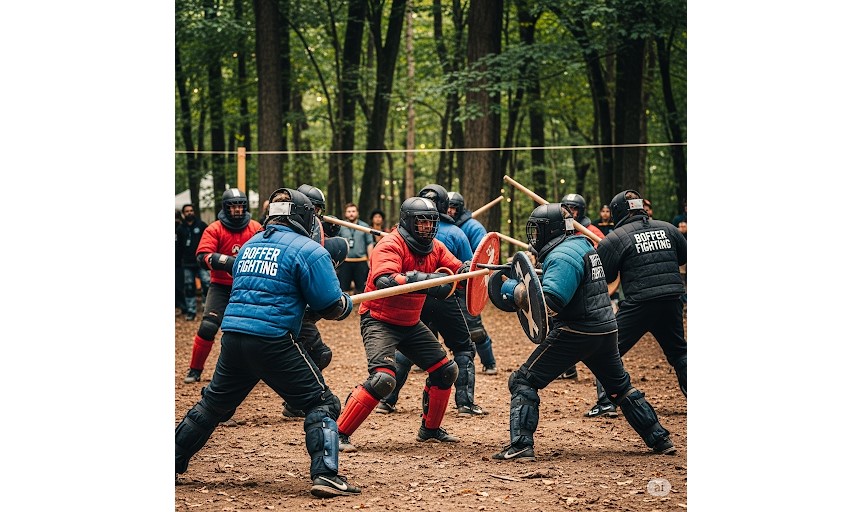
The Sport of Boffer Fighting: A Comprehensive Guide
Boffer Fighting is a thrilling, fast-paced combat sport using foam-padded weapons. It blends historical reenactment with athletic competition. Practitioners around the world train in combat skills, teamwork, and strategy. Originating in fantasy role-playing games, the sport has evolved into a serious competitive and recreational activity. In this blog post, we will explore the origins, global reach, rules, and social impact of Boffer Fighting.
Origins and History of Boffer Fighting
The roots of Boffer Fighting trace back to the 1960s and 1970s. It began among players of live-action role-playing games (LARP). These enthusiasts wanted a safe way to simulate medieval combat. Early weapons were made using PVC pipe cores wrapped in foam and duct tape.
In the United States, groups like the Society for Creative Anachronism (SCA) and Dagorhir were early pioneers. They established rules for weapon safety and combat realism. Over time, different communities developed their own systems. Each focused on a unique balance between safety, fantasy, and competitive sport.
The 1980s saw a surge in interest. Events grew larger, and groups began organizing tournaments. By the 1990s, boffer combat was no longer just a role-playing hobby. It had become a recognized form of athletic activity.
Europe adopted similar activities, especially in the UK, Germany, and Scandinavia. There, LARP events merged with combat sports. The term “boffer” became more widespread, referring specifically to padded weapons.
Today, Boffer Fighting has multiple identities. It is both a sport and a performance art. Its flexible structure allows it to grow in many directions.
Global Popularity and Presence
Boffer Fighting is now played across continents. In North America, groups like Amtgard, Belegarth, and Darkon attract thousands of members. These organizations hold weekly practices and annual national events.
Canada has its own regional groups. Provinces like Ontario and British Columbia boast growing communities. Events often include both tournaments and immersive role-play elements.
In Europe, the United Kingdom leads with active clubs and national events. Germany and the Nordic countries host some of the largest LARP events in the world. Combat sports using boffer weapons are a significant component.
Australia and New Zealand have seen rapid growth. Their communities often mix Boffer Fighting with traditional martial arts. This fusion brings a unique approach to the sport.
Asia, especially Japan and South Korea, is a newer frontier. Interest there is increasing through anime and cosplay subcultures. Enthusiasts are forming combat leagues and cosplay-integrated fighting groups.
Overall, the sport’s global spread is impressive. Social media and international tournaments help unite these scattered communities.
Amateur Boffer Fighting in Youth and Schools
Amateur Boffer Fighting is ideal for schools and youth programs. It emphasizes fitness, discipline, and creativity. Many schools in the U.S. have after-school clubs that teach boffer combat. These programs often tie in historical lessons and literature.
Some youth camps include Boffer Fighting as part of their curriculum. Campers learn teamwork, safety, and combat skills. These environments are carefully controlled, ensuring safety and inclusion.
Libraries and community centers also host programs. They provide foam weapons and protective gear. Participants engage in short games and drills. These sessions are especially popular during summer breaks.
Homeschool groups often use Boffer Fighting to meet physical education requirements. Parents appreciate the sport’s structured format. Students enjoy its interactive and engaging nature.
In Europe, youth LARP and combat camps have similar programs. Children learn medieval history through hands-on experience. Safety gear and clear rules make it accessible to all ages.
These grassroots efforts ensure the sport remains inclusive and educational. Amateur programs help foster the next generation of participants.
Professional Leagues and Organizations
While Boffer Fighting is often community-driven, professional leagues are emerging. In the United States, Battle Games National (BGN) coordinates large-scale competitions. Teams compete for national rankings, and the league enforces strict rules.
Another major organization is the National Foam Fighting League (NFFL). This league focuses on high-level athletes. It standardizes rules across regions and hosts annual championships.
In Canada, the Dominion Foam Combat League (DFCL) governs national play. It connects local clubs under a single umbrella. The league also provides training for referees and coaches.
Europe boasts several structured organizations. The UK’s National Boffer Combat Federation (NBCF) manages competitive teams. Germany’s Kampfspiel Union organizes regional tournaments with live broadcasts.
Australia’s Federation of Combat Arts includes a Boffer Fighting division. This group works alongside traditional martial arts federations. Their goal is recognition as an official sport.
Though still growing, these leagues bring professionalism and consistency. They provide a clear pathway from amateur to elite levels.
Political and Social Significance
Boffer Fighting is more than just combat. It promotes inclusion, equality, and mental health. The sport attracts people from diverse backgrounds. Gender, age, and physical ability often matter less than teamwork and dedication.
Many Boffer communities emphasize consent and respect. Rules discourage aggressive behavior off the field. Leaders create welcoming spaces where participants feel safe and valued.
Politically, the sport can empower marginalized groups. Some communities use Boffer Fighting to teach social skills and confidence. LGBTQ+ groups often find a safe haven in inclusive leagues.
Veterans and trauma survivors also benefit. The physical activity helps with stress relief. The structured environment gives a sense of purpose.
In schools, Boffer programs build leadership and cooperation. Students who may struggle in traditional sports often thrive here. This shift changes how educators view physical education.
Social media has also played a role. Stories of personal growth and empowerment spread quickly. These narratives inspire others to join and participate.
Overall, Boffer Fighting builds stronger communities. It teaches empathy, patience, and resilience.
Rules and Gameplay
The rules of Boffer Fighting vary by organization. However, most systems share common principles. Safety is the top priority. All weapons must be foam-padded and inspected before combat.
Combatants usually fight in one-on-one or team-based scenarios. Hits are registered on limbs and torso. A clean hit disables the struck area. For example, a hit to the arm makes that arm unusable.
Headshots are often illegal or limited to light contact. Many groups require helmets or face protection. Groin and spine areas are typically off-limits.
Players must acknowledge valid hits. Honor-based systems are common. Referees oversee competitive matches to ensure fairness.
Matches occur on marked fields. Objectives include last-man-standing, capture-the-flag, or king-of-the-hill. Each scenario tests different skills, from speed to strategy.
Combat rounds are timed. Between rounds, teams regroup and strategize. This structure keeps the pace quick and exciting.
Weapons include swords, spears, axes, and shields. Dual-wielding is allowed in some systems. Archery with foam-tipped arrows adds variety.
Armor is sometimes used, but it often serves a cosmetic purpose. Realistic-looking gear enhances immersion. Some leagues factor armor into hit points.
Sportsmanship is crucial. Disrespect or cheating can lead to penalties or disqualification. Training sessions focus on technique and rule comprehension.
Conclusion
Boffer Fighting combines athleticism, creativity, and community. It has evolved from a niche hobby into a global phenomenon. The sport’s accessibility makes it popular among all age groups.
Professional leagues bring structure and visibility. Amateur programs in schools and youth groups foster growth. Social and political impacts demonstrate its value beyond the battlefield.
As it continues to grow, Boffer Fighting will shape new generations of athletes and leaders. Its blend of competition and camaraderie ensures lasting appeal.
Whether for fun, fitness, or fellowship, Boffer Fighting offers something unique. Now is the perfect time to pick up a foam sword and join the adventure.