
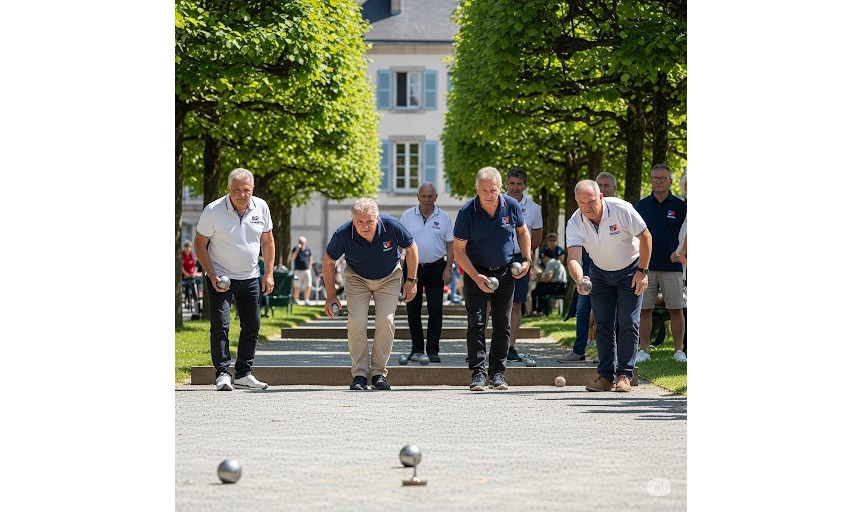
Boule Lyonnaise: The Timeless Game That Unites Sport, Culture, and Community
Boule Lyonnaise is more than a game. It is a sport that fuses history, precision, and cultural identity. Played competitively and casually, it continues to thrive in various regions across the world. This traditional sport, often overshadowed by mainstream athletics, carries a profound heritage. It also fosters strong community bonds and offers rich sporting experiences.
In this comprehensive exploration, we will dive deep into the origins of Boule Lyonnaise. We will also examine its global popularity, the landscape of amateur play, professional leagues, and its rules. Furthermore, we will explore the social and political dimensions that make this sport enduringly relevant.
Origins and History of Boule Lyonnaise
The roots of Boule Lyonnaise trace back to ancient civilizations. Games involving rolling or throwing stones were common in Greece and Rome. These early games eventually evolved as they spread across Europe.
By the 18th century, a structured version emerged in the Lyon region of France. Known initially as “jeu de boules,” it developed specific characteristics. Players used heavy metal balls and competed on long rectangular courts. Unlike pétanque, players would take a run-up before throwing, adding dynamism to the sport.
In 1850, formal rules were created in Lyon. The game began to flourish in both urban and rural France. Societies and clubs were formed to promote the game. It became an integral part of Lyon’s social life.
By 1900, Boule Lyonnaise had earned its identity. In 1906, the first national federation was founded. The sport began to spread to neighboring countries such as Italy and Switzerland. Over time, it evolved with standardized equipment, organized competitions, and dedicated arenas.
Global Popularity
Although Boule Lyonnaise originated in France, it found a foothold internationally. In Europe, the sport remains strongest in France and Italy. It enjoys dedicated followings in Switzerland, Slovenia, and Croatia.
Italy, in particular, plays a significant role. The Italian variant, known as “Bocce Volo,” closely resembles Boule Lyonnaise. The country has cultivated a strong professional scene and has also integrated it into its cultural fabric.
In South America, Argentina and Uruguay have developed competitive leagues. French immigrants introduced the sport there in the early 20th century. The game gained popularity in community centers and local clubs.
In Africa, the sport has a presence in countries like Tunisia and Algeria. Here, it is often played in urban centers where French colonial influence remains.
Asia has also begun embracing Boule Lyonnaise. In Japan, the game is promoted by sporting associations that cherish European culture. China has shown interest too, especially in regions with French educational institutions.
Internationally, the sport is governed by the Confédération Mondiale des Sports de Boules (CMSB). This body ensures the uniformity of rules and organizes world championships.
Amateur Boule Lyonnaise: Youth and School Programs
Amateur Boule Lyonnaise serves as the foundation of the sport’s ecosystem. Across Europe, local clubs offer introductory programs for youth. In France and Italy, many schools include it in physical education curricula.
These youth programs focus on developing hand-eye coordination, strategy, and sportsmanship. Children participate in friendly matches and regional tournaments. Local clubs often collaborate with schools to scout talented players.
In Switzerland, community centers host weekend sessions. These events are free and open to all age groups. The emphasis is on inclusion, skill-building, and intergenerational interaction.
Outside Europe, amateur play is growing steadily. In Argentina, local clubs organize youth leagues that mirror professional formats. These leagues often receive community funding and donations.
Japan’s adoption of the sport also includes academic institutions. Universities hold annual intercollegiate tournaments. These events not only promote competition but also cultural exchange.
Overall, amateur Boule Lyonnaise nurtures a love for the sport. It builds a pipeline of talent for professional leagues. It also helps instill values of discipline and community participation.
Professional Leagues Around the World
Professional Boule Lyonnaise leagues offer high-level competition. France leads the way with the Ligue Nationale de Boules. This league features top-tier teams, often backed by regional sponsorships.
Players in France undergo rigorous training. They compete in national tournaments that attract large audiences. Prize money and media coverage have increased, boosting the sport’s profile.
Italy boasts a robust league system as well. The Federazione Italiana Bocce (FIB) governs professional play. Teams compete in televised events, and individual stars often gain celebrity status.
Switzerland and Slovenia also have organized leagues. These countries prioritize technique and sportsmanship. Their professional teams often participate in international competitions.
In South America, Argentina’s league system continues to grow. It features both men’s and women’s divisions. Matches are on local sports channels, and players receive endorsements.
The CMSB plays a key role in maintaining global standards. It sanctions the World Games and World Championships. These events bring together athletes from over 30 countries.
Professional Boule Lyonnaise exemplifies strategic brilliance. It demands physical skill, mental focus, and teamwork. With increasing international recognition, the professional scene is poised for more growth.
Political and Social Significance
Boule Lyonnaise is not just a sport; it’s a cultural phenomenon. In France, it symbolizes regional pride and identity. Politicians often support clubs and attend major tournaments.
The sport promotes community cohesion. Local clubs serve as meeting points for all generations. Events are often accompanied by food festivals, music, and social activities.
In Italy, Boule Lyonnaise bridges generational gaps. Elderly players teach younger enthusiasts, preserving tradition. These interactions strengthen communal bonds.
The sport has also been leveraged for diplomacy. Matches between international teams foster goodwill and cultural understanding. Tournaments in politically sensitive regions help ease tensions.
In post-conflict societies like parts of the Balkans, the game aids reconciliation. Shared love for the sport helps rebuild trust and unity. Clubs in these regions often focus on inclusion and mutual respect.
In urban settings, it serves as an outlet for physical activity. It engages seniors, reduces social isolation, and promotes mental wellness. These outcomes make it a valuable tool in public health strategies.
Socially and politically, Boule Lyonnaise transcends sport. It fosters solidarity, preserves heritage, and enriches communities.
Rules of Boule Lyonnaise
Understanding the rules is essential to appreciating the game’s depth. You play on a rectangular court measuring 27.5 meters by 2.5 to 4 meters.
Each team has four players. Games are singles or doubles formats. The objective is to place your boules closest to the target ball, known as the jack.
Each player throws their boule underhand after taking a few steps or a short run-up. This is unique compared to pétanque or bocce. Boules are made of metal and weigh about 900 grams.
A coin toss decides which team throws first. The jack is thrown between 12 and 20 meters from the starting circle.
Players alternate turns, trying to get closer to the jack or knock opponents’ boules away. Precision and strategy are critical. Teams score points for each boule closer to the jack than the opponent’s closest boule.
A typical match consists of several ends. The first team to reach 13 points usually wins. Games can be timed or untimed, depending on the tournament rules.
Fouls include stepping outside the designated throwing zone or exceeding the time limit. Penalties include nullifying the throw or awarding points to the opponent.
Umpires ensure rules are followed. They also resolve disputes using measuring tools. Matches often draw spectators who appreciate the game’s tactical nuances.
Conclusion
Boule Lyonnaise offers more than sport. It embodies tradition, community, and international camaraderie. With deep historical roots and growing global popularity, it remains a compelling and vibrant activity.
From schoolyards to professional arenas, it continues to engage players of all ages. It bridges cultures, unites generations, and strengthens communities.
Through amateur enthusiasm and professional excellence, Boule Lyonnaise is securing its place in the modern world. It stands as a shining example of how tradition can thrive in today’s global society.
Whether you’re watching a match in Lyon or playing in Buenos Aires, the spirit of Boule Lyonnaise endures. It is not merely a game; it is a living heritage that continues to inspire.