
Butterfly Swimming: A Deep Dive into the Sport’s Evolution and Global Impact
Butterfly Swimming is one of the most physically demanding disciplines in competitive swimming. It requires strength, endurance, and impeccable technique. While it is often seen as a beautiful stroke, its roots and rise to prominence are just as compelling. The history, popularity, rules, and global influence of Butterfly Swimming make it an essential part of the aquatic sports world. In this comprehensive blog post, we will explore every aspect of this unique sport.
The Origin and History of Butterfly Swimming
The development of Butterfly Swimming can be traced back to the early 20th century. In the 1930s, swimmers sought faster techniques for the breaststroke. This pursuit led to the innovation of an over-the-water recovery movement. David Armbruster, a coach at the University of Iowa, is credited with creating the early version of the butterfly stroke. His swimmer, Jack Sieg, helped refine it.
Initially, swimmers combined the butterfly arm movement with a frog kick. However, this style was controversial. It wasn’t until the dolphin kick was introduced in the 1950s that Butterfly Swimming became a separate discipline. The official recognition by FINA (Fédération Internationale de Natation) occurred in 1952.
This transformation revolutionized swimming. Butterfly became one of the four competitive strokes alongside freestyle, backstroke, and breaststroke. It made its Olympic debut in 1956. Since then, it has seen dramatic improvements in performance and technique.
Global Popularity and Reach of Butterfly Swimming
Butterfly Swimming enjoys widespread popularity in both professional and amateur circles. It is part of international events like the Olympics, World Championships, and Commonwealth Games. Countries with strong swimming traditions such as the United States, Australia, China, and Hungary dominate these competitions.
In North America, competitive swimming is well-funded and organized. The U.S. collegiate system plays a crucial role in developing elite butterfly swimmers. Australia has a culture that embraces swimming as a national pastime. China, with its state-sponsored athletic programs, consistently produces world-class athletes.
European nations also participate enthusiastically. Hungary and Germany have produced several Olympic champions. Japan and South Korea in Asia have also invested heavily in swimming programs. In Africa, nations like South Africa have developed strong swimming teams, contributing to the sport’s growing footprint.
Butterfly Swimming is taught in community pools and recreational centers across the globe. Its technical difficulty makes it a challenge but also a goal for many young swimmers. Enthusiasts and professionals alike appreciate the grace and power required to master the stroke.
Youth and Amateur Butterfly Swimming
The sport begins early for many athletes. Swim schools and youth clubs around the world introduce Butterfly Swimming as part of their curriculum. Although considered advanced, it is taught after the basics of freestyle and backstroke are mastered.
In the United States, organizations like USA Swimming promote the sport at the grassroots level. Age group competitions help identify talent early. Swimmers as young as eight years old compete in butterfly events.
European countries have similar structures. Clubs operate training programs supported by regional and national bodies. These systems ensure a consistent pipeline of talent.
In Asia, particularly in Japan and China, youth training is intense and regimented. Butterfly Swimming is part of school physical education programs in some regions. This widespread exposure helps build a strong base of amateur swimmers.
Africa and South America are emerging markets. NGOs and international programs are helping introduce structured swimming to these areas. Butterfly Swimming, though challenging, is gaining traction through these efforts.
Youth competitions often include the 50m and 100m butterfly events. These races help swimmers build confidence and improve technique. Many future champions begin their careers at these local meets.
Professional Leagues and Competitions
Butterfly Swimming has a solid presence in professional swimming leagues. The International Swimming League (ISL), launched in 2019, features the world’s top swimmers. It includes multiple butterfly events and promotes team-based competition.
Olympic Games remain the pinnacle of the sport. Athletes train for years to compete in the 100m and 200m butterfly events. Michael Phelps, perhaps the most famous butterfly swimmer, brought unprecedented attention to the discipline.
World Championships organized by FINA occur every two years. These include short course and long course events. The butterfly stroke features prominently in individual and medley races.
Regional competitions like the Pan Pacific Championships, European Championships, and Asian Games further support the professional landscape. These events help swimmers gain experience and exposure.
Professional swimmers often start their careers in collegiate or national teams. Sponsorships and endorsements support them financially. Many go on to become ambassadors of the sport, promoting swimming and healthy living.
Political and Social Significance
Butterfly Swimming, like all sports, holds social and political weight. It brings people together and showcases national pride. Olympic performances, particularly in butterfly events, often serve as symbols of national excellence.
Michael Phelps’ dominance brought attention to mental health in sports. His openness about struggles helped break stigmas. Similarly, champions from developing nations inspire youth and challenge stereotypes.
The inclusion of athletes from diverse backgrounds promotes inclusivity. Programs aimed at teaching swimming to underrepresented communities often use Butterfly Swimming as a benchmark of achievement.
Governments and NGOs use swimming to promote public health and safety. In flood-prone regions, swimming skills are life-saving. Introducing children to advanced techniques like butterfly encourages confidence and resilience.
Additionally, women’s participation in Butterfly Swimming has highlighted issues of equality. Athletes like Dana Vollmer and Sarah Sjöström have set records while advocating for women’s sports.
Rules and Techniques of Butterfly Swimming
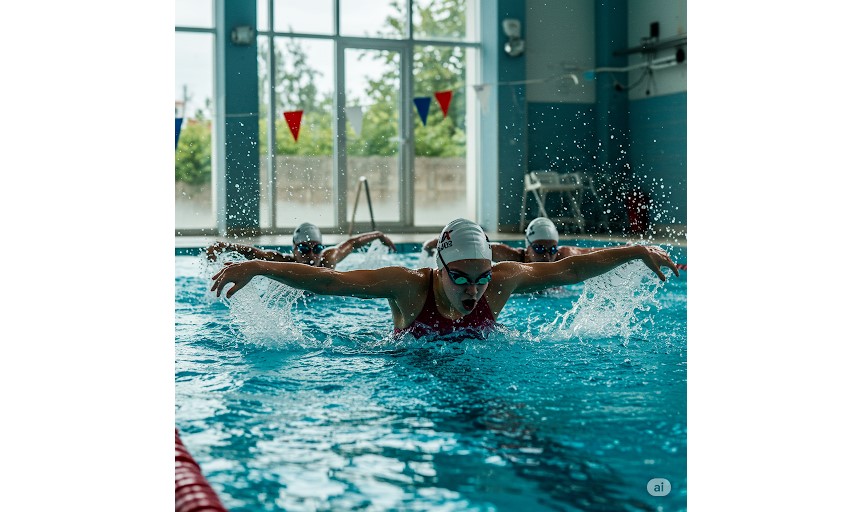
Understanding the rules is essential to appreciate the sport fully. Butterfly Swimming requires swimmers to use symmetrical arm and leg movements. Both arms must move forward simultaneously over the water.
The dolphin kick characterizes the stroke. Swimmers keep their legs together and move them in a wave-like motion. Two kicks are usually executed per arm cycle.
Swimmers must touch the wall with both hands at the same time during turns and at the finish. This rule applies in both short course and long course formats.
False starts lead to disqualification. Timing and reaction are crucial at the start. Swimmers dive into the water from a block and begin with a strong underwater dolphin kick.
Turns involve a quick tuck and push off the wall while maintaining the dolphin motion. Breathing is usually done every second or third stroke to maintain momentum.
Officials closely monitor swimmers for illegal movements. These include asynchronous arm strokes or scissors kicks. Consistent technique and endurance are key to avoiding penalties.
Equipment such as swim caps and goggles are standard. Some swimmers use specialized suits designed for hydrodynamics. However, regulations limit their technology to ensure fairness.
Training focuses on strength, flexibility, and technique. Drills often isolate components of the stroke. Video analysis helps swimmers identify and correct mistakes.
Butterfly Swimming is not only about speed. It combines rhythm, timing, and muscle coordination. Mastery requires years of dedicated practice.
Conclusion
Butterfly Swimming stands as a symbol of athletic excellence. From its humble beginnings in the early 20th century, it has grown into a global phenomenon. Athletes, coaches, and fans around the world celebrate the discipline for its beauty and challenge.
This sport plays a crucial role in both amateur and professional arenas. Its presence in schools, clubs, and global competitions underscores its importance. Through events like the Olympics and ISL, Butterfly Swimming continues to inspire millions.
Politically and socially, the sport breaks barriers and promotes health. It empowers communities and gives individuals a platform to excel. Its rules and structure ensure a fair and competitive environment for all.
With a rich history and a promising future, Butterfly Swimming will remain a cornerstone of aquatic sports. Whether at a local pool or the Olympic stage, its impact is undeniable. Let us continue to support and celebrate this incredible sport.