
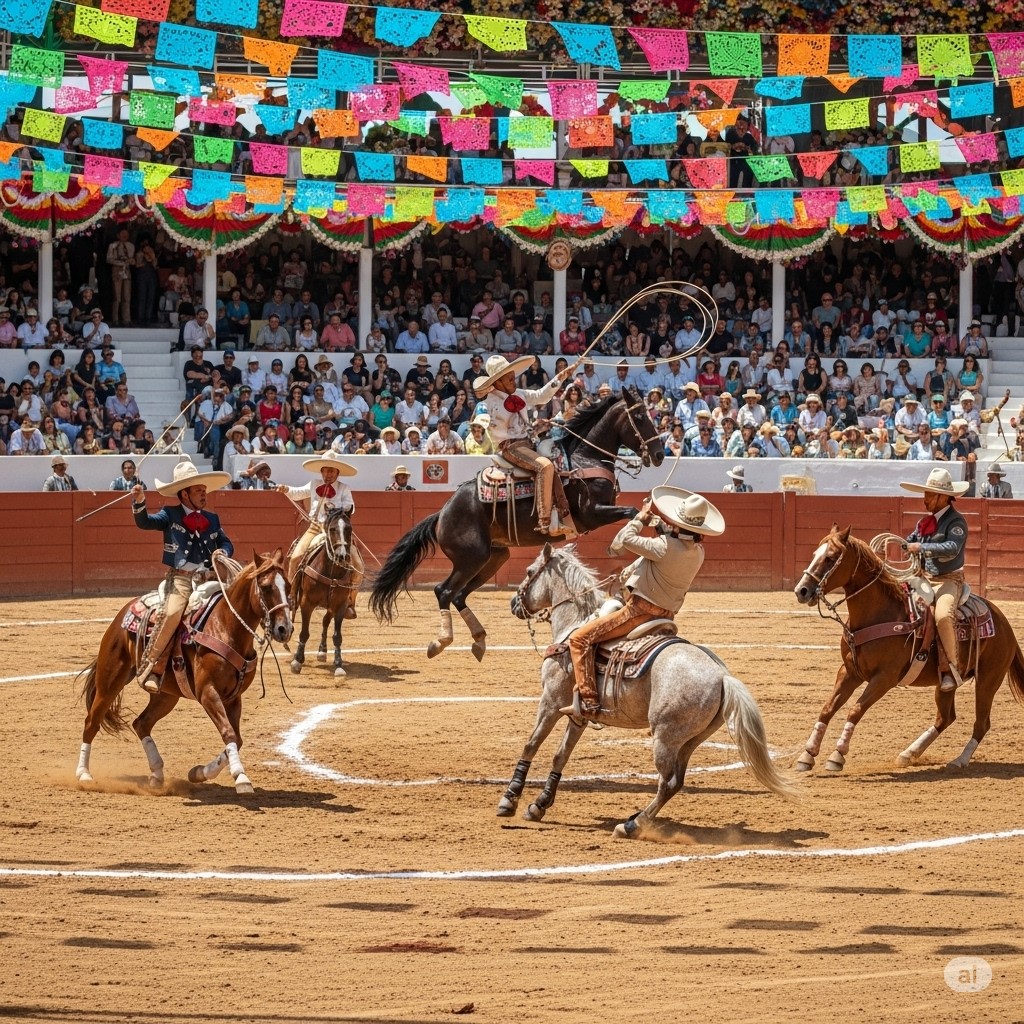
Charreada: Mexico’s National Rodeo and Its Global Significance
Charreada, often called Mexico’s national sport, captures the spirit, culture, and identity of a proud nation. The roots of this rodeo-style competition run deep, and its traditions are steeped in history. As the sport continues to evolve, it maintains a firm grip on the hearts of people in Mexico and beyond. In this article, we’ll explore Charreada in depth. We’ll trace its origins, describe how it’s played, examine its global popularity, highlight amateur and professional participation, and analyze its social and political impact.
Origins and History of Charreada
Charreada traces its origins to the 16th century, during Spanish colonization of the Americas. The Spanish brought cattle and horses to Mexico, along with European ranching techniques. Over time, local ranchers known as charros developed their own style of managing livestock. These techniques combined Spanish traditions with indigenous practices.
By the 17th century, large haciendas dominated Mexican rural life. Landowners held competitions to showcase their charros’ abilities. These contests were both functional and entertaining. They reflected everyday ranching tasks, such as roping cattle and taming horses.
During the Mexican Revolution (1910-1920), haciendas began to decline. In response, charros formed associations to preserve their customs. The first formal charro organization, the Asociación Nacional de Charros, was established in 1921. It played a key role in codifying the sport and keeping the tradition alive.
In 1933, the Mexican government declared Charreada the national sport. This recognition elevated its status and helped foster its growth. Today, the sport continues to thrive, representing a powerful symbol of Mexican identity.
Rules and Structure of Charreada
A Charreada consists of nine scored events, called suertes. Each event tests different skills in horsemanship, roping, and cattle handling. Teams, or escaramuzas, typically consist of six to twelve participants.
- Cala de Caballo: Riders demonstrate their horse’s training and obedience. They perform stops, spins, and side passes.
- Piales en el Lienzo: A charro ropes the hind legs of a running mare to bring her to a stop.
- Colas en el Lienzo: Also known as steer tailing, the rider grabs a steer by the tail and attempts to topple it.
- Jineteo de Toro: Similar to bull riding, the charro must stay atop a bucking bull until it stops bucking.
- Terna en el Ruedo: Three charros work together to rope a steer, first by the neck and then by the hind legs.
- Jineteo de Yegua: This event features bareback riding of a wild mare.
- Manganas a Pie: A charro attempts to rope the front legs of a running mare from a stationary position.
- Manganas a Caballo: Similar to the previous event, but the charro performs it on horseback.
- Paso de la Muerte: A charro rides a tame horse and attempts to leap onto a wild, bareback horse.
Points are awarded based on skill, technique, and flair. Judges deduct points for errors or lack of control.
Global Popularity of Charreada
Though Charreada originated in Mexico, its popularity has spread to other parts of the world. Mexican communities in the United States, Canada, and Central America have embraced the sport.
In the United States, Charreada events are common in states with large Mexican populations. California, Texas, Arizona, and New Mexico host numerous competitions each year. These events often coincide with festivals, drawing large crowds.
Canada has seen growing interest, particularly in Alberta and British Columbia. These provinces host cultural events that include Charreada exhibitions.
Charreada has also found enthusiasts in Central American countries like Guatemala and El Salvador. In these regions, local adaptations exist, but the core elements remain consistent.
While Europe and Asia have not adopted the sport widely, cultural exchanges have introduced Charreada to international audiences. Demonstrations and exhibitions help showcase the sport’s unique charm.
Amateur Charreada and Youth Participation
Amateur Charreada plays a crucial role in sustaining the sport. Local clubs and associations nurture young talent and ensure the tradition continues. In Mexico, children often start training as early as age six.
Schools and community centers offer programs to teach Charreada fundamentals. These include horsemanship, roping, and etiquette. The goal is to instill discipline and respect for tradition.
Youth leagues operate under the guidance of experienced charros. These leagues conduct competitions that mirror professional events. Success at this level often leads to regional and national tournaments.
In the United States, amateur Charreada has gained traction. Nonprofit organizations and cultural groups promote the sport among Mexican-American youth. These initiatives provide a sense of belonging and pride in heritage.
Girls and young women also participate, especially in the event of escaramuza. This discipline features teams of female riders performing synchronized routines. It combines precision riding with traditional dress, adding grace to the competition.
Professional Leagues and Organizations
Several professional Charreada leagues exist across Mexico and the United States. These organizations maintain high standards and help elevate the sport’s profile.
The Federación Mexicana de Charrería (FMCH) governs professional Charreada in Mexico. Founded in 1933, FMCH organizes national championships and regulates competition rules.
Each year, the Campeonato Nacional Charro serves as the pinnacle event. Teams from all over Mexico compete for national glory. This tournament draws thousands of spectators and receives national media coverage.
In the United States, leagues like the Federación de Charros USA and various state-level associations manage competitions. These groups often collaborate with FMCH to maintain consistency.
Professional teams invest heavily in training, equipment, and breeding horses. Sponsorship deals and government grants provide financial support. Television and online streaming have broadened the sport’s reach.
Some teams have become household names, attracting loyal fan bases. Their riders often serve as cultural ambassadors, representing Mexican heritage abroad.
Political and Social Significance of Charreada
Charreada holds immense social and political value in Mexican society. It serves as a living link to the country’s rural and revolutionary past. The sport celebrates the values of courage, honor, and skill.
Politically, Charreada has received backing from the Mexican government. Designating it as the national sport reinforced its status. This recognition has led to funding for training centers and cultural programs.
During political campaigns, candidates often attend Charreada events. Doing so connects them with rural voters and shows respect for tradition.
Socially, the sport fosters community and identity. Events bring families together and serve as platforms for cultural expression. Traditional music, food, and attire create a festive atmosphere.
Charreada also empowers women through escaramuza. These performances highlight female strength and precision, challenging gender norms.
Cultural preservation remains a central goal. Through Charreada, younger generations learn about their history and values. The sport becomes a bridge between past and present.
Charreada has also been included in discussions on intangible cultural heritage. Advocates seek recognition from UNESCO to ensure global appreciation and protection.
Conclusion
Charreada stands as a vibrant symbol of Mexican culture and pride. Its roots stretch back centuries, yet it remains relevant today. Across amateur and professional levels, the sport showcases talent, dedication, and tradition.
While its heart lies in Mexico, Charreada’s influence has expanded globally. From youth programs to elite competitions, it continues to thrive. The sport not only entertains but also unites communities and celebrates identity.
Through its rituals and performances, Charreada tells a story. It is a story of resilience, honor, and belonging. As the sport grows and adapts, its spirit endures.
For fans and newcomers alike, Charreada offers more than competition. It offers a cultural journey, rooted in heritage and driven by passion.