
Chess Boxing: A Sport of Mind and Muscle
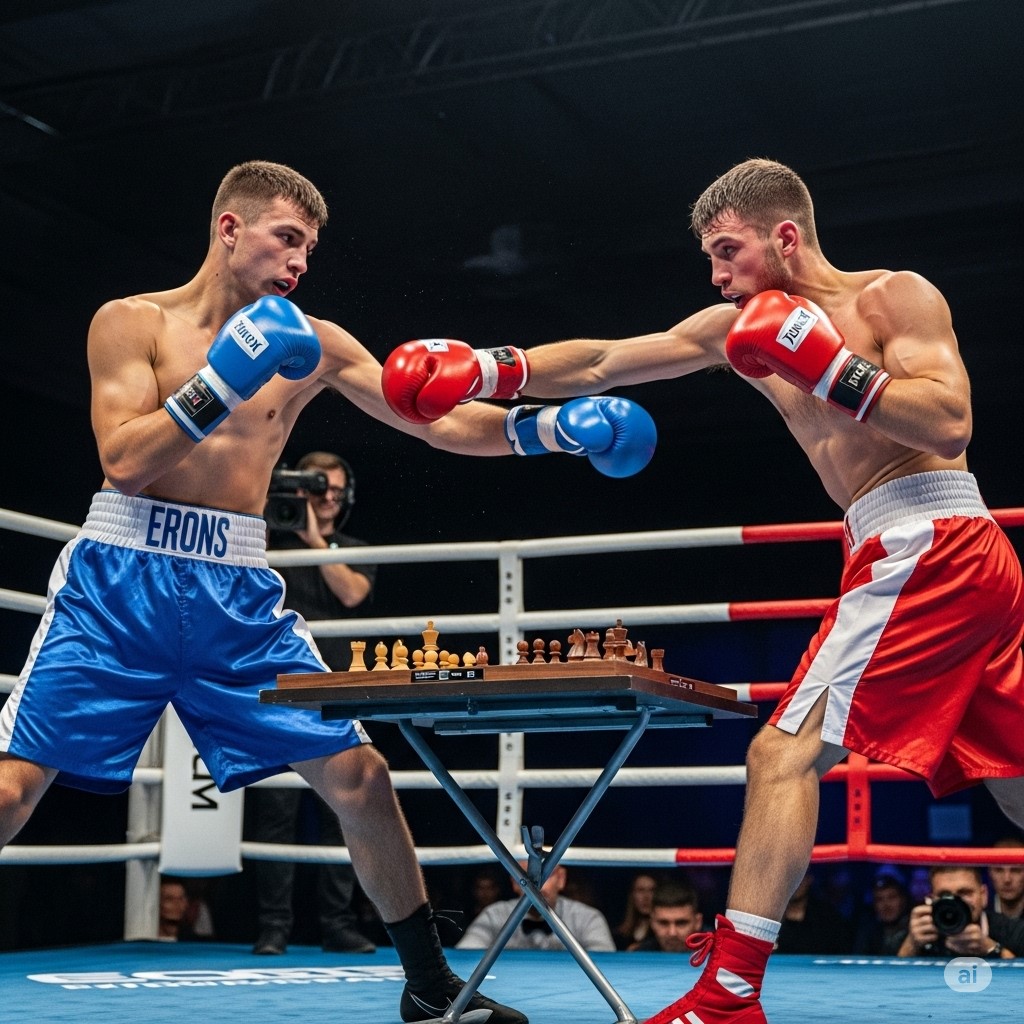
Chess Boxing is one of the most unique and intriguing sports in the world. It combines two disciplines that seem worlds apart: chess and boxing. Mental agility meets physical strength in this hybrid sport. The competitors must excel in both brains and brawn. Over the past two decades, it has gained a following worldwide. This post dives deep into its origin, global presence, rules, professional and amateur circuits, and its socio-political impact.
The Origins and History of Chess Boxing
The concept originated from a fictional idea. In 1992, French comic book artist Enki Bilal introduced it in his graphic novel “Froid Équateur.” Inspired by this, Dutch performance artist Iepe Rubingh turned the concept into reality in 2003. The first official match took place in Berlin, Germany.
Rubingh founded the World Chess Boxing Organization (WCBO) the same year. This move helped to formalize the sport. The idea quickly spread across Europe. Soon, people in Asia and the Americas began to take notice.
By 2008, the sport had a world championship. Berlin, London, and Moscow emerged as early hubs. These cities hosted major events. The blend of culture, sport, and intellect attracted diverse crowds. Over time, it turned into a subculture with devoted fans.
Global Popularity and Where It Is Played
It has grown significantly since its inception. Europe continues to be the stronghold. Germany, the United Kingdom, and Russia host regular events. In Germany, Berlin remains a key location. London is home to the Chess Boxing Global club. Russia treats the sport with seriousness due to its strong chess history.
In Asia, India and China are leading the charge. The Indian Chess Boxing Organization actively promotes the sport. Youth championships are common in states like Tamil Nadu and Maharashtra. China integrates it with martial arts schools.
The United States has also joined the scene. Los Angeles and New York have hosted exhibitions and local tournaments. Canada has also shown increasing interest. Latin American countries like Mexico and Argentina have small but growing communities.
Africa has emerging Chess Boxing activities in South Africa and Nigeria. These programs are mostly supported by NGOs. Their goal is to use the sport for youth development.
Australia and New Zealand have also seen occasional events. The sport’s global reach continues to expand yearly.
Amateur Chess Boxing Around the World
Amateur Chess Boxing thrives in clubs and community centers. These clubs provide training in both disciplines. Many offer programs for youth and beginners. They emphasize character building and discipline.
In Europe, amateur clubs in Berlin, London, and Paris lead the scene. They regularly host inter-club matches. These matches foster camaraderie and skill development.
India has taken significant strides. School programs introduce children to both chess and boxing. Competitions are often held at the state and national levels. The sport is promoted as a way to balance academic and physical excellence.
In the United States, grassroots movements are slowly growing. Youth centers in New York have introduced Chess Boxing to at-risk teens. The goal is to develop both strategic thinking and physical confidence.
In Africa, organizations like Fight for Peace use Chess Boxing to engage disadvantaged youth. These programs are often funded through international aid. They show promising results in reducing crime and school dropouts.
Asia’s amateur scene is growing as well. Chinese martial arts schools are experimenting with Chess Boxing. Youth tournaments are beginning to gain traction.
Professional Leagues and Global Associations
Professional Chess Boxing has evolved into an organized sport. The World Chess Boxing Organization (WCBO) remains the governing body. It sanctions major tournaments and sets rules.
The Chess Boxing Global club in London is a premier league. It features professional fighters and grandmasters. They compete in front of large audiences. Matches are often streamed online.
Germany’s Intellectual Fight Club is another major league. It blends entertainment with athleticism. The events are theatrical but maintain sporting integrity.
India hosts the Chess Boxing Organization of India (CBOI). It organizes national leagues and sends athletes to international events. They work closely with schools and universities.
In the United States, efforts are underway to form a national body. Although still in its infancy, the movement is gaining momentum.
Russia has institutional support for the sport. It aligns with the country’s historic love for chess and boxing. Moscow hosts high-profile matches regularly.
These leagues provide a career path for athletes. They also help increase the sport’s visibility.
Political and Social Significance of Chess Boxing
It carries deep social implications as it breaks the stereotype of fighters lacking intellect. It also shatters the image of chess players as physically weak. This duality promotes a more holistic view of human potential.
The sport is also used in peace-building initiatives. In post-conflict areas, it provides a way to channel aggression positively. Programs in places like Sierra Leone and Afghanistan have reported success.
In urban areas, it engages youth in constructive activities. Cities like Berlin and New York see reduced crime among participating teens. It becomes more than a sport as it turns into a community-building tool.
It promotes gender equality as well. Women compete at high levels. The sport celebrates both mental and physical strength regardless of gender.
It also bridges cultural divides. Competitors from different backgrounds engage respectfully. The global nature of the sport encourages international dialogue.
Rules of Chess Boxing
It follows a strict format. A match consists of 11 rounds. It alternates between chess and boxing.
The match starts with a four-minute chess round. Then comes a three-minute boxing round. This continues until one competitor wins.
Victory can be achieved in multiple ways. A knockout or checkmate ends the match immediately. Timeouts in chess also lead to victory. If neither occurs, judges decide the winner based on boxing points.
Players wear boxing gloves during boxing rounds. Gloves are removed for chess. They wear standard boxing attire.
The chess portion uses rapid time controls. Each player has a total of 12 minutes. Mistakes under pressure can be costly.
A ring is used for both activities. The chessboard sits in the center during chess rounds. It is removed before boxing begins.
Medical checks are mandatory. Athletes must pass physical and cognitive evaluations. This ensures safety.
Referees and chess arbiters oversee the match. Both must be certified professionals.
Fouls in boxing and illegal chess moves are penalized. Repeat offenses can lead to disqualification.
The Future of Chess Boxing
The sport continues to evolve. New clubs and leagues form each year. Its appeal to both intellect and strength is unmatched.
Digital platforms help spread awareness. Live streams and social media boost global reach. Fans from different continents engage in discussions.
Educational institutions are starting to embrace it. Schools see it as a way to foster balanced development.
The inclusion of Chess Boxing in multi-sport events is under discussion. Some advocate for its place in the Olympics.
With time, the sport may gain mainstream recognition. Its unique blend gives it a distinct identity.
Conclusion
Chess Boxing is more than just a novelty. It represents the union of two powerful disciplines. Its history is rooted in art and has evolved into a global movement. As it spreads across continents, it touches lives in profound ways. From youth empowerment to professional leagues, its impact is far-reaching. With continued support, Chess Boxing could become a staple of modern sport. It deserves attention for its ability to inspire both mind and body.