
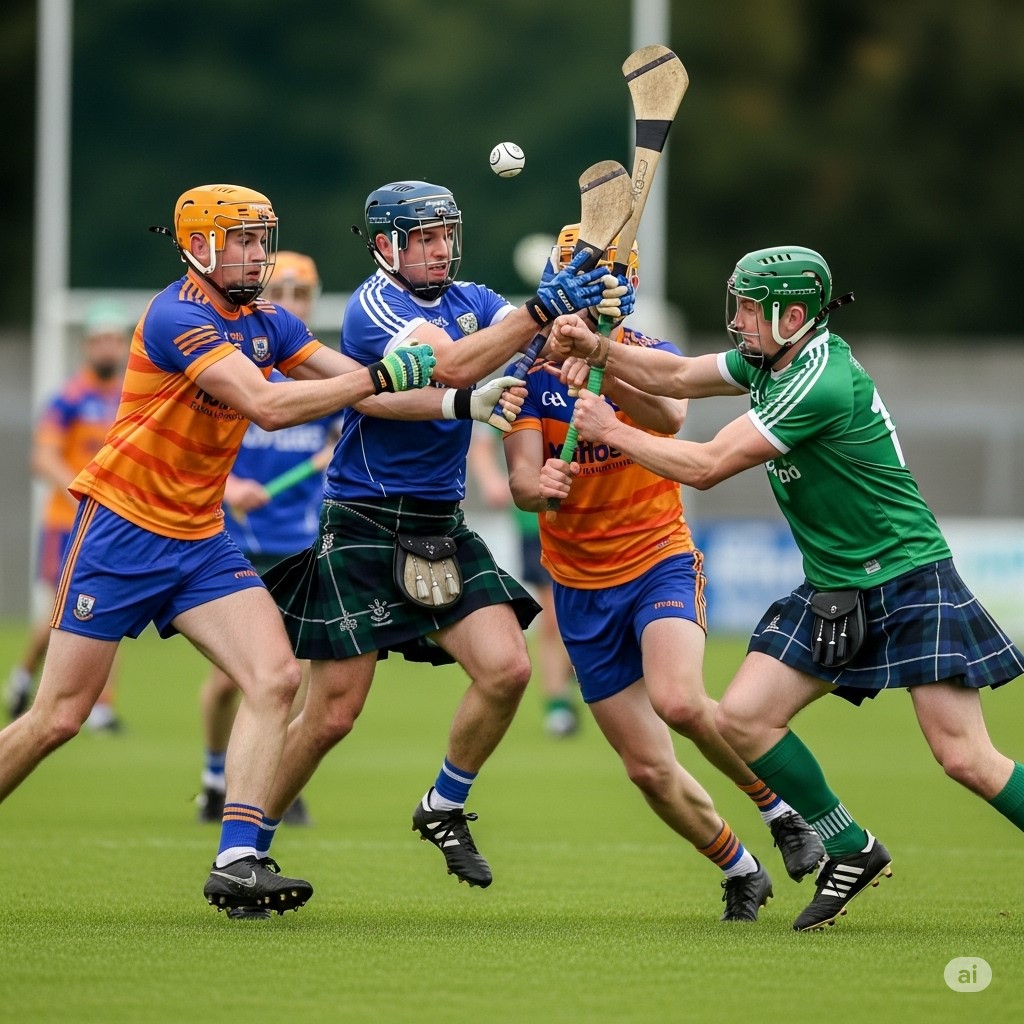
The Unique World of Composite Rules Shinty Hurling: A Fusion of Celtic Tradition and Modern Sport
Composite Rules Shinty Hurling is a thrilling hybrid sport born from Celtic tradition. It combines Scotland’s shinty and Ireland’s hurling into a fast-paced, physically demanding game. The sport offers a cultural bridge between two nations with deeply rooted sporting identities. Over time, it has evolved into a unique expression of athleticism and heritage.
Origins and History of Composite Rules Shinty Hurling
The roots of Composite Rules Shinty Hurling stretch back centuries. Shinty, native to the Scottish Highlands, and hurling, central to Irish culture, share ancient origins. Both games are stick-and-ball sports dating back to prehistoric times. Celtic tribes used early forms of these games for recreation and warrior training.
In the late 19th century, cultural revival movements in both Scotland and Ireland sparked renewed interest in traditional sports. Leaders from the Camanachd Association (shinty) and the Gaelic Athletic Association (hurling) began discussing collaborative matches. The first official Composite Rules Shinty Hurling match took place in 1897 in Glasgow. That historic game brought together teams from both nations under agreed-upon rules.
Matches became more regular by the mid-20th century. The sport symbolized friendship and shared heritage. International matches often coincided with festivals or cultural events. Today, they play the hybrid sport more often, especially during special fixtures between Ireland and Scotland.
Global Popularity and Geographic Reach
Although Composite Rules Shinty Hurling is not a mainstream global sport, it has carved out a niche. It enjoys loyal followings in Scotland and Ireland. The annual international match between the two countries garners media attention and enthusiastic crowds.
In North America, diaspora communities in the United States and Canada have kept the sport alive. Irish and Scottish emigrants introduced traditional games to their new homes. Some amateur clubs in New York, Toronto, and Boston occasionally organize hybrid matches.
Australia and New Zealand also host occasional games. These countries have strong Gaelic sporting traditions thanks to emigrant communities. Events such as Highland Games and Celtic festivals often feature demonstration matches.
While the sport has not yet reached the scale of hurling or shinty alone, it continues to expand. Dedicated associations work to promote awareness and increase participation. Online streaming and social media help fans around the world stay connected.
Amateur Play and Development in Youth and Schools
Most Composite Rules Shinty Hurling matches are amateur. Grassroots initiatives in Scotland and Ireland play a key role in keeping the sport alive. Youth programs in rural areas occasionally integrate hybrid rules to teach versatility.
In Scotland, schools in Highland regions often introduce students to shinty first. Select programs then expose students to the hybrid version. Similarly, Irish schools in Munster and Ulster sometimes organize friendly matches using composite rules.
Summer camps and cultural exchange programs offer another avenue. Students learn both sports, then participate in hybrid tournaments. These initiatives foster understanding and respect between the cultures.
Volunteers and local coaches play a pivotal role. Their dedication ensures that youth can learn and enjoy the sport. Equipment is often shared or repurposed from either game, making the sport accessible.
Professional Leagues and Competitive Structure
Currently, Composite Rules Shinty Hurling does not have established professional leagues. The sport remains largely an amateur and exhibition-based endeavor. However, it features several prestigious fixtures each year.
The most notable event is the annual Scotland vs. Ireland international series. This two-leg match alternates between home grounds. One leg is played in Ireland under slightly adjusted rules favoring hurling. The other leg in Scotland uses rules leaning towards shinty.
Players are usually selected from the top national leagues. Scotland draws from the Marine Harvest Premiership. Ireland selects players from top hurling counties such as Kilkenny and Cork.
In the absence of formal leagues, players juggle commitments to their main sport. Nevertheless, training camps and strategy sessions are taken seriously. These matches carry national pride and cultural significance.
Political and Social Significance of the Sport
Composite Rules Shinty Hurling holds deep symbolic value. It reflects the shared history and kinship of Celtic peoples. The sport strengthens ties between Scotland and Ireland.
Historically, both nations have experienced colonial pressures and efforts to suppress native culture. Reviving traditional sports became a form of cultural resistance. The hybrid sport embodies unity without erasing identity.
Events featuring Composite Rules Shinty Hurling often coincide with national celebrations. For example, matches sometimes align with St. Andrew’s Day or Samhain festivals. These events underscore the sport’s cultural relevance.
In divided communities, the sport has served as a neutral ground. It promotes cooperation and mutual respect. Cross-border youth programs use the sport to build bridges.
Socially, it empowers rural communities by valuing their traditions. Local pride is on full display during matches. The games foster intergenerational connections and storytelling.
Detailed Rules of Composite Rules Shinty Hurling
The rules of Composite Rules Shinty Hurling are carefully balanced. They aim to respect both parent sports while ensuring fair play. A compromise is required on equipment, gameplay, and scoring.
Players use a hurley (camán) or a shinty stick (caman), depending on preference. However, players must adapt their technique to hybrid conditions. The ball used is typically a sliotar, familiar to hurling players.
Each team has 14 players. The match consists of two 35-minute halves. Players can catch the ball in the air but only for a maximum of two steps. After that, the ball must be struck or passed.
Body checking, allowed in shinty, is restricted. Shoulder-to-shoulder contact is permissible, but aggressive tackles are penalized. Ground play, vital in shinty, remains integral. Players must often strike the ball from the ground.
Scoring combines elements of both sports. A goal (into the net) scores three points. Sending the ball over the crossbar earns one point. This scoring system keeps matches dynamic and engaging.
Goalkeepers wear helmets and padded gloves. Other players must wear helmets with faceguards. The sport emphasizes safety without compromising intensity.
Sideline cuts are taken like in hurling. However, long-range ground hits are also permitted, reflecting shinty influence. You get free hits for fouls and you take them from the spot of the infraction.
Referees receive special training to understand both rule sets. Dual officials from each country often officiate together. This ensures a balanced and fair interpretation of rules.
Conclusion
Composite Rules Shinty Hurling is more than a game. It is a living testament to shared history, cultural pride, and sporting excellence. By blending two ancient traditions, it creates a unique experience.
While it lacks global reach or professional leagues, it’s important as it fosters community, identity, and international friendship. Its rules demonstrate that cooperation can yield innovation.
With continued promotion and youth involvement, its future looks promising. In an age of homogenized sports, Composite Rules Shinty Hurling stands out. It reminds us of the power of tradition and collaboration in shaping meaningful experiences.