
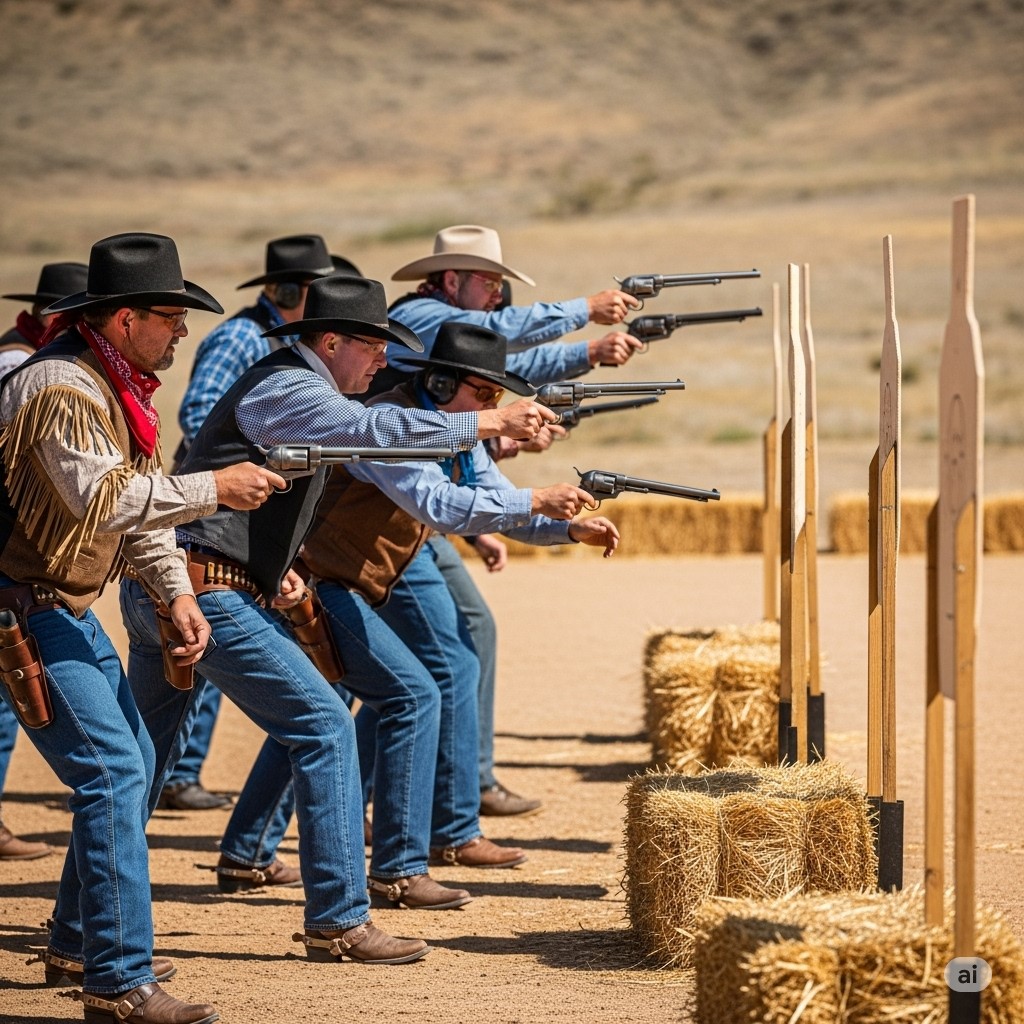
The Thrilling World of Cowboy Action Shooting: A Complete Guide
Cowboy Action Shooting is a fast-paced, nostalgic shooting sport. It blends marksmanship, role-playing, and Old West flair. In recent years, it has seen a resurgence across many countries. People of all ages join to experience the excitement of the Wild West. This blog will explore its origins, global spread, amateur involvement, professional leagues, and cultural impact.
Origins and History of Cowboy Action Shooting
The roots of Cowboy Action Shooting trace back to the early 1980s in the United States. A group of enthusiasts in Southern California formed the Single Action Shooting Society (SASS) in 1987. Their goal was to recreate Old West-style gunfights using period-accurate firearms and attire.
Participants used single-action revolvers, lever-action rifles, and shotguns. Each weapon mirrored those used in the late 1800s. The goal was not only accuracy but also style and speed. Early matches had few rules but emphasized authenticity. Shooters adopted Old West personas and dressed in cowboy attire.
By the mid-1990s, SASS had thousands of members. Events began to pop up across the U.S. Historical reenactments combined with shooting sports attracted a unique audience. It wasn’t just about hitting targets. It was about living history.
The founders saw the sport as more than just shooting. They envisioned it as a lifestyle. Members began to build sets resembling old frontier towns. Shooters performed scenarios based on real or fictional events. The integration of storytelling gave the sport its unique flavor.
Global Popularity and Locations
Today, Cowboy Action Shooting is practiced in over 20 countries. Nations like Canada, Australia, Germany, and the United Kingdom host major events. Japan and South Africa also have thriving communities. The SASS now has international chapters that promote the sport abroad.
Europe in particular has embraced the sport’s theatrical elements. Events in Germany and France attract hundreds of shooters and spectators. Many local shooting clubs host annual cowboy-themed competitions.
Australia’s version of Cowboy Action Shooting has a strong following. Clubs under the Single Action Shooting Australia (SASA) mirror the U.S. model. Matches include traditional costumes and old-time scenarios.
In Canada, clubs operate under the Wild Bunch and SASS rules. Canadian shooters compete in national and international events. They often travel to the U.S. to participate in major championships.
In Japan, the sport has adapted to local culture while keeping the essence of the Old West. Though firearm laws are strict, participants use airsoft and replica guns to compete. This adaptation has expanded the sport’s reach.
Amateur Participation and Youth Involvement
Cowboy Action Shooting isn’t limited to professionals. Amateurs play a crucial role in its growth. Most local clubs welcome beginners with little or no experience. Introductory events teach safety, firearm basics, and costuming.
Newcomers often start with borrowed gear. This allows them to try the sport before investing in equipment. Many clubs offer mentorship programs for beginners. These initiatives help new shooters feel comfortable and build confidence.
Youth participation is also growing. Programs like SASS’s Young Guns and Buckaroos engage shooters under 18. Safety is the highest priority. All youth matches are closely supervised. Young participants learn responsibility, focus, and discipline.
Some schools, especially in rural communities, offer shooting sports as extracurricular activities. Clubs often partner with schools to introduce students to the sport. These youth leagues use scaled-down scenarios and lighter firearms.
Family involvement is common. Parents and children often shoot in the same events. This shared experience strengthens community ties and promotes family bonding.
Professional Leagues and Global Organizations
Though largely amateur, Cowboy Action Shooting has seen a rise in professional circuits. The Single Action Shooting Society remains the most recognized body. It sanctions regional, national, and world championship events.
The End of Trail is the sport’s premier championship. Held annually in Arizona, it gathers top shooters worldwide. The event features multiple stages, each with elaborate props and storylines. Competitors shoot for both speed and accuracy.
Australia’s SASA organizes state and national championships. Winners often gain international recognition. Their events mirror the same structure as SASS-sanctioned matches.
In Germany, the Western Shooting Federation (WSF) runs professional-level events. These matches are known for their historical detail and intense competition. European teams often travel to the U.S. for the End of Trail.
Japan’s airsoft-based leagues are growing quickly. While not using live ammunition, these matches follow the same principles. Shooters are judged on speed, accuracy, and authenticity. The Japanese leagues maintain close ties with international groups.
While Cowboy Action Shooting lacks a singular global league, its community is tight-knit. International competitions help bridge the gap between amateur and professional levels.
Social and Political Significance
Cowboy Action Shooting holds unique social and political significance. Culturally, it preserves elements of American frontier history. Participants immerse themselves in a time when personal honor and community values were central.
The sport promotes historical education. Shooters often study 19th-century American history to create authentic personas. Many events include historical talks, exhibits, and storytelling.
Politically, Cowboy Action Shooting is tied to Second Amendment advocacy in the U.S. Supporters often emphasize responsible gun ownership and safety. Organizations like SASS lobby for shooting sports rights.
Outside the U.S., the sport remains largely apolitical. However, it often intersects with heritage and identity. In Australia and Canada, it reinforces pioneer roots. In Europe, it celebrates the mythos of the American West.
Socially, the sport fosters strong community bonds. Events are family-friendly and inclusive. Clubs often support charitable causes. Many donate proceeds to local schools, veterans’ groups, and emergency services.
The sport has also become a medium for creative expression. Participants write stories, design costumes, and build elaborate sets. This artistic element makes the sport accessible to people beyond traditional shooting communities.
Rules of Cowboy Action Shooting
Cowboy Action Shooting follows a strict but fun rule set. Shooters use firearms from the late 1800s or their modern replicas. Each participant needs two revolvers, one lever-action rifle, and one shotgun.
Matches are divided into stages. Each stage presents a unique scenario. These scenarios often involve storytelling elements. Shooters must complete tasks like rescuing hostages or defending a stagecoach.
Targets are usually steel plates. Competitors shoot from designated positions. Time and accuracy determine scores. Penalties are given for missed targets or safety violations.
Shooters must dress in period-correct clothing. This includes cowboy hats, boots, and Old West outfits. Each participant adopts an alias, often inspired by Western movies or history.
Safety is paramount. All shooters must undergo safety briefings before matches. Range Officers supervise every stage. Firearms are inspected before use. Muzzle control and trigger discipline are strictly enforced.
There are several shooting categories. Examples include Traditional, Duelist, and Gunfighter. Each has unique rules about how firearms are held and fired. Youth categories like Buckaroo and Young Gun offer simplified rules.
Props like saloon doors, wagons, and jail cells enhance the experience. However, props must not interfere with shooter safety. All stages are designed with safety as the top priority.
Stage design is another critical aspect. Match directors build scenarios that test different skills. Some emphasize speed. Others focus on precision. Creative scenarios keep the sport fresh and engaging.
Scores are tallied at the end of each match. Winners receive trophies, ribbons, or even cash prizes. However, the community aspect often overshadows competition. Camaraderie is valued more than victory.
Conclusion
Cowboy Action Shooting offers a unique blend of sport, history, and theater. It appeals to people from all walks of life. Whether a seasoned marksman or a curious beginner, there is a place in this sport for everyone.
The sport’s rich history roots it in American culture. Its global reach proves its universal appeal. Amateur and youth programs ensure its future is bright. Professional leagues and international events bring recognition and prestige.
Most importantly, Cowboy Action Shooting builds community. It educates, entertains, and inspires. In a modern world, it offers a chance to step back in time. Through this sport, the spirit of the Old West lives on.