
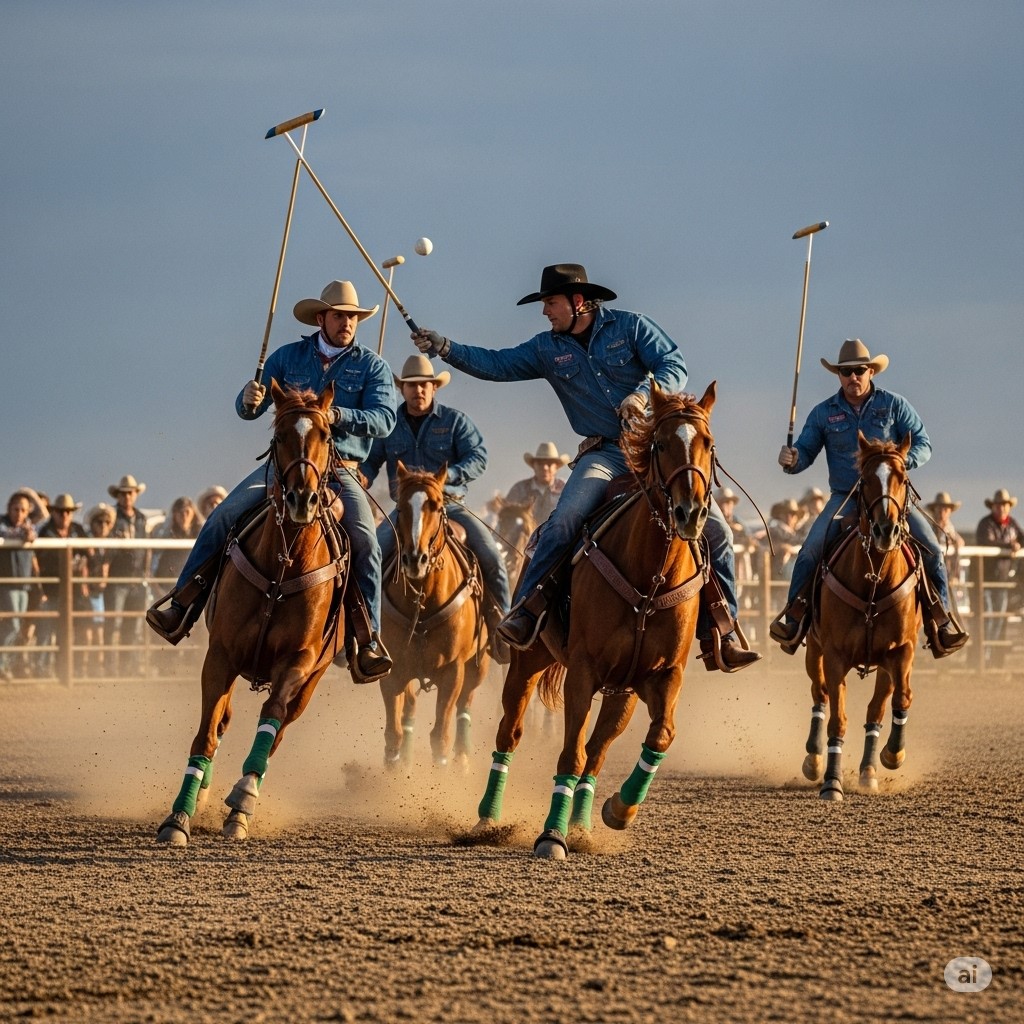
Cowboy Polo: A Unique Blend of Western Tradition and Team Sport
Cowboy Polo is a thrilling sport that blends the rugged excitement of rodeo with the structure of traditional polo. It offers a fast-paced and physically demanding experience. Originating in the United States, it has carved a niche in equestrian and Western sporting culture. This blog post will explore the sport’s fascinating history, current reach, amateur and youth engagement, professional leagues, and its social and political impact. Alongside, a detailed explanation of the rules will be provided to offer a comprehensive view. The term “Cowboy Polo” will guide this journey.
The Origins and History of Cowboy Polo
It began in the 1940s in the American West. Ranchers and cowboys sought a competitive and entertaining sport that could be played on horseback. They adapted traditional polo, swapping elegant thoroughbreds and refined mallets for sturdy western horses and homemade gear. The first known matches took place in New Mexico and Arizona.
This grassroots beginning quickly gained attention in local rodeo communities. Enthusiasts embraced the game’s rough-and-tumble nature. Unlike traditional polo, the sport emphasized cowboy values: resilience, horsemanship, and grit. Its origin reflects a creative spirit and deep connection to Western ranching culture.
By the 1950s, organized Cowboy Polo clubs had emerged. These clubs set basic rules, standardized equipment, and organized regional tournaments. Over time, the sport saw increased participation across the Southwest and gradually spread into surrounding states.
Global Popularity and Geographic Reach of Cowboy Polo
Although it started in the United States, its appeal has extended internationally. Western lifestyle festivals in Canada, Australia, and parts of Europe now feature exhibition matches. These events introduce the sport to broader audiences.
In Canada, especially in Alberta and British Columbia, Cowboy Polo has gained a modest following. Western heritage plays a vital role in these areas. Therefore, the sport fits naturally into local traditions. In Australia, outback regions have embraced it as part of rodeo competitions.
European interest remains small but passionate. Countries such as Germany and the United Kingdom host Cowboy Polo as a novelty sport during equestrian and Western-themed events. Online platforms and social media have helped build a small yet connected global community of players and fans.
Despite its limited presence globally, it continues to grow through cultural exchange and international collaboration. Clubs often invite foreign players to tournaments, fostering interest and skill-sharing across borders.
Amateur Cowboy Polo and Youth Participation
Amateur Cowboy Polo thrives in rural communities, especially in the western and southwestern United States. Local clubs often operate as nonprofit organizations. Volunteers run them, and they focus on community engagement and horsemanship.
High school clubs and 4-H organizations in states like Texas, New Mexico, and Wyoming have adopted the sport. These programs teach teamwork, riding skills, and sportsmanship. Schools sometimes incorporate Cowboy Polo into agricultural and vocational education.
Youth leagues are essential to the sport’s future. They offer structured development pathways. Beginners start with horsemanship training and progress to competitive play. Parental support and school involvement help sustain these youth programs.
College clubs also exist, though less commonly. A few universities with strong agricultural programs have formed Cowboy Polo teams. These teams often compete in regional leagues and serve as ambassadors for the sport on campus.
Community rodeo events frequently include amateur Cowboy Polo matches. These games entertain local crowds and showcase homegrown talent. They also provide an entry point for young riders to join the sport.
Professional Leagues and Global Structure
Professional Cowboy Polo remains relatively niche. However, several regional leagues have emerged to elevate competition. The American Cowboy Polo Association (ACPA) leads these efforts. Based in Texas, the ACPA organizes tournaments, enforces rules, and promotes the sport.
Another key organization is the Western Equestrian Sports Federation (WESF). This group focuses on integrating Cowboy Polo into broader equestrian events. Their partnerships with rodeo circuits have brought the sport to large audiences.
A handful of semi-professional teams exist in the United States. These teams often receive sponsorships from local businesses and western apparel brands. They participate in seasonal leagues and exhibition matches.
In Canada, the Cowboy Polo League of Alberta (CPLA) manages organized play. While still small, this league hosts annual championships and coordinates with American leagues for cross-border tournaments.
Although no major global league exists, discussions are ongoing about forming an international federation. Such a body could standardize rules, sanction international events, and develop a World Cowboy Polo Championship.
Political and Social Significance of Cowboy Polo
Cowboy Polo represents more than just a sport. It serves as a cultural symbol of rural America. Through this lens, it carries political and social weight.
In rural communities, the sport reinforces traditional values. It celebrates hard work, teamwork, and resilience. Participation often brings families together and strengthens local identity.
Politically, the sport highlights the importance of preserving rural lifestyles. Advocates use it to draw attention to land rights, agricultural education, and youth development programs. Cowboy Polo events sometimes align with community fundraisers and awareness campaigns.
Socially, the sport promotes inclusivity and mentorship. Young riders often learn from seasoned cowboys. Intergenerational participation builds community bonds. Many clubs welcome riders from diverse backgrounds, encouraging broad involvement.
Media coverage of Cowboy Polo has also grown. Documentaries and social media features have shed light on the sport’s deeper meaning. These portrayals help challenge urban misconceptions about rural life.
Rules and Gameplay Explained
It is played on horseback with two teams, each consisting of four players. The game takes place on a rectangular dirt or grass field, usually about 200 feet by 100 feet.
The objective is to score goals by hitting a ball through the opposing team’s goalposts. Players use a sturdy, rubber-headed mallet. The ball is typically a rubber or leather-covered softball.
Each match consists of six periods called chukkers, each lasting six minutes. Teams switch ends after each chukker. Games are fast-paced and require agility, coordination, and precise horsemanship.
Players must ride Western-style saddles and wear protective gear. Helmets, boots, and sometimes padded vests are mandatory. Horses should be well-trained and accustomed to sudden stops and tight turns.
Fouls include reckless riding, dangerous swings, and unsportsmanlike conduct. Penalties range from free shots to player disqualification. Referees enforce rules and ensure safety.
Substitution is allowed between chukkers. This allows players to switch horses and stay fresh. Proper horse care is emphasized, and overworking an animal can result in penalties.
Tactics include marking opponents, passing strategically, and anticipating ball movement. Communication and teamwork are crucial. Players often develop strong bonds with their teammates and horses.
Final Thoughts
Cowboy Polo is a vibrant sport with deep cultural roots and growing global appeal. From its humble origins to its emerging professional leagues, the sport continues to evolve. It offers meaningful opportunities for youth engagement, community building, and international exchange.
Despite its niche status, Cowboy Polo plays a vital role in preserving Western traditions. Its unique blend of athleticism, strategy, and horsemanship makes it both challenging and rewarding. As awareness grows, so too will the sport’s impact and reach.