
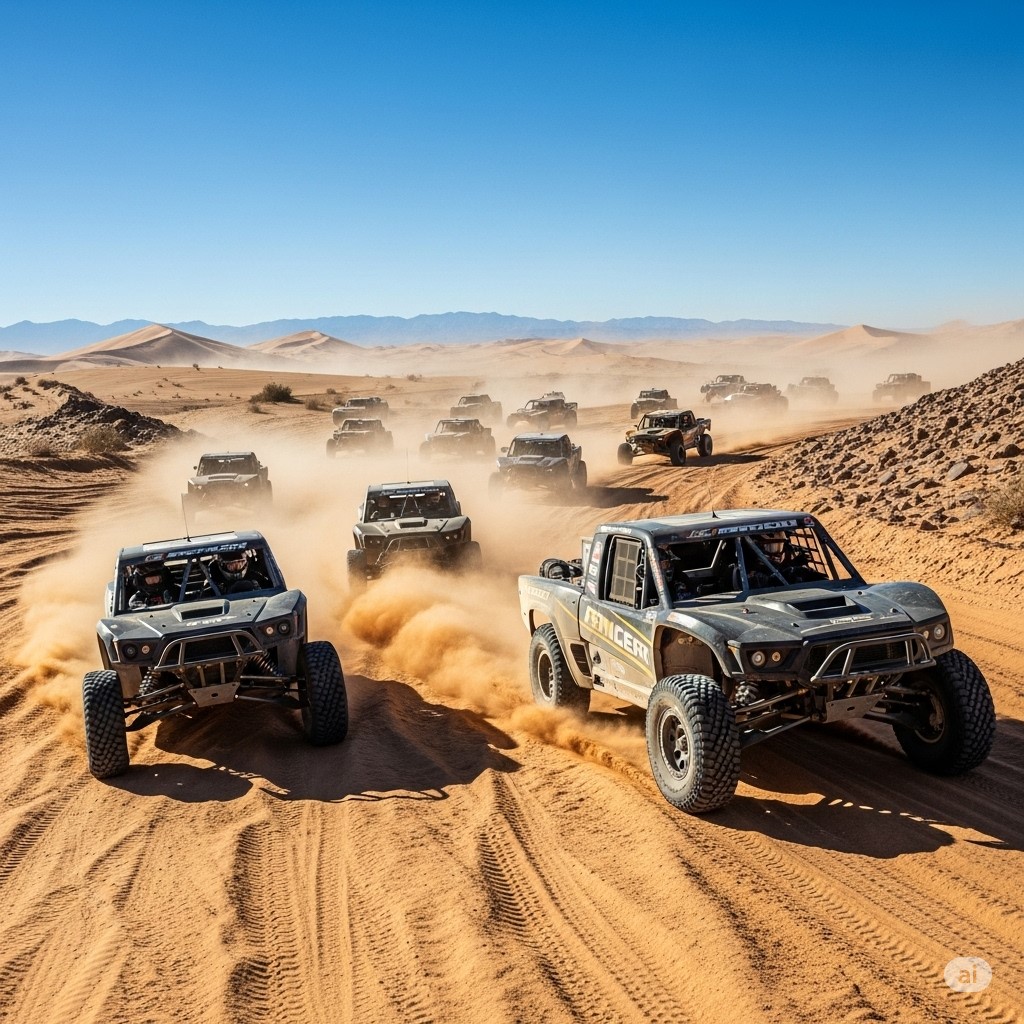
The Thrill and Legacy of Desert Racing
Desert racing is a motorsport that captures the spirit of adventure and resilience. This high-octane sport combines speed, skill, and endurance across challenging terrains. While it may not receive the same spotlight as Formula 1 or NASCAR, desert racing has carved a unique niche globally. It boasts a rich history, enthusiastic communities, and unparalleled excitement for competitors and spectators alike. In this blog post, we will explore the fascinating origins, global reach, and the impact of desert racing both socially and politically. From youth leagues to professional circuits, desert racing’s legacy continues to grow with every roaring engine.
The Origins and History
Desert racing’s roots trace back to the early 20th century. Adventure seekers in the United States and parts of Africa began testing the limits of vehicles across desert landscapes. These early competitions were informal and driven by curiosity rather than organized sportsmanship.
In the mid-1900s, the sport gained momentum in Baja California, Mexico. The inaugural Baja 1000, held in 1967, solidified the region as a desert racing hub. Enthusiasts from across North America participated, cementing the event’s legendary status. Over time, technological advancements in vehicles allowed racers to conquer harsher conditions, fueling the sport’s popularity.
During the 1980s, the Paris-Dakar Rally emerged as another iconic event. Starting in Paris and ending in Dakar, Senegal, it showcased international talent and innovation. Despite logistical and political challenges, the rally became synonymous with endurance and adventure. By the 21st century, the event moved to South America and later Saudi Arabia, expanding its global footprint.
The Global Popularity
Desert racing thrives across continents, drawing participants and fans from diverse cultures. The sport’s appeal lies in its raw nature, where human and machine face unyielding environments.
In North America, events like the Baja 1000 and Mint 400 attract thousands annually. Enthusiasts gather in Nevada and California to witness thrilling races. Similarly, Africa’s rich desert landscapes host renowned events such as the Africa Eco Race. These competitions honor the Paris-Dakar Rally’s spirit while promoting sustainability.
In the Middle East, desert racing enjoys immense cultural significance. Countries like Saudi Arabia, the UAE, and Qatar host prestigious rallies. The Abu Dhabi Desert Challenge and Qatar Cross-Country Rally are highlights in the region. These events showcase cutting-edge vehicles and exceptional driving skills.
Europe contributes to desert racing’s growth through events like the Andalucía Rally in Spain. Competitors often use these events to prepare for larger international challenges. Meanwhile, South America, with its vast and varied terrain, remains a favorite for rally enthusiasts. Bolivia, Argentina, and Chile have all hosted stages of the Dakar Rally.
Amateur Desert Racing Across the Globe
Amateur desert racing provides an accessible entry point for budding racers. Community events and local clubs foster a passion for the sport, particularly among youth.
In North America, grassroots leagues organize small-scale races. These events cater to beginners, offering categories for different vehicle types. Families often participate together, passing down skills to younger generations. Youth leagues introduce children to racing fundamentals. Schools in states like Arizona and California have even integrated off-road mechanics into extracurricular programs.
In Africa, communities celebrate desert racing as both sport and tradition. Young drivers train using modified vehicles, honing their skills on challenging terrains. Local races often double as social gatherings, strengthening community bonds.
The Middle East emphasizes youth participation through initiatives supported by royal families and private sponsors. Training programs teach safety, navigation, and driving techniques. Competitions such as the Saudi Youth Desert Challenge encourage young talent to embrace the sport.
In Europe, amateur events focus on rally-style racing. Many aspiring racers gain experience in controlled environments before tackling deserts abroad. South America’s vibrant racing culture inspires young enthusiasts to dream big. Events in regions like Atacama and Patagonia provide ample opportunities for amateurs.
Professional Leagues and Circuits in Desert Racing
Professional desert racing has evolved into a global spectacle. Prestigious leagues and circuits attract elite racers and significant sponsorships.
The Dakar Rally remains the pinnacle of professional desert racing. Its grueling stages push participants to their limits, demanding unparalleled stamina and skill. Competitors race across dunes, mountains, and plains, showcasing exceptional talent.
In North America, SCORE International organizes premier events. The Baja 1000, Baja 500, and San Felipe 250 are key fixtures. These races feature categories for motorcycles, trucks, and buggies, ensuring diverse competition.
The FIA World Cup for Cross-Country Rallies is another major platform. Sanctioned by the International Automobile Federation, it includes events across Europe, Asia, and the Middle East. Drivers earn points based on performance, vying for the coveted championship.
The Middle East boasts leagues like the UAE Desert Championship. These events blend tradition with modernity, drawing participants from across the globe. African races, such as the Africa Eco Race, emphasize environmental consciousness alongside competition.
The Social and Political Impact
Desert racing holds significant social and political relevance. It unites communities, fosters innovation, and highlights environmental concerns.
Socially, the sport brings people together. Events serve as cultural celebrations, blending local traditions with modern entertainment. Families and friends gather to support racers, creating lifelong memories. In regions like North Africa and the Middle East, desert racing reinforces cultural pride.
Politically, desert racing has often been a platform for showcasing national capabilities. Countries hosting major rallies gain international recognition. These events also boost tourism and economic development. For instance, Saudi Arabia’s investment in the Dakar Rally highlights its Vision 2030 goals. The initiative seeks to diversify the economy and promote global engagement.
Additionally, desert racing raises awareness about environmental preservation. Modern rallies incorporate eco-friendly practices, reducing their carbon footprint. Events like the Africa Eco Race advocate sustainable racing, balancing competition with conservation.
Rules and Regulations of Desert Racing
Desert racing follows strict rules to ensure fairness and safety. While variations exist across events, several principles are universal.
Participants must adhere to designated routes. Navigational tools like GPS devices assist racers in staying on course. Deviations can result in penalties or disqualification.
Vehicles undergo rigorous inspections before races. Organizers ensure compliance with technical specifications and safety standards. Equipment such as roll cages, fire extinguishers, and helmets is mandatory.
Competitors must demonstrate sportsmanship. Unsporting behavior, such as tampering with rivals’ vehicles, leads to severe consequences. Assistance among racers is encouraged, especially in emergencies.
Time management plays a crucial role. Racers strive to complete stages within allotted times while avoiding penalties. Organizers enforce speed limits in sensitive areas to protect wildlife and preserve the environment.
Desert racing’s appeal lies in its blend of thrill and discipline. These rules maintain the sport’s integrity while prioritizing participants’ safety.
Conclusion
Desert racing represents a celebration of human ingenuity and resilience. Its rich history, global appeal, and community-driven nature make it a standout motorsport. From amateur leagues to professional circuits, the sport continues to inspire generations. Beyond the adrenaline, desert racing fosters unity and cultural pride while addressing environmental challenges. As it evolves, desert racing will undoubtedly leave an indelible mark on the world of sports.




