
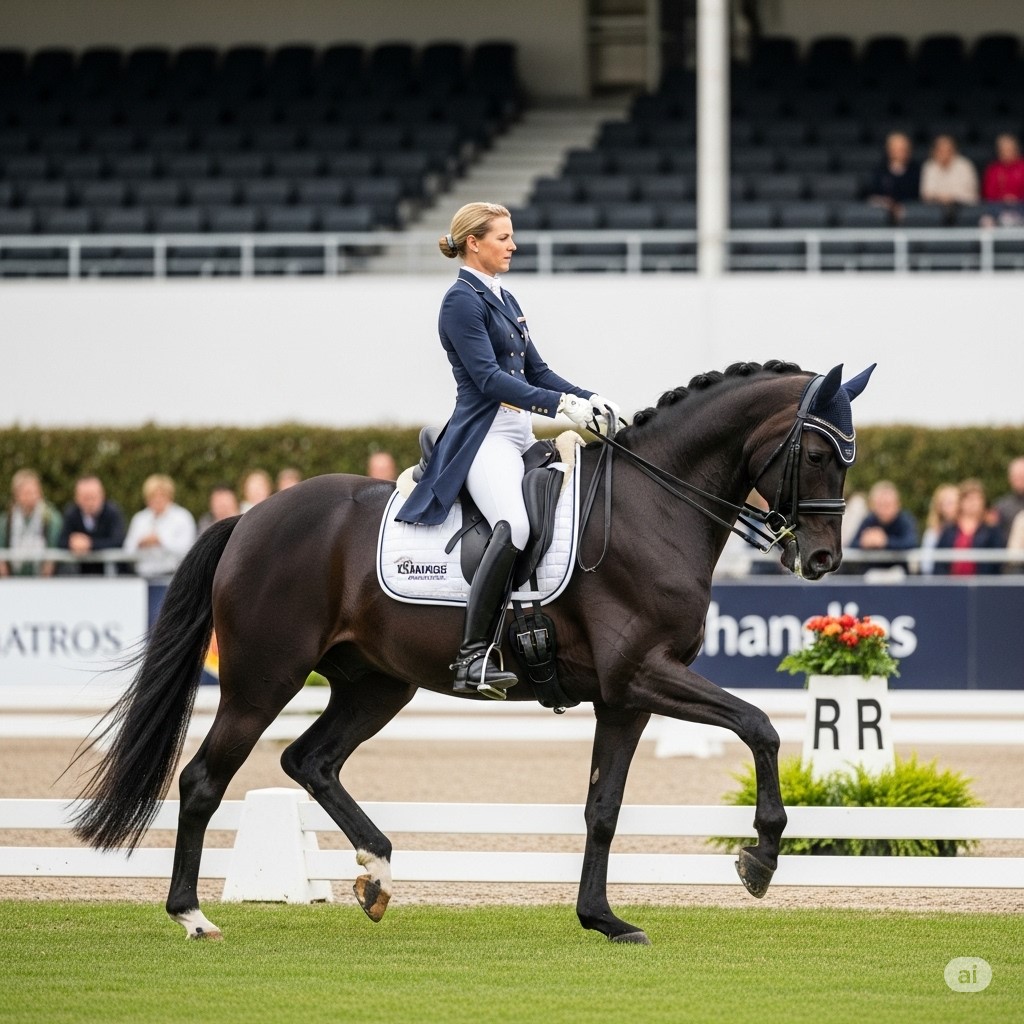
The Art and Sport of Dressage: A Complete Guide
Dressage is often referred to as the ballet of equestrian sports. It combines athletic precision with artistic elegance. This sport has captivated audiences worldwide for centuries. Dressage involves horse and rider performing a series of predetermined movements known as “tests.” These movements appear effortless but require years of training and trust. The grace, harmony, and discipline shown in Dressage create a powerful connection between horse and rider.
Origins and Historical Evolution
Dressage dates back to ancient Greece. Xenophon, a Greek soldier and philosopher, wrote about training horses for battle around 400 B.C. His writings laid the foundation for classical horsemanship. Later, during the Renaissance, riding became a sophisticated art form in European royal courts. Italian and French riding academies refined techniques that emphasized control, balance, and fluidity.
By the 17th century, Dressage had become integral to military training. The Spanish Riding School of Vienna, founded in 1572, formalized many elements still used today. Its Lipizzaner stallions are world-renowned for performing intricate maneuvers that showcase Dressage at its finest.
In the early 20th century, the sport shifted from a military necessity to a competitive discipline. Dressage debuted at the 1912 Stockholm Olympics. Initially reserved for military officers, it opened to civilians after World War II. This democratization sparked widespread interest and rapid development.
Global Popularity and Geographic Distribution
Dressage enjoys a strong international presence. Europe remains its heartland, with Germany, the Netherlands, and the United Kingdom leading the charge. Germany has produced many Olympic and World Champions. The Netherlands is known for elegant horses and innovative training techniques. The UK has invested heavily in equestrian sports, producing top-tier riders.
In North America, Dressage continues to grow. The United States Equestrian Federation (USEF) governs the sport nationally. Canada also supports a vibrant Dressage community through Equestrian Canada.
In Asia, Japan and South Korea have seen increased interest. Japan has hosted international competitions and developed strong national teams. South Korea invests in equestrian infrastructure and youth development.
Australia and New Zealand also boast thriving Dressage scenes. Both countries participate regularly in international competitions. Their isolated locations have not hindered enthusiasm or skill development.
South America shows promise as well. Brazil, Argentina, and Chile have burgeoning equestrian cultures. Brazil hosted equestrian events during the 2016 Olympics, raising the sport’s profile across the continent.
Amateur Dressage and Youth Participation
Amateur Dressage thrives across the globe. Local and regional clubs support entry-level riders. Many countries have organizations that provide guidelines, competitions, and mentorship. In the United States, the United States Dressage Federation (USDF) supports amateur riders with resources and event listings.
Youth involvement is key to the sport’s longevity. Pony Clubs and 4-H programs introduce children to Dressage early. These organizations emphasize sportsmanship, horse care, and basic training. Riders learn discipline and build confidence as they progress.
Schools and academies offer specialized programs. Some boarding schools integrate equestrian sports into their curriculum. Europe has numerous equestrian schools that groom young talent for future competition. Scholarships and youth championships motivate participation.
Virtual platforms also enable remote learning. Online courses, webinars, and virtual shows have expanded access. This digital shift has become especially important since the COVID-19 pandemic.
Professional Leagues and International Competitions
Professional Dressage is governed by the International Federation for Equestrian Sports (FEI). The FEI sets rules and oversees major competitions. The highest levels include the Grand Prix, Grand Prix Special, and Grand Prix Freestyle.
The Olympic Games represent the pinnacle of professional competition. Dressage has been part of the Olympics since 1912. Riders and teams compete for individual and national glory. Germany, the Netherlands, and Great Britain often dominate the podium.
The World Equestrian Games occur every four years. They include all FEI disciplines and draw global audiences. Riders compete in Dressage, Jumping, Eventing, and more.
The FEI World Cup is another major event. It includes a series of qualifying rounds culminating in a final. Riders perform freestyle routines set to music, showcasing creativity and technical skill.
In Europe, the CDI (Concours Dressage International) circuit offers regular high-level competition. Riders earn points and rankings that influence international standings.
National leagues also support professional development. The United States has its Dressage Finals and regional championships. Germany and the Netherlands offer rigorous national competitions that feed into international rankings.
Political and Social Significance
Dressage holds cultural significance beyond sport. Historically, it represented nobility and military prowess. Today, it symbolizes discipline, grace, and partnership. The sport breaks down social barriers by promoting inclusivity and mutual respect.
Countries invest in equestrian programs to boost tourism and international reputation. Hosting events like the Olympics or World Games elevates national prestige. Government support often includes funding for training centers and youth outreach.
Socially, Dressage fosters community. Riders, trainers, and fans form strong networks. Many equestrian centers offer therapy programs. Equine-assisted therapy helps individuals with physical or emotional challenges. Dressage movements, in particular, promote body awareness and coordination.
Gender equality is also a highlight. Men and women compete on equal footing. Many of the world’s top Dressage riders are women, including Olympic champions. This parity sets a strong example for other sports.
Environmental concerns have also come into play. Sustainable farming practices and ethical horse care are emphasized. Events increasingly follow green protocols to reduce their ecological footprint.
Detailed Rules and Competition Structure
Dressage competitions consist of a series of tests. Each test includes a sequence of movements judged on accuracy, rhythm, and harmony. Riders perform in a 20×60 meter arena with lettered markers. These markers indicate where movements should be executed.
Tests are divided by levels: Introductory, Training, First, Second, Third, and Fourth Levels. Above these are the FEI levels: Prix St. Georges, Intermediate I and II, and Grand Prix. Each level builds on the complexity of the previous one.
Judges score each movement on a scale from 0 to 10. A score of 10 signifies excellence, while 0 means not performed. Comments accompany scores to guide improvement. Collective marks evaluate gait, impulsion, submission, and rider position.
Penalties occur for errors such as wrong movements or deviations. Three errors in one test can lead to elimination. Riders must wear proper attire, including a helmet, jacket, gloves, and breeches. Horses must be clean, well-groomed, and properly tacked.
The Freestyle test allows riders to choose music and choreography. It combines technical skill with artistic interpretation. Judges evaluate both components. Creativity, rhythm, and harmony are essential.
To qualify for higher-level tests, riders must earn minimum scores at lower levels. This ensures progression and skill development. Many competitions offer team and individual formats. National federations maintain ranking systems and qualification pathways.
Time limits vary by test but typically range from 4 to 6 minutes. Precision and timeliness are critical. Late entries or off-course riding can result in penalties.
Conclusion
Dressage offers a unique blend of sport and art. Its rich history and global appeal continue to grow. From ancient battlefields to Olympic arenas, the journey has been extraordinary. Riders of all ages and skill levels can find purpose and community in Dressage. The sport rewards patience, discipline, and connection with the horse. As technology and outreach expand, so does its accessibility. Dressage remains a shining example of what harmony between human and animal can achieve.