
The Art and Legacy of Egyptian Stick Fencing: A Deep Dive into History, Rules, and Modern Impact
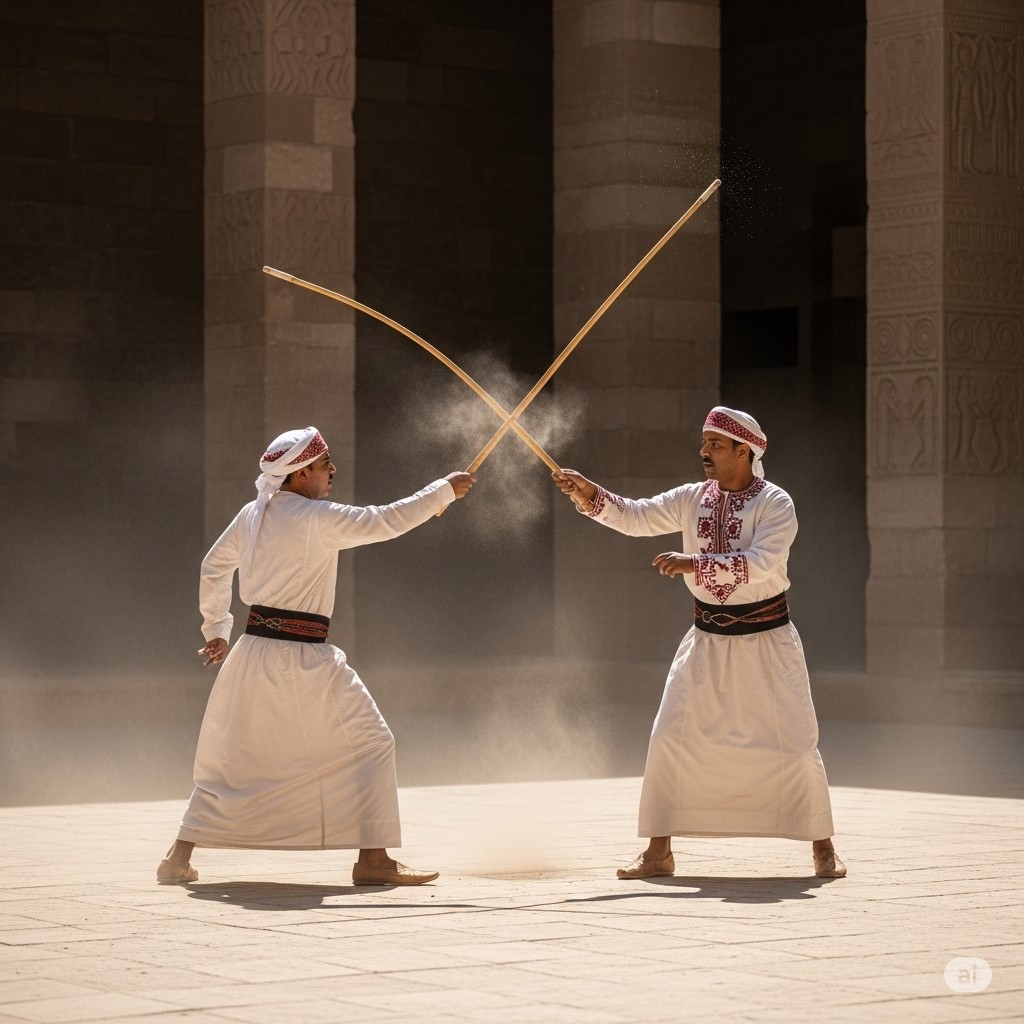
Egyptian Stick Fencing is more than just a sport. It is a cultural expression, an ancient tradition, and a martial art wrapped in rhythm and grace. This traditional combat dance, deeply rooted in Egyptian heritage, has transcended its folk origins to emerge as a recognized sport. The rhythmic clack of sticks, the calculated footwork, and the ceremonial attire make it as theatrical as it is competitive. In this blog post, we will explore the fascinating origin and evolution of Egyptian Stick Fencing, its global popularity, the amateur and professional scenes, its societal significance, and the rules that govern it.
The Origins and History of Egyptian Stick Fencing
Egyptian Stick Fencing, known locally as “Tahtib,” dates back over 5,000 years. Archaeologists have discovered depictions of the sport in ancient tombs in Saqqara. These illustrations show pairs of men holding sticks in what appears to be ritualized combat. It was originally practiced as both a form of training for warriors and a ceremonial performance.
The sport has always had two layers: martial and cultural. On one side, it served as a non-lethal method for tribes to resolve disputes. On the other, it was an essential part of celebrations and festivals. During the Pharaonic era, stick fencing was often performed during public gatherings to honor gods or commemorate events.
As centuries passed, Egyptian Stick Fencing retained its place in society. It survived the Greco-Roman period, the Islamic caliphates, and colonial occupations. Each era added subtle changes. However, the sport’s core—honor, rhythm, and skill—remained unchanged.
Global Popularity and Spread
Despite its deeply regional origins, Egyptian Stick Fencing has garnered attention beyond Egypt’s borders. Cultural exchange programs, international martial arts festivals, and tourism have played significant roles in spreading awareness.
In Europe, cultural enthusiasts and martial artists alike have adopted it. France, Germany, and the United Kingdom have small but passionate communities. In North America, Egyptian cultural centers and diaspora communities have kept the practice alive. Demonstrations during heritage festivals often attract large crowds.
Additionally, UNESCO designated Tahtib as an Intangible Cultural Heritage of Humanity in 2016. This recognition sparked renewed interest in the sport. Since then, more documentaries, research papers, and global workshops have emerged.
Asian martial arts practitioners, especially in Japan and China, have studied Egyptian Stick Fencing to understand its unique choreography. Their interest comes from the sport’s ceremonial aspects, which resonate with their own traditions.
Amateur Play: Youth and Schools
In Egypt, amateur Egyptian Stick Fencing thrives in both rural and urban settings. Community centers and youth clubs often teach the sport. In Upper Egypt, many villages hold informal tournaments during local festivals. Young boys begin learning the basic stances and rhythms as early as age six.
Schools in Egypt have also integrated the sport into extracurricular activities. Teachers use it to instill discipline, coordination, and respect for cultural heritage. Unlike other sports, Egyptian Stick Fencing emphasizes humility and honor, which aligns with educational goals.
Private organizations and NGOs have further promoted the sport among youth. They organize summer camps and weekend workshops, especially targeting underprivileged areas. These programs offer an alternative to street life and help preserve national identity.
Outside Egypt, community-based classes have appeared in cities with large Egyptian populations. In New York, Toronto, and Paris, weekend schools teach children the basics of Egyptian culture, including stick fencing. Parents find this a valuable way to maintain a connection to their roots.
Professional Leagues and Global Competition
Professionalization of Egyptian Stick Fencing is a recent development. Traditionally, it was never a commercial sport. However, increasing global interest has led to formal structures being established.
The Egyptian Traditional Martial Arts Federation (ETMAF) was formed in the early 2000s. It sets standards, oversees training certifications, and hosts national championships. Participants from all over Egypt compete in these annual events. Winners gain recognition and occasionally sponsorships.
Internationally, countries like France and Canada have founded their own leagues. These leagues operate under guidelines inspired by the ETMAF but adapted to local preferences. They organize regional tournaments, skill development workshops, and cultural exhibitions.
World Stick Martial Arts Championships, held every two years, have included a special category for Egyptian Stick Fencing since 2018. This inclusion marked a turning point, establishing it as a legitimate global sport.
Television networks in the Middle East now broadcast high-level matches. Sponsorship deals are emerging, and professional players are beginning to earn modest incomes. While it is not yet as commercial as boxing or fencing, it is steadily gaining ground.
Political and Social Significance
Egyptian Stick Fencing has always held more than recreational value. Politically, it symbolizes national pride and continuity. In times of social upheaval, public performances often serve as reminders of Egypt’s enduring culture.
During the 2011 revolution, for instance, many public squares witnessed spontaneous Tahtib demonstrations. These performances were not acts of protest but rather expressions of unity and cultural identity.
Socially, the sport functions as a rite of passage in many rural communities. It teaches young men values like respect, courage, and restraint. Elders often supervise matches, ensuring they remain respectful and symbolic rather than violent.
Gender dynamics are also evolving. Historically male-dominated, the sport has seen increasing female participation. Women’s teams have formed in Cairo and Alexandria, challenging traditional norms and expanding the sport’s reach.
Cultural diplomacy efforts have further elevated the sport’s social role. Embassies and cultural institutes use it to bridge understanding between nations. Demonstrations during international summits and cultural fairs foster goodwill and highlight Egypt’s soft power.
Rules and Gameplay of Egyptian Stick Fencing
The game is played between two competitors, each holding a stick approximately four feet long. These sticks are made from rattan or similar light, flexible wood. Players face each other in a circle, often surrounded by drummers and spectators.
Matches are usually three to five minutes long. The objective is not to injure but to demonstrate skill, control, and rhythm. Strikes aim for the opponent’s head or shoulders but must be controlled. Excessive force results in penalties.
A panel of judges evaluates each round. Points are awarded based on technique, style, control, and audience engagement. Unlike Western fencing, contact is not the sole determinant of success. Aesthetics and tradition play key roles.
There are specific stances and movements all players must learn. For example, the “standing camel” stance shows readiness, while the “falcon strike” is a high-speed downward swing. Footwork is just as critical as hand movement. Players must remain balanced, poised, and reactive.
Protective gear is minimal in amateur matches but required in professional bouts. Helmets and padded vests are standard. This ensures safety without compromising the sport’s visual elegance.
Music is integral to gameplay. Traditional drums and flutes accompany each match, setting rhythm and pace. Players move in time with the music, creating a performance that blends combat with dance.
Referees and judges are typically experienced players or cultural custodians. Their decisions carry weight, as they maintain the sport’s integrity and authenticity. Disputes are rare and usually resolved respectfully.
Conclusion: The Living Legacy of Egyptian Stick Fencing
Egyptian Stick Fencing continues to evolve without losing its essence. It remains a living tradition, practiced in villages, showcased on global stages, and studied in academic circles. As a sport, it offers physical challenge, cultural richness, and deep symbolism.
Its spread across continents highlights the universal appeal of discipline, honor, and tradition. Whether played by children in rural Egypt or demonstrated in a European cultural festival, the sport connects people to something timeless.
As global recognition grows, so too will opportunities for professionalization, education, and cultural exchange. Egyptian Stick Fencing is not just surviving—it is thriving.
Its rhythmic strikes echo not just through courtyards and arenas, but through the collective memory of a civilization proud of its past and optimistic about its future.