
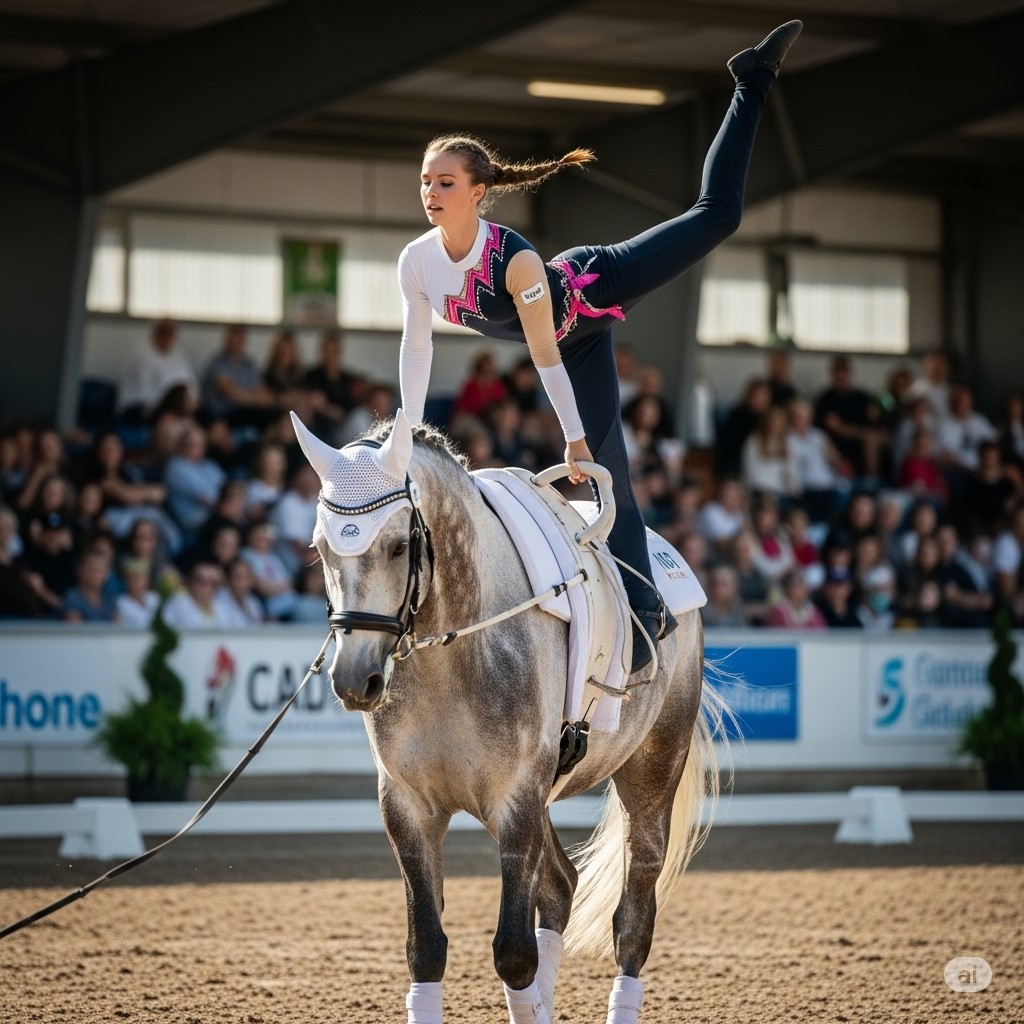
Equestrian Vaulting: A Unique Blend of Gymnastics and Horsemanship
Equestrian Vaulting is a captivating sport that blends gymnastics and dance with the strength and grace of horseback riding. This sport challenges physical fitness, coordination, and harmony between horse and athlete. While it is lesser-known than other equestrian disciplines, Equestrian Vaulting has a long, rich history. It enjoys a dedicated following in countries around the world. With growing programs for youth and professionals alike, it offers both athletic opportunity and artistic expression.
Origins and Historical Development
The roots of Equestrian Vaulting trace back to ancient times. The earliest known instances appeared in ancient Roman games. Riders performed stunts and acrobatic feats on moving horses as part of military training and entertainment.
During the Renaissance, vaulting evolved into a form of classical horsemanship. Nobles in Italy, France, and Germany incorporated it into court displays. The sport continued to develop in military academies across Europe. Cavalry units used it to teach balance, agility, and trust between rider and mount.
In the 20th century, Equestrian Vaulting formalized into a structured sport. Germany played a major role in its modern revival. In 1983, the sport made its debut at the European Championships. The first World Vaulting Championships followed in 1986. Since then, the sport has continued to grow and gain recognition.
Global Popularity and Regional Strengths
Equestrian Vaulting has found strong support in Europe. Germany, Switzerland, and Austria lead in both participation and competitive success. These countries boast numerous clubs and training facilities. Vaulting is often introduced at an early age through local riding schools.
France and Italy also contribute significantly to the sport’s development. Their national federations promote vaulting as a fundamental equestrian discipline. Scandinavia has also embraced the sport, especially in Sweden and Denmark.
Outside Europe, vaulting has made inroads in North America. The United States and Canada have active national organizations. Programs exist at both amateur and elite levels. In the U.S., the American Vaulting Association (AVA) oversees competitions and certifications.
Australia and New Zealand also host vaulting clubs and events. Though smaller in scale, these programs provide critical access to the sport in the Southern Hemisphere. South Africa and several South American countries are seeing emerging interest.
Despite its niche status globally, vaulting has loyal communities worldwide. Social media and online streaming have helped increase exposure. International events often draw competitors from over 20 nations, reflecting vaulting’s expanding footprint.
Amateur and Youth Participation
Amateur Equestrian Vaulting thrives through grassroots programs. Riding academies and equestrian centers often offer vaulting lessons alongside riding disciplines. Many children begin with vaulting because it builds balance and confidence without the pressure of reins or saddles.
Youth programs emphasize fun, teamwork, and physical fitness. Group routines encourage cooperation and creativity. Vaulting is especially inclusive; athletes of various physical abilities can find roles within team formats. For example, lighter vaulters perform lifts while stronger team members provide support.
Schools and youth clubs frequently integrate vaulting into extracurricular activities. In Germany, vaulting is often part of riding club curriculum. Some schools even include it in physical education. In the U.S., 4-H and Pony Club organizations offer vaulting divisions, giving young athletes opportunities to compete and progress.
At the amateur level, competitions include walk, trot, and canter categories. These allow beginners to progress at their own pace. Routines are judged based on form, difficulty, and harmony with the horse. Athletes can compete individually, in pairs, or as teams.
Regional and national championships give amateurs recognition and motivation. Many future professionals start in these community-based programs. Vaulting also serves as a stepping-stone into other equestrian sports.
Professional Leagues and International Competition
Professional Equestrian Vaulting is governed by the Federation Equestre Internationale (FEI). This body sets rules and oversees major competitions worldwide. The FEI World Vaulting Championships are held every two years and represent the pinnacle of the sport.
Top vaulters from Europe, North America, and beyond compete in individual and team events. The World Equestrian Games also include vaulting as a core discipline. These multi-sport events attract global media coverage and sponsorship.
Professional leagues and clubs operate under national federations. In Germany, the German Equestrian Federation hosts a national vaulting league. This structure allows athletes to compete throughout the year in ranked events. Similar leagues exist in Switzerland, Austria, and France.
The United States has a semi-professional circuit. High-level competitions are often concentrated on the West Coast. Clinics and training camps help prepare athletes for international competition.
Professional vaulters often train year-round. They work with choreographers, strength coaches, and equine specialists. Routines combine technical precision with artistic interpretation. Horses are selected for temperament and movement quality. These elements create performances that rival ballet or gymnastics.
While sponsorship and media exposure remain limited, professional vaulting is slowly gaining commercial traction. Streaming platforms and social media allow athletes to build personal brands. These developments help attract new fans and funding.
Political and Social Impact
Equestrian Vaulting holds cultural and social significance in many regions. In Europe, the sport is part of rural tradition and community identity. Riding clubs often serve as social hubs. Vaulting teams bring families together and foster a strong sense of belonging.
Socially, vaulting promotes cooperation and trust. Unlike many sports that reward individualism, vaulting thrives on teamwork. Athletes must synchronize with each other and with the horse. This dynamic fosters respect and empathy.
Vaulting also plays a role in therapeutic and adaptive sports. Programs for individuals with physical or developmental challenges use vaulting to build coordination and confidence. The rhythmic motion of the horse combined with gymnastic movement has therapeutic benefits.
Politically, the sport reflects broader discussions around animal welfare and youth development. Organizations like the FEI enforce strict horse care standards. National federations also invest in youth engagement through vaulting. These efforts support healthy lifestyles and foster civic values.
In some countries, vaulting receives government support as part of cultural heritage programs. This funding helps maintain rural training centers and supports international competition.
Vaulting has also been used to bridge cultural gaps. International camps and exchanges allow young vaulters to connect across borders. These initiatives promote understanding and friendship through shared athletic goals.
Rules and Competitive Structure
Equestrian Vaulting has clearly defined rules that ensure fairness and safety. The sport is typically performed in a round arena, 15 meters in diameter. A horse moves in a circle on a lunge line, guided by a lunger.
Vaulting routines are performed at walk, trot, or canter. Most competitive events use the canter. Athletes perform compulsory exercises and freestyle routines. Judges score each based on technique, artistic expression, and harmony with the horse.
Compulsory routines include moves such as the mount, basic seat, flag, mill, scissors, and stand. These movements test fundamental skills and control. Each has specific criteria that judges evaluate.
Freestyle routines allow for creative expression. Athletes choreograph performances to music. These may include lifts, jumps, spins, and partner work. Timing, originality, and difficulty all affect scoring.
Competitions are divided into individual, pas-de-deux (pairs), and team events. Teams consist of up to six vaulters, with three performing at any time. The horse’s movement and behavior are also judged, emphasizing the importance of equine partnership.
Athletes wear form-fitting uniforms to ensure safety and allow judges to evaluate form. No shoes are worn, enhancing grip and sensitivity on the horse’s back.
Safety is paramount. Horses undergo veterinary checks before events. Vaulting surfaces are designed for cushioning and traction. Coaches and lungers must meet certification standards.
Events range from local club competitions to international championships. Each level has specific guidelines tailored to athlete experience. Rankings are maintained by national and international governing bodies.
Rules evolve to reflect advancements in training and safety. The FEI regularly updates its code to maintain high standards. This ongoing refinement ensures that the sport remains dynamic and inclusive.
Conclusion
Equestrian Vaulting is a sport unlike any other. It combines athleticism, creativity, and a profound connection with animals. From ancient military training to modern-day competitions, the sport has evolved while maintaining its core values.
Its global presence continues to grow. Programs for youth, amateurs, and professionals provide avenues for participation at every level. Vaulting is more than a sport—it is a celebration of trust, teamwork, and artistry.
The future looks bright as technology, inclusivity, and international cooperation fuel further growth. Whether as a hobby or a profession, Equestrian Vaulting offers something truly special for athletes and spectators alike.