
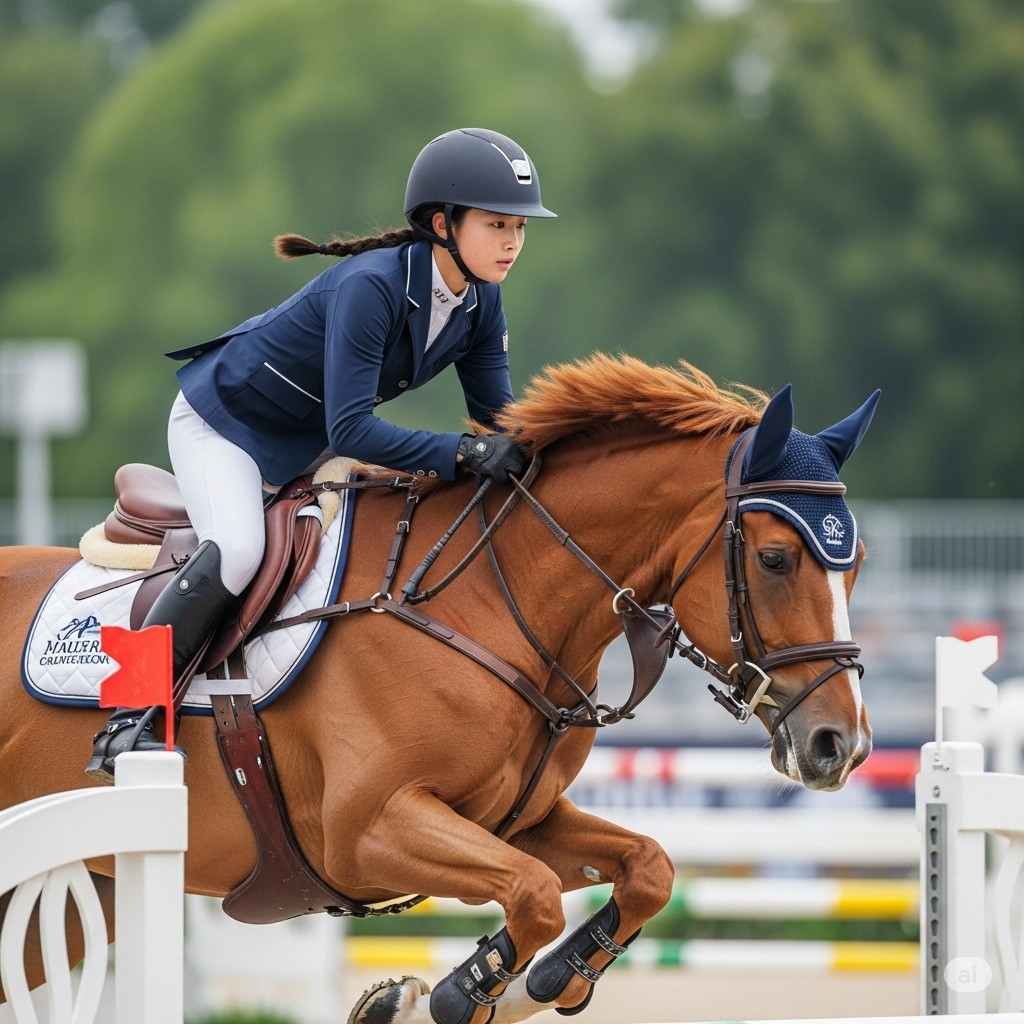
Equine Show Jumping: A Global Sport of Elegance and Athleticism
Equine Show Jumping is a sport that blends precision, speed, and teamwork between horse and rider. It captures the imagination of fans with its elegance and raw competitive spirit. The sport has grown from humble beginnings into a global phenomenon. Today, Equine Show Jumping is practiced by thousands worldwide, from local amateur events to prestigious international competitions.
Origins and History of Equine Show Jumping
The origins of Equine Show Jumping trace back to 18th-century Europe. During this time, landowners began enclosing their property. Riders and their horses had to jump fences and hedges during fox hunts. This necessity laid the groundwork for competitive jumping.
By the 19th century, jumping events appeared in equestrian shows in France and the UK. In 1869, the first recorded jumping competition took place in Dublin, Ireland. The format gained popularity in England, especially at agricultural shows.
In 1900, the sport debuted at the Summer Olympics in Paris. It was one of the first equestrian disciplines featured at the Games. Over the years, rules became more standardized, and judging criteria improved.
By 1921, the International Federation for Equestrian Sports (FEI) was established. This body oversaw international competitions and ensured consistency. Since then, Equine Show Jumping has evolved into a regulated, respected, and widely recognized sport.
Global Popularity and Reach of the Sport
Equine Show Jumping enjoys worldwide appeal. Europe remains a dominant hub, with countries like Germany, the Netherlands, the UK, and France leading in participation and success. These nations invest heavily in training, breeding, and competition.
In North America, the United States and Canada boast a thriving show jumping scene. Events such as the Winter Equestrian Festival in Florida draw top riders from around the world. South American nations like Brazil and Argentina also host prominent competitions.
In Asia, countries like Japan, China, and South Korea are investing in infrastructure and rider development. Meanwhile, Australia and New Zealand have strong national circuits that feed into the global calendar.
The Middle East, particularly the United Arab Emirates, Qatar, and Saudi Arabia, has embraced the sport with vigor. These nations have built state-of-the-art facilities and sponsor international riders.
Africa has seen growing interest, especially in South Africa and Egypt. Regional federations support youth training and host international qualifiers.
Global television coverage and streaming platforms have broadened the sport’s visibility. Social media has further connected fans to riders and events.
Amateur Equine Show Jumping Around the World
Amateur riders form the backbone of Equine Show Jumping. Local riding clubs and equestrian centers organize competitions at various levels. These events help young riders gain experience and showcase talent.
Youth participation begins at the grassroots. Children often start in lead-line or walk-trot classes before progressing to cross-rails and vertical jumps. Many nations have Pony Clubs, which introduce children to horsemanship and competition.
In schools, particularly in Europe and North America, equestrian sports are part of extracurricular programs. High school and college teams compete in interscholastic and intercollegiate leagues. For example, the Intercollegiate Horse Shows Association (IHSA) in the U.S. offers competitive opportunities for students regardless of horse ownership.
Adult amateurs range from casual weekend competitors to dedicated semi-professionals. They participate in regional and national championships. Rider development programs often pair amateurs with experienced trainers and coaches.
Accessibility remains a challenge, as the sport can be costly. However, leasing programs and shared ownership models have made participation more feasible. Volunteerism and community support also help keep entry-level competitions affordable.
Professional Leagues and Competitions Globally
Equine Show Jumping features several high-profile professional leagues and competitions. The Longines Global Champions Tour (LGCT) stands as one of the most prestigious. It spans cities like Doha, Paris, and Shanghai. The format combines elite competition with glamorous settings.
Another major series is the Rolex Grand Slam of Show Jumping. This includes four iconic events: CHIO Aachen (Germany), CSIO Spruce Meadows ‘Masters’ (Canada), CHI Geneva (Switzerland), and The Dutch Masters (Netherlands). Winning all four is a rare and celebrated achievement.
The FEI World Cup Jumping series runs annually and culminates in a World Final. Riders qualify through regional leagues in North America, Western Europe, Central Europe, and other zones.
The Olympics and World Equestrian Games represent the pinnacle of team and individual competition. Riders represent their countries and compete for national pride.
National federations also run grand prix circuits. In the United States, the USEF and USHJA organize national competitions and championships. The British Showjumping Association performs a similar role in the UK.
Prize money has increased significantly. Top riders earn six-figure purses and secure sponsorship deals. Equine athletes become celebrities in their own right.
Political and Social Significance of Equine Show Jumping
Equine Show Jumping holds social and political relevance beyond sport. It serves as a symbol of tradition and excellence, especially in countries with strong equestrian cultures.
In the Middle East, investment in the sport reflects a broader strategy to diversify economies and boost tourism. Hosting international events enhances global prestige.
Show jumping also supports rural economies. Breeding farms, trainers, veterinarians, and farriers all benefit. Events attract spectators and generate local revenue.
Socially, the sport promotes inclusivity. Programs like Riding for the Disabled offer therapeutic riding opportunities. Some countries have para-equestrian jumping competitions.
Women have made significant strides in the sport. Unlike many sports, show jumping features mixed-gender competition at all levels. Female riders regularly dominate global rankings and win major titles.
Additionally, environmental awareness is growing. Organizers are adopting sustainable practices such as eco-friendly footing, solar energy, and water conservation.
Rules and Structure of Equine Show Jumping
Equine Show Jumping competitions are governed by the FEI rulebook at the international level. National federations have their own adaptations. Despite some variation, core rules remain consistent.
A course designer lays out a series of obstacles in a specific order. These include verticals, oxers (spread fences), combinations, and water jumps. Riders must memorize the course before riding.
Each round is timed. Penalties, called faults, are added for errors. Four faults are given for knocking down a rail or a foot in the water. A refusal, when a horse stops before a jump, also incurs four faults. Two refusals lead to elimination.
Time faults are added if the rider exceeds the time allowed. The fastest round with the fewest faults wins. In the case of ties, a jump-off is held. Riders navigate a shortened course at speed to determine the winner.
Horses must meet age and fitness requirements. Tack and equipment are regulated for safety and fairness. Judges enforce rules and resolve disputes.
There are different height classes, ranging from under 1 meter for beginners to over 1.6 meters for elite levels. Divisions also exist for juniors, young riders, amateurs, and professionals.
The sport rewards not just athleticism but strategy. Riders must pace their horses, choose ideal angles, and balance speed with caution.
Conclusion
Equine Show Jumping is more than a sport—it is a celebration of discipline, trust, and artistry. Its rich history dates back centuries, yet it continues to evolve. From grassroots programs to global tournaments, it offers something for everyone.
Its influence spans continents, its impact reaches beyond competition, and its community grows stronger each year. With rising visibility, deeper inclusivity, and unwavering passion, Equine Show Jumping stands tall in the world of sport.
Whether you’re a fan, rider, or newcomer, the world of Equine Show Jumping awaits with open arms and galloping hooves.