
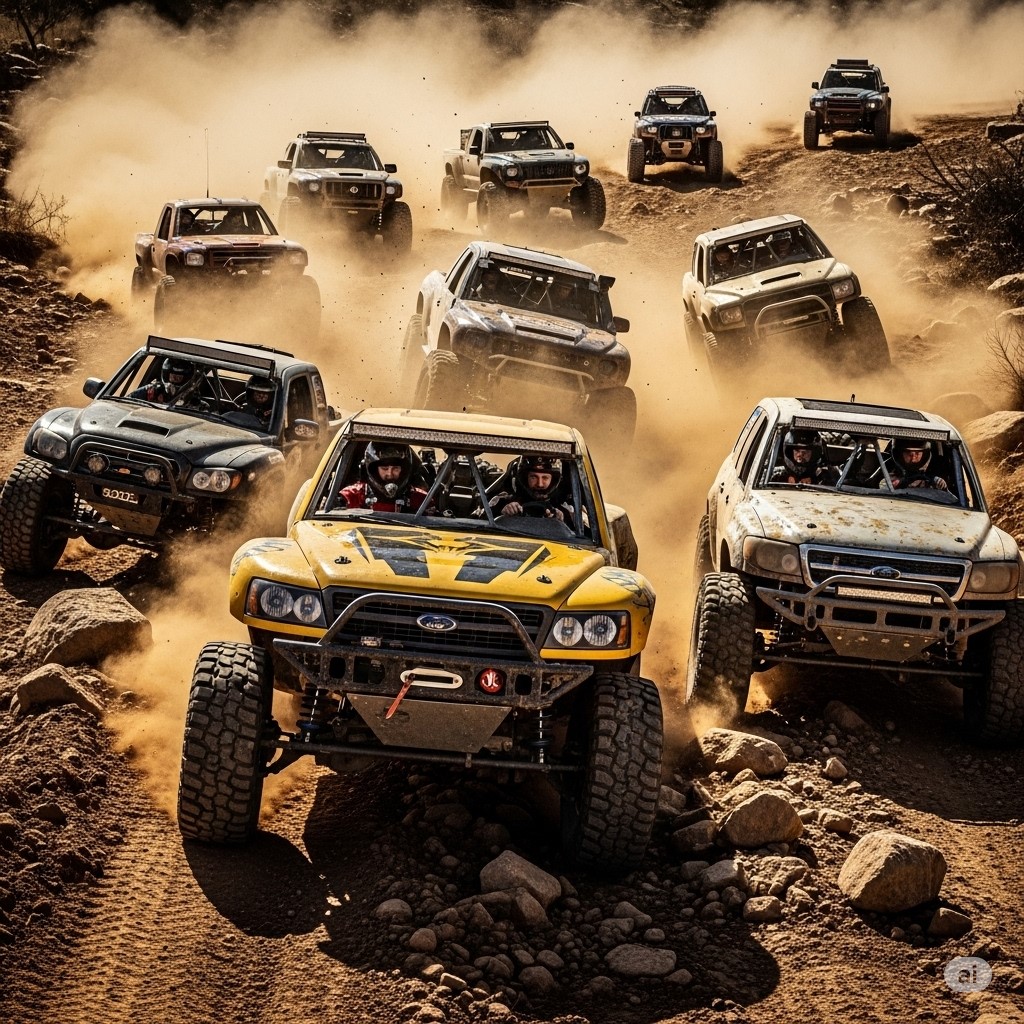
Extreme Off-Road: A Deep Dive into the World’s Most Rugged Motorsport
Extreme Off-Road is more than a sport—it’s a way of life for adrenaline junkies across the globe. This high-octane activity pushes drivers and vehicles to their limits. Navigating treacherous terrain, scaling boulders, and wading through mud bogs, athletes battle not only competitors but also the elements. In recent years, Extreme Off-Road has evolved into a mainstream motorsport. Its global appeal continues to grow, from amateur enthusiasts to professional drivers in elite leagues.
The Origins and History of Extreme Off-Road
The roots of Extreme Off-Road can be traced back to the post-World War II era. Returning soldiers in the United States repurposed military jeeps for recreational use. These early machines proved ideal for rocky trails and rugged paths. Over time, informal gatherings became competitive events. Jeep clubs in California and Utah began organizing trail rides and competitions during the 1950s.
As interest grew, formal organizations took shape. The 1970s saw the birth of structured off-road racing. Events such as the Baja 1000 in Mexico helped lay the groundwork. Soon after, rock crawling emerged as a distinct discipline. This involved slower speeds and technical skill instead of pure speed. By the 1990s, Extreme Off-Road had split into several subgenres, each with its own set of rules and vehicles.
Europe joined the movement with its own rugged competitions. Countries like the UK and Iceland developed their own formats. Iceland, in particular, became famous for vehicles with balloon tires racing up volcanic slopes. The international growth cemented the sport’s place on the world stage.
Global Popularity and Where It’s Played
Extreme Off-Road has exploded in popularity on nearly every continent. North America remains the largest market. The United States hosts hundreds of events annually. Locations like Moab, Utah and Johnson Valley, California are iconic destinations. Canada offers rugged trails in British Columbia and Alberta.
In South America, Brazil and Argentina have developed strong off-road communities. The vast, untamed landscape provides an ideal environment. Africa has also embraced the sport. South Africa and Namibia host competitive events in deserts and bushland.
Europe presents a unique twist. Nations like Iceland, the UK, and Italy boast strong traditions. Iceland’s hill-climb events and the UK’s Trials competitions offer thrilling formats. Eastern European countries such as Russia and Poland have growing off-road scenes.
Asia is quickly catching up. India, the Philippines, and Thailand are nurturing vibrant communities. Off-road tourism also contributes to the sport’s expansion. In Australia, the Outback offers a natural course for both amateurs and pros. Extreme Off-Road is not just a sport; it’s a global adventure.
Amateur Participation: Youth and School Involvement
Amateur Extreme Off-Road thrives on grassroots participation. Local clubs offer entry-level experiences for off-road enthusiasts. Events often include trail rides, obstacle courses, and rock crawling. These activities allow beginners to test their skills without the pressures of competition.
Youth participation is on the rise. Programs across the United States, Australia, and Europe encourage involvement from a young age. Junior 4×4 leagues allow teens to compete in safe, controlled environments. These leagues use scaled-down vehicles that mirror full-size trucks and jeeps.
Some schools incorporate off-road education into STEM programs. Students learn engineering principles by building small-scale off-road vehicles. Competitions like the Baja SAE challenge university students to design and race their own machines. This bridges the gap between classroom knowledge and real-world application.
Family-friendly events also foster early interest. Weekend rallies often include youth courses and beginner trails. Parents and children bond over their shared passion. Amateur Extreme Off-Road builds community and imparts valuable life skills.
Professional Leagues and Global Organizations
Extreme Off-Road has reached professional heights with leagues spanning the globe. In the United States, Ultra4 Racing leads the charge. This league blends high-speed desert racing with technical rock crawling. The King of the Hammers, held in California, is the crown jewel of the series.
The World Extreme Rock Crawling Championship Series (W.E.Rock) also commands attention. It features technical challenges across multiple classes. Professional drivers from around the world compete in this respected league.
Europe hosts several elite events. The Croatia Trophy is a grueling multi-day challenge through forests and swamps. The Rainforest Challenge in Malaysia is one of Asia’s premier competitions. It attracts global talent and tests endurance and teamwork.
Australia’s Tuff Truck Challenge offers another unique format. Vehicles tackle boulder fields, river crossings, and steep climbs. These events push engineering limits and reward creative problem-solving.
Sponsorships and live streaming have increased visibility. Professional teams now enjoy support from automotive brands and tech companies. This financial backing allows for better training and equipment, raising the sport’s profile even further.
Political and Social Significance
Extreme Off-Road holds more than recreational value. Politically, the sport often intersects with land use debates. Environmentalists and off-road enthusiasts sometimes clash over trail access. Organizations like the BlueRibbon Coalition advocate for responsible land use and motorized recreation rights.
In many regions, the sport supports local economies. Events bring tourism and generate income for remote areas. Towns near major trails often rely on off-road visitors. The industry also supports thousands of jobs in engineering, mechanics, and media.
Socially, the sport fosters community and inclusion. Clubs and events welcome participants from all backgrounds. Veterans, people with disabilities, and underrepresented groups find empowerment through off-roading. Adaptive vehicles and inclusive programming make the sport accessible.
Charity events and fundraisers are common. Teams often race for causes such as veterans’ support or environmental conservation. The sport builds more than just vehicles; it builds connections and positive change.
Rules and Structure of the Sport
Extreme Off-Road features several rule sets depending on the competition type. However, general principles apply across the board. Vehicles must meet safety standards. Roll cages, harnesses, helmets, and fire extinguishers are mandatory.
Courses are designed with various obstacles. These include rock gardens, mud pits, steep inclines, and water crossings. Drivers must complete each obstacle without outside help. If a vehicle becomes stuck, time penalties or disqualification may follow.
Scoring systems vary. In rock crawling, points are deducted for hitting cones or reversing. The goal is to navigate cleanly and efficiently. In endurance races like King of the Hammers, time determines the winner. Speed, durability, and navigation are key.
Technical inspections take place before every race. Judges check compliance with league rules. Classes are divided by vehicle type and modification level. This ensures fair competition and safety for all.
Teamwork plays a big role. Many events require a spotter to guide the driver. Communication and trust are critical. Mistakes can lead to rollovers or mechanical failure.
Respect for the environment is also essential. Drivers must stick to designated trails. Violations can result in fines and bans. Sustainability and preservation go hand-in-hand with the thrill of competition.
Conclusion
Extreme Off-Road continues to evolve as a global phenomenon. From humble beginnings to world-class events, the sport attracts fans and athletes alike. Its blend of adventure, skill, and engineering captivates audiences around the world.
Whether through youth programs or elite competitions, the community remains inclusive and vibrant. As technology advances, so does the sport’s potential. Extreme Off-Road is not just about pushing limits—it’s about forging connections, inspiring innovation, and exploring the wildest corners of the earth.
With strong roots, growing popularity, and positive social impact, Extreme Off-Road is here to stay. Its rugged spirit drives forward, fueled by passion, grit, and the thrill of the unknown.