
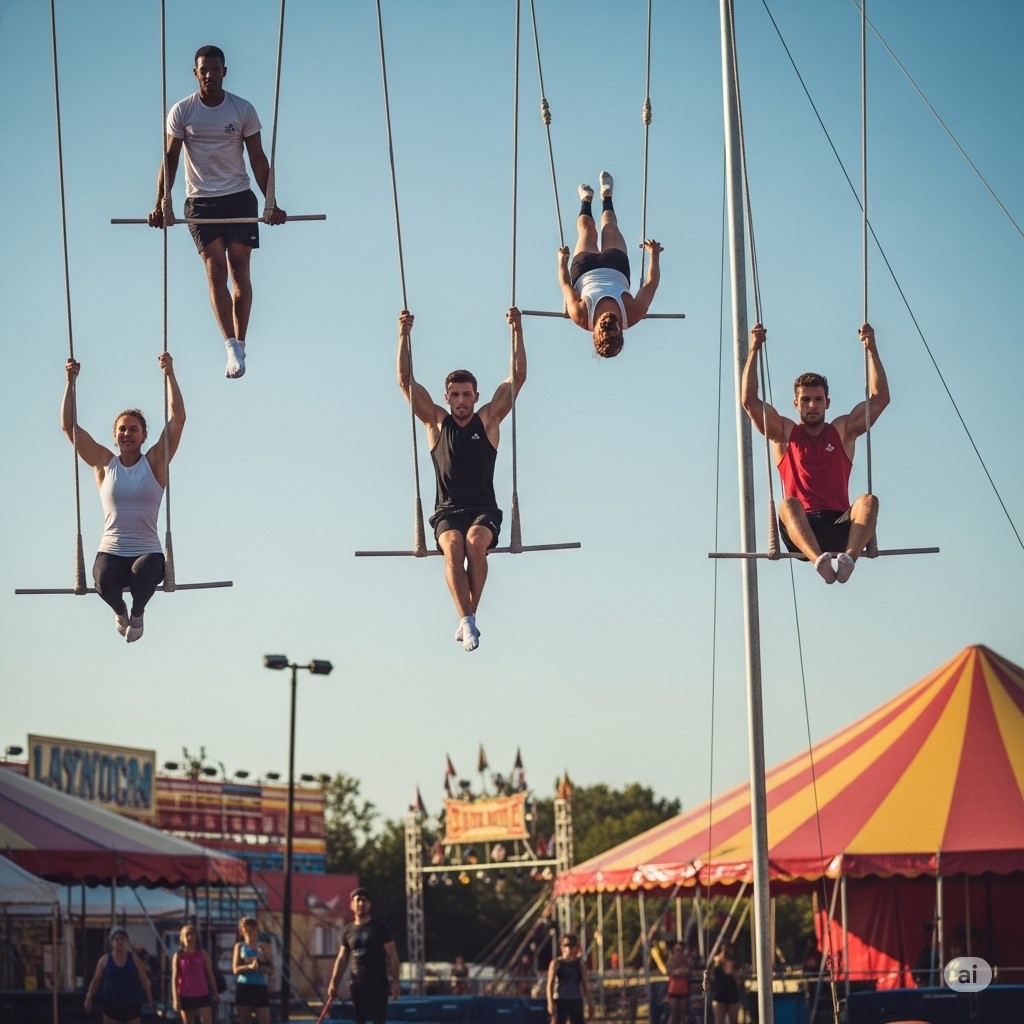
Flying Trapeze: The Art, Sport, and Global Movement
Flying Trapeze is a captivating blend of art, athleticism, and adrenaline. It has mesmerized audiences for generations. In recent years, Flying Trapeze has evolved from a circus act into a legitimate global sport. Its popularity is growing in both amateur and professional circles. Today, Flying Trapeze schools and clubs are thriving on nearly every continent. As a sport, it combines performance and precision, while also encouraging personal growth and social bonding. This blog post will explore its origins, global popularity, amateur and youth involvement, professional leagues, social and political impact, and the rules that govern it.
The Origin and History of Flying Trapeze
The story of Flying Trapeze began in 1859 in Toulouse, France. A young French acrobat named Jules Léotard revolutionized aerial movement. He practiced over his father’s swimming pool and invented a flying rig that would allow a performer to leap from one swinging bar to another. He showcased this daring act at the Cirque Napoléon in Paris. The audience was awestruck.
Léotard’s invention was more than just a performance—it was an innovation. It required athletic ability, mental focus, and perfect timing. Over the next few decades, Flying Trapeze became a staple of the circus. Acts grew more complex and featured multiple performers. The trapeze artists dazzled spectators with flips, twists, and catches mid-air.
In the 20th century, as circus acts toured globally, Flying Trapeze became an international phenomenon. Circuses like Ringling Bros. and Cirque du Soleil featured top trapeze acts, elevating the discipline. Though rooted in entertainment, the sport began to evolve. Schools emerged, teaching the technique and discipline to those outside the circus.
Global Popularity of Flying Trapeze
Flying Trapeze has exploded in popularity, especially over the past two decades. Today, it’s practiced in countries like the United States, Australia, France, the United Kingdom, and Japan. In cities such as New York, London, and Sydney, Flying Trapeze schools attract both beginners and advanced practitioners.
Much of the sport’s popularity can be attributed to its accessibility. No longer is it exclusive to circus professionals. People of all ages can participate. With safety harnesses and nets, anyone can experience the thrill.
Media exposure has also played a role. Reality shows, documentaries, and social media have showcased the excitement and athleticism involved. As a result, Flying Trapeze has drawn fans from the fitness, performance, and adventure communities.
Many travel destinations now feature trapeze classes as part of their adventure tourism packages. Resorts in places like Bali, Costa Rica, and the Caribbean offer Flying Trapeze experiences. These short programs often lead to long-term interest.
Amateur and Youth Participation in Flying Trapeze
The sport has flourished at the amateur level. Flying Trapeze schools cater to all skill levels. Beginners start with basic swings and progress to complex tricks. Most schools offer structured training programs that build strength, coordination, and confidence.
Children and teens are especially drawn to the sport. Many schools now offer youth classes. These programs focus on safety, teamwork, and fun. They encourage a sense of achievement and build discipline from a young age.
Some high schools and extracurricular organizations have added Flying Trapeze to their activity offerings. Summer camps across the United States and Europe now include it as a key feature. Students not only learn techniques but also develop strong bonds with their peers.
Competitions for amateurs are also gaining traction. These events create a community atmosphere. Participants showcase their skills in friendly but exciting environments. Local contests often lead to regional and national tournaments.
Universities have even started incorporating Flying Trapeze into physical education and performing arts programs. This educational inclusion signals a deeper appreciation for the sport’s value.
Professional Leagues and Performances
While amateur Flying Trapeze is booming, professional leagues are developing fast. Though not yet as standardized as traditional sports, several organizations now promote professional-level competition and performance.
Cirque du Soleil remains a leader in high-level trapeze performance. However, other groups such as The Flying Gaonas and The Flying Caceres have also elevated the sport. These troupes often train for months to perfect breathtaking routines.
In Australia, the National Institute of Circus Arts offers elite training and performance opportunities. In the U.S., the École Nationale de Cirque in Montreal produces many of the world’s top trapeze artists. These institutions serve as breeding grounds for professional talent.
Professional trapeze festivals are held in countries like Spain, Brazil, and Canada. These events include competition, showcases, and networking opportunities. Judges evaluate routines based on difficulty, execution, and creativity.
Though there is no unified global league yet, collaborative efforts are underway. International federations are discussing standard rules, ranking systems, and future Olympic inclusion. The professional community is deeply invested in shaping the sport’s future.
Social and Political Significance
Flying Trapeze offers more than just physical thrills. Socially, it fosters inclusion, community, and empowerment. People from different backgrounds come together to learn and perform. Age, gender, and physical ability are often secondary to commitment and enthusiasm.
Programs have been developed to support underprivileged youth. Nonprofits in cities like Rio de Janeiro and Los Angeles offer free trapeze lessons. These initiatives help children gain confidence, discipline, and life skills. Flying Trapeze becomes a tool for transformation.
From a political standpoint, the sport serves as soft diplomacy. International exchanges between trapeze schools promote cultural understanding. Artists and athletes often travel abroad to collaborate and share knowledge.
The sport has also been a platform for advocacy. Shows have been staged to raise awareness for causes like mental health, climate change, and gender equality. The visual and emotional impact of trapeze performance makes it a compelling medium for storytelling.
Empowerment is another key aspect. Especially for women, Flying Trapeze offers a chance to break barriers. Many female flyers now lead schools, direct shows, and push the limits of what’s possible in the air.
Rules and Structure of Flying Trapeze
Flying Trapeze operates within a structured yet dynamic set of rules. These regulations ensure safety and maintain fairness in competition.
Each performance begins with the flyer launching from a platform. They swing from a horizontal bar, release, and aim to be caught mid-air by a catcher. The standard setup includes a safety net, spotting lines, and sometimes a harness.
Competitions judge athletes on form, difficulty, timing, and innovation. Points are awarded for clean execution, originality, and successful catches. Deductions apply for fumbles, missed catches, and improper dismounts.
Common tricks include the “knee hang,” “splits catch,” and “triple somersault.” Performers train for years to master these moves. Timing with the catcher is critical. Split-second precision determines success.
Practice sessions often follow a specific order. Warm-ups lead into technique drills. Flyers rehearse specific tricks and transitions. Catchers also train rigorously to maintain consistency.
Team events feature multiple flyers and synchronized routines. These performances are choreographed to music and judged for artistic merit. Creativity plays a big role, especially in showcases and festivals.
Though the sport is thrilling, safety is paramount. Flyers use safety lines during practice. Spotters stand by at all times. Rigging is inspected before every session.
In formal competitions, judges receive certification. Rules and scoring criteria are outlined in official handbooks. Transparency in scoring maintains integrity.
Conclusion
Flying Trapeze has come a long way from its circus origins. Today, it stands as a dynamic global sport, accessible to amateurs and revered by professionals. Its growth in schools, clubs, and festivals shows no sign of slowing down.
From its early days in France to international showcases today, Flying Trapeze continues to inspire. It builds courage, discipline, and community. Whether as a performer, student, or spectator, the thrill of soaring through the air unites people worldwide.
The global Flying Trapeze movement is more than athleticism. It represents creativity, resilience, and hope. As more people take flight, the future of this sport shines brighter than ever.