
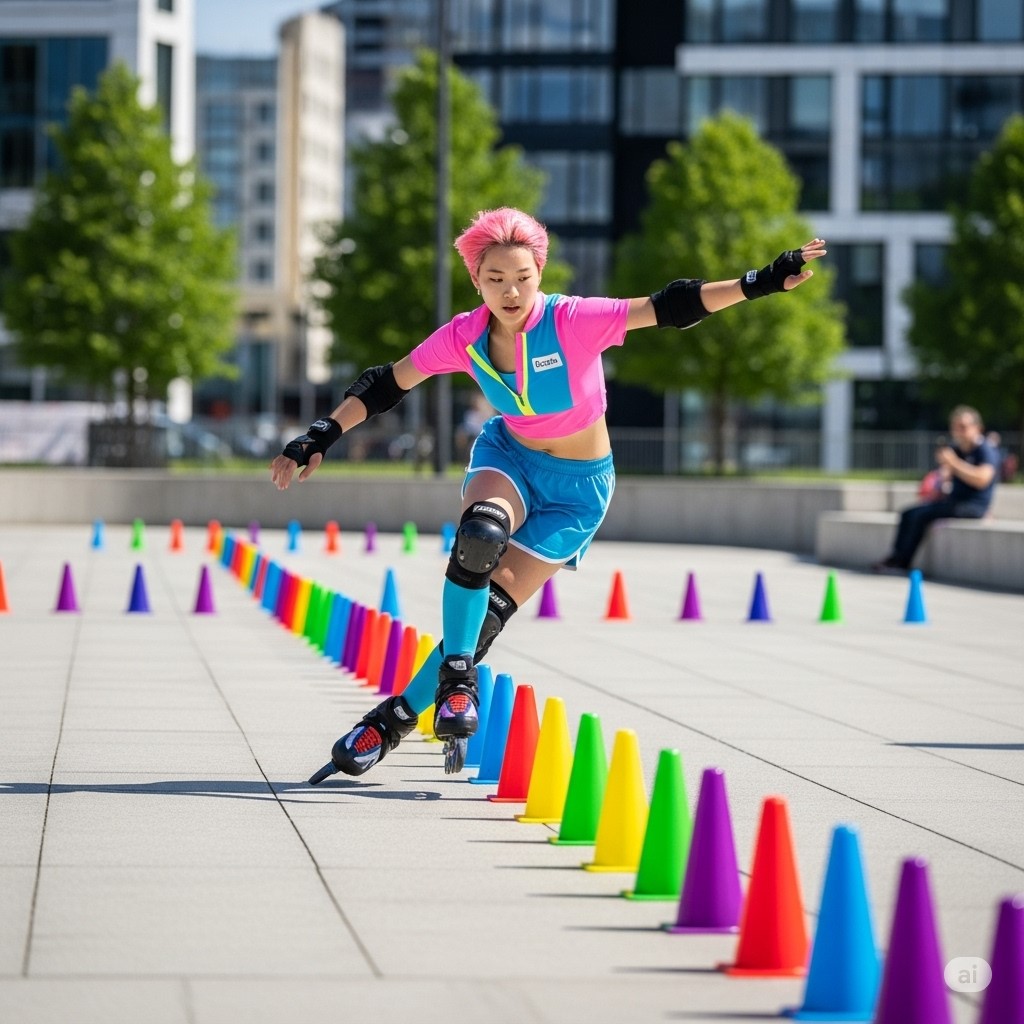
Freestyle Slalom Skating: The Art, Sport, and Global Movement
Freestyle Slalom Skating is a high-skill sport that blends artistry, athleticism, and rhythm. It involves performing tricks and maneuvers around a line of cones set in a straight line, spaced evenly apart. This sport has gained traction over the past few decades due to its accessibility and visual appeal. It is now practiced in various countries and continues to grow in popularity. The world of Freestyle Slalom Skating extends far beyond individual tricks. It encompasses a rich history, structured leagues, youth participation, and even political and social impact.
The Origins and History of Freestyle Slalom Skating
Freestyle Slalom Skating originated in the late 1980s. Initially, it started as a street sport among inline skaters looking to show off their control and creativity. Skaters began using plastic cones to create an obstacle course for their tricks. What began as a fun street activity quickly gained formal recognition.
In the early 1990s, skaters from France, South Korea, and China began organizing informal competitions. As videos of these performances spread online, the sport’s visibility increased. Organizations began to form to standardize rules and encourage fair competition.
By the mid-2000s, international competitions had become more frequent. The World Slalom Series (WSS) was founded in 2008 to unify the sport. Since then, skaters from all continents have participated in global events. This has allowed the sport to mature with consistency in judging and technical standards.
Freestyle Slalom has also seen advancements in skate technology. Skaters now use high-performance inline skates designed for control and precision. Cone placement and competition formats have also evolved. This evolution has elevated the sport from a niche hobby to a global discipline.
Global Popularity of Freestyle Slalom Skating
Freestyle Slalom Skating is especially popular in Europe and Asia. Countries like France, Poland, Russia, China, and South Korea have become powerhouses in the sport. These nations host regular national championships. They also send top athletes to global events.
In Asia, the sport enjoys immense popularity. China and South Korea boast robust training programs. Schools and clubs provide structured coaching for youth skaters. National television even broadcasts major competitions.
European countries contribute significantly to the sport’s growth. France has been a major pioneer, with urban skating cultures in cities like Paris and Lyon. Poland and Russia have also nurtured elite skaters through national organizations.
In North America, the sport is growing steadily. Major cities like New York, Toronto, and Los Angeles have thriving skate scenes. Clubs often organize community events and training camps. While the sport is less mainstream in the U.S., interest is climbing thanks to social media and YouTube.
South America and Africa have smaller but passionate communities. Countries like Brazil and South Africa are nurturing grassroots movements. These regions hold local competitions and promote inclusivity in the sport.
Freestyle Slalom Skating in Amateur Settings
Youth and amateur participation form the backbone of Freestyle Slalom Skating. Across the globe, young skaters start by learning basic balance and control. As they gain confidence, they move on to more complex tricks.
In Asia, many schools integrate the sport into physical education programs. South Korea and China lead in this area. Kids are taught slalom basics as part of their school curriculum. Clubs offer weekend training sessions and competitions.
European countries run strong youth leagues. France and Italy have age-specific tournaments. These competitions offer safe spaces for young talent to flourish. Community centers and skate parks often serve as training grounds.
In North America, amateur skaters join local clubs. These organizations run workshops and camps. Coaches use progressive learning methods to teach skills. Video analysis tools help young skaters refine their techniques.
Online platforms have also democratized access to the sport. Social media, tutorials, and virtual coaching make it easier for anyone to learn. Youth skaters often post their routines, gaining both feedback and recognition.
Amateur competitions focus on skill development rather than just winning. Judges offer constructive feedback. Skaters compete in age and skill-level categories. This helps keep the sport inclusive and developmental.
Professional Leagues in Freestyle Slalom Skating
The World Slalom Series (WSS) is the premier professional league for Freestyle Slalom Skating. It hosts over 100 competitions worldwide each year. The WSS tracks skaters’ rankings based on their performance in these events.
Top-tier skaters travel across continents to compete in WSS events. Major tournaments take place in Paris, Shanghai, Moscow, and Seoul. These competitions offer prize money and international recognition.
Each WSS event includes different categories: Classic, Battle, Speed, and Pair Slalom. Classic routines involve choreographed performances set to music. Battle format pits skaters head-to-head in real-time trick contests. Speed slalom focuses on time-based cone navigation. Pair slalom features synchronized routines.
The International Freestyle Skaters Association (IFSA) also governs certain competitions. It provides certification for judges and coaches. National organizations collaborate with IFSA to align local events with international standards.
Professional skaters often have sponsorships from skate brands. They appear in commercials, give workshops, and act as ambassadors. Many transition to coaching or start their own training academies.
Countries like China have government-backed professional teams. These skaters train full-time and represent their country in global competitions. Their performances often blend cultural elements with high-level skill.
Political and Social Significance of the Sport
Freestyle Slalom Skating holds social and political value. It promotes healthy lifestyles, youth engagement, and gender equality. Governments in Asia and Europe support the sport for these reasons.
In China, the sport is part of youth development programs. It helps reduce screen time and promotes physical activity. Government funding ensures access to equipment and training for all income levels.
South Korea uses the sport to engage urban youth. City governments fund skate parks and community events. This has reduced delinquency and fostered social inclusion.
In Europe, Freestyle Slalom supports multicultural integration. Immigrants and local residents often meet at skating events. These interactions foster understanding and unity.
The sport also empowers women. Female skaters have risen to the top of global rankings. Equal prize money and mixed-gender judging panels reflect a commitment to fairness.
On a broader scale, skating events often support social causes. Competitions raise awareness for climate change, mental health, and inclusion. The skate community values activism and civic engagement.
Politically, some governments use the sport to showcase modernity and progress. Events are often held in city centers to attract tourists. Media coverage portrays participating countries in a positive light.
Rules and Structure of Freestyle Slalom Skating
Competitions follow strict rules to ensure fairness and consistency. Events are divided into several categories. Each has its own scoring criteria and structure.
In Classic Slalom, skaters perform a routine set to music. Judges score based on difficulty, style, and execution. Each trick must be done while skating through a line of 20 cones spaced 80 cm apart.
Speed Slalom is a race against the clock. Skaters go through a 20-cone line as fast as possible. They must use only one foot and avoid knocking over cones. Time penalties apply for any mistakes.
Battle Slalom is more dynamic. Skaters face off in small groups. Each gets multiple rounds to perform tricks. Judges eliminate weaker performances until a winner emerges.
Pair Slalom features synchronized routines. Two skaters perform tricks together. Precision and timing are crucial. Judges score for unity, creativity, and execution.
All competitions use a standard cone setup. The cones are brightly colored and lightweight. Judges inspect the course before every event.
Judging panels consist of experienced skaters. They assess technical difficulty, flow, creativity, and cone accuracy. Each skater receives a final score based on averages.
Skaters wear protective gear during practice and competitions. Helmets, wrist guards, and knee pads are common. This minimizes injury risks, especially for youth participants.
Training and warm-ups are scheduled before each event. Skaters get limited time to familiarize themselves with the floor surface and lighting.
Music choices must meet event guidelines. Lyrics must be appropriate, and songs must be pre-approved. This ensures a family-friendly atmosphere.
Disqualifications occur for unsportsmanlike behavior, illegal equipment, or repeated cone violations. Appeals can be made to the event jury.
Conclusion
Freestyle Slalom Skating has evolved from a street activity to a global sport. Its blend of skill, creativity, and culture makes it unique. From schoolyards in Asia to professional arenas in Europe, its reach is expanding. The sport encourages youth development, international camaraderie, and social inclusion.
Professional leagues provide a platform for the world’s best skaters. Amateur competitions nurture new talent. Communities around the globe unite through this dynamic art form.
As Freestyle Slalom Skating continues to grow, its impact becomes even more profound. It is not just a sport but a cultural and social movement. With rising popularity and increased accessibility, the future of Freestyle Slalom Skating looks incredibly bright.