Gaelic Football: Ireland’s Fierce and Proud National Sport
Gaelic Football is a thrilling and uniquely Irish sport that combines speed, skill, and strategy. It has captivated fans for over a century. Played with passion across Ireland and beyond, it unites communities and inspires fierce local rivalries. The sport blends elements of soccer, rugby, and basketball, creating a dynamic spectacle. Gaelic Football is more than a game; it is a symbol of Irish identity and resilience. In this blog post, we will explore the origin, rules, global reach, amateur development, leagues, and the political and social impact of this iconic sport.
Origins and History of Gaelic Football
It has deep roots in Irish culture. Its origins can be traced back to ancient Ireland. Historical records from the 14th century describe a game called “Caid,” which resembles modern Gaelic Football.
Caid involved two teams and a ball made of animal bladder. The aim was to kick or carry the ball to a target. Although rough and unregulated, it laid the foundation for the modern game.
In the 19th century, traditional Irish sports began to fade due to British influence and the rise of English sports. In response, Irish nationalists sought to preserve their heritage. The Gaelic Athletic Association (GAA) was founded in 1884 in Thurles, County Tipperary.
The GAA aimed to revive and organize Irish sports, including hurling and Gaelic Football. In 1887, the first official Gaelic Football championship took place. Since then, the sport has grown in popularity and structure.
Gaelic Football flourished in the 20th century, surviving political upheaval and two world wars. The All-Ireland Senior Football Championship became the pinnacle of competition. County teams from all over Ireland battled for the coveted Sam Maguire Cup.
Today, Gaelic Football remains a core pillar of Irish identity. It bridges generations and rural-urban divides. The sport’s history reflects Ireland’s journey through colonization, independence, and globalization.
Global Popularity of Gaelic Football
Although Gaelic Football is predominantly played in Ireland, it has a growing global footprint. Irish emigrants brought the sport to new shores, establishing clubs and competitions worldwide.
The GAA has over 400 clubs outside of Ireland. These include teams in the United States, Britain, Canada, Australia, New Zealand, Europe, and Asia. Major cities like New York, London, and Sydney boast thriving Gaelic games communities.
In the United States, the North American County Board (NACB) oversees Gaelic Football. Chicago, Boston, and San Francisco host major tournaments. American-born players increasingly participate in Gaelic Football at competitive levels.
In the UK, the British GAA governs the sport. Cities such as London, Birmingham, and Manchester have strong Irish communities and clubs. London even fields a team in the All-Ireland Championship.
Australia features many Gaelic clubs, especially in cities like Melbourne and Perth. The annual Australasian Gaelic Games unite teams from Australia and New Zealand. These games foster cultural connection and community pride.
Continental Europe has seen a rise in Gaelic Football clubs as well. European GAA organizes regional competitions across France, Germany, Spain, and Scandinavia. These clubs welcome Irish expatriates and local enthusiasts.
In Asia, Gaelic Football is gaining traction. The Asian GAA coordinates tournaments in the Middle East, China, Japan, and South Korea. Dubai, in particular, hosts one of the largest Gaelic Football events outside Ireland.
This global expansion reflects the adaptability and appeal of the sport. It also strengthens the cultural ties between Ireland and its diaspora.
Amateur Gaelic Football: Youth and Schools
Gaelic Football is fundamentally an amateur sport. It thrives through local clubs, schools, and volunteer support. This grassroots structure fosters strong community bonds.
Youth participation begins early. Children often start playing in primary school. Local clubs run coaching programs and underage teams. These programs focus on skill development and fun.
At the secondary school level, Gaelic Football is integrated into physical education. Inter-school competitions, such as the Hogan Cup, are highly competitive. Schools serve as vital training grounds for future stars.
The GAA provides structured pathways for youth development. Underage competitions include Under-14, Under-16, Minor (Under-18), and Under-20 levels. Each stage offers increasing challenges and opportunities.
Club membership is often family-based. Parents volunteer as coaches, referees, or fundraisers. This community involvement reinforces social connections.
Colleges and universities also support Gaelic Football. Competitions like the Sigerson Cup showcase top student-athletes. Many county players emerge from university programs.
The amateur ethos of Gaelic Football means that players train and compete for pride, not pay. This commitment to community and identity underpins the sport’s unique character.
Professional Leagues and Structures
Despite its amateur status, Gaelic Football maintains a highly organized and competitive structure. The GAA oversees all official competitions and standards.
The All-Ireland Senior Football Championship is the sport’s premier event. It features county teams from all 32 counties of Ireland. Matches take place from May to July, culminating in the final at Croke Park.
Provincial championships—Connacht, Leinster, Munster, and Ulster—determine regional champions. These teams advance to the All-Ireland series. The format was recently modernized to include group stages and qualifiers.
The National Football League (NFL), held from January to April, acts as a secondary competition. It features four divisions, promoting and relegating teams based on performance. The NFL helps teams prepare for the championship season.
Club competitions are also significant. Each county runs a Senior Club Championship. Winners progress to the provincial and All-Ireland Club Championships. The final is held in January at Croke Park.
Internationally, the International Rules Series pairs Irish Gaelic Footballers against Australian Rules Football players. The hybrid game highlights skills from both codes.
While no full-time professional league exists, elite county players train like professionals. Strength and conditioning, nutrition, and media commitments are standard. Yet players remain unpaid, honoring the sport’s amateur tradition.
Sponsorship and broadcasting generate revenue. However, funds are reinvested in local clubs, facilities, and development programs.
Political and Social Significance
Gaelic Football is deeply intertwined with Irish politics and society. It has played a pivotal role in national identity and cultural revival.
The founding of the GAA in 1884 was a political act. It aimed to resist British cultural domination and promote Irish nationalism. The GAA aligned with the broader Gaelic Revival, which sought to restore the Irish language, arts, and traditions.
During the Irish War of Independence, the GAA and its members were targets of British repression. The 1920 Bloody Sunday massacre at Croke Park remains a tragic symbol. British forces shot 14 civilians during a Gaelic Football match. This event strengthened public support for Irish independence.
In Northern Ireland, Gaelic Football faced suppression. The sport was associated with Catholic and nationalist communities. Playing or supporting Gaelic games could attract discrimination.
Despite this, the sport persisted. It offered a safe space for cultural expression and community solidarity. Today, it continues to bridge divides and promote reconciliation.
Gaelic Football is inclusive. While rooted in tradition, it evolves with society. Initiatives promote participation among women, people with disabilities, and newcomers to Ireland.
The sport fosters civic pride and volunteerism. Local clubs often serve as community hubs, hosting events and supporting charities.
Political leaders regularly attend Gaelic Football matches. The All-Ireland final is a national event, uniting people from all walks of life.
Rules of Gaelic Football
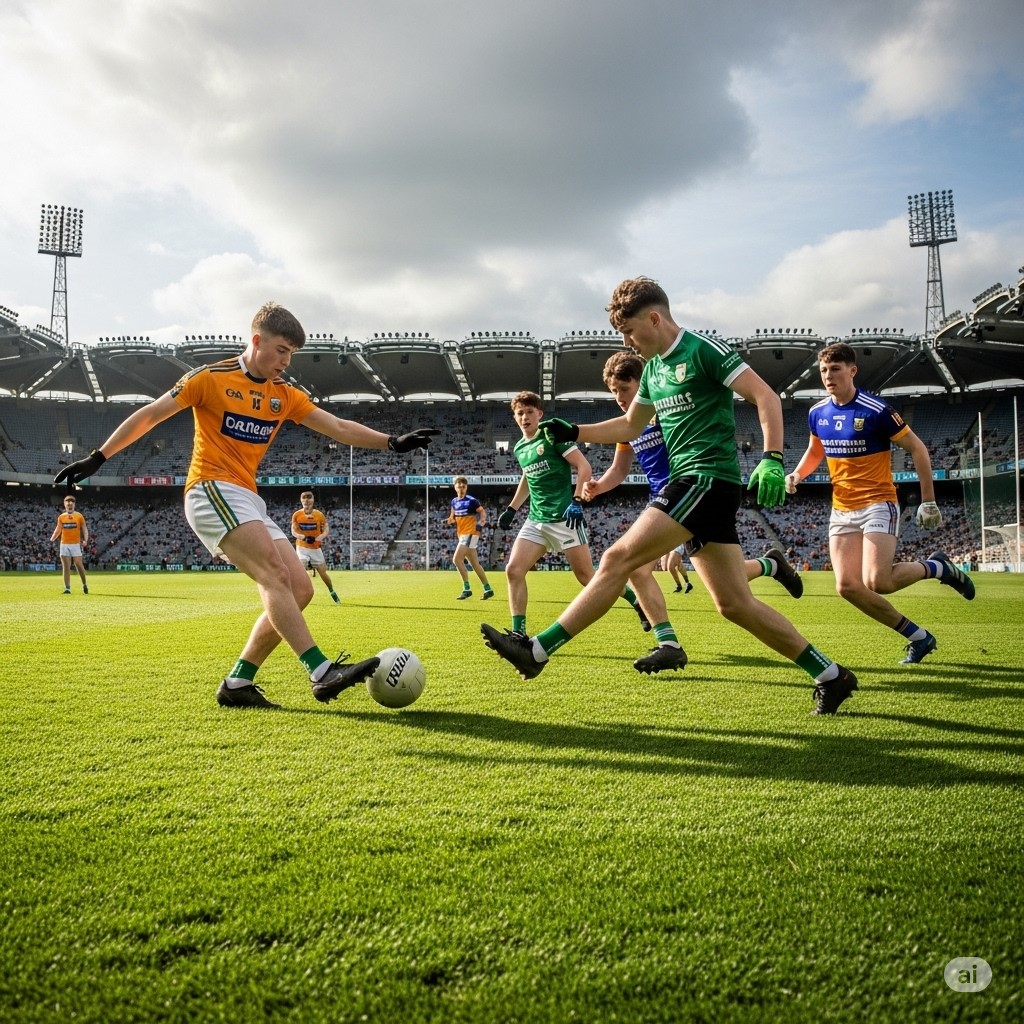
It is played between two teams of 15 players each. Matches take place on a rectangular grass field with H-shaped goals at each end.
The objective is to score by kicking or punching the ball into the opponent’s goal (3 points) or over the crossbar (1 point).
The game consists of two halves, each lasting 30 to 35 minutes, depending on the level. Referees manage play and enforce rules.
Players can move the ball by kicking, hand-passing, or soloing (bouncing or toe-tapping the ball while running). Physical contact is allowed but must be controlled.
Defensive players can tackle using their hands or shoulders. However, pulling jerseys or dangerous play results in fouls.
Fouls lead to free kicks, penalties, or cards (yellow, black, red). A black card results in a 10-minute sin-bin. A red card means ejection from the game.
Each team consists of a goalkeeper, six defenders, two midfielders, and six forwards. Teams may use substitutions during the match.
Set plays include kick-outs, sidelines, and 45-meter kicks. Strategy involves ball control, spatial awareness, and teamwork.
Gaelic Football requires fitness, skill, and tactical intelligence. The fast pace and frequent transitions make it exciting to watch and play.
Conclusion
Gaelic Football is a vibrant and essential part of Irish life. It combines ancient traditions with modern athleticism. The sport thrives through community support and passionate participation.
Its history reflects Ireland’s struggles and triumphs. Its global reach continues to expand. Youth and amateur programs ensure its future. Though officially amateur, Gaelic Football operates with professionalism and pride.
Socially and politically, the sport carries immense meaning. It brings people together and strengthens cultural identity.
With its unique blend of skill, spirit, and heritage, Gaelic Football remains one of the world’s most compelling sports. Whether played on Irish soil or abroad, it connects hearts and tells the story of a proud people.