
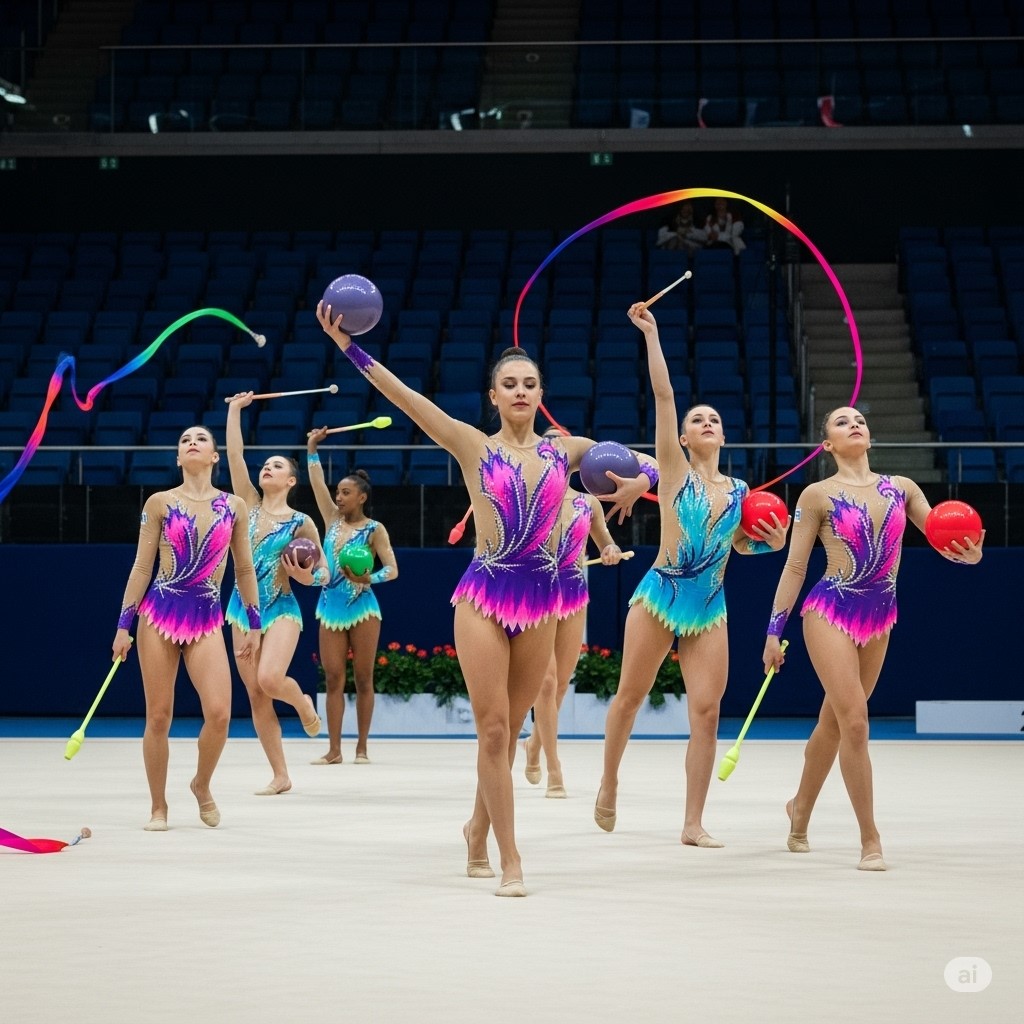
Group Gymnastics: A Celebration of Unity, Precision, and Artistic Expression
Group Gymnastics is a dynamic sport that combines teamwork, flexibility, strength, and artistic choreography. It involves synchronized routines performed by groups of gymnasts, often set to music. Unlike individual gymnastics, it emphasizes group coordination and visual harmony. In this comprehensive post, we will explore the sport’s origins, global appeal, amateur and professional play, rules, and its broader political and social significance. Group Gymnastics continues to grow and inspire across the world.
The Origins and History of Group Gymnastics
The roots of Group Gymnastics stretch back to the early 19th century. It began in Northern Europe, particularly in Sweden, Denmark, and Finland. These countries focused on collective physical activity to promote national health and unity.
Swedish educator Pehr Henrik Ling pioneered a system of group exercises. His work laid the foundation for gymnastics as a discipline. His vision emphasized posture, controlled movement, and unity of body and mind.
During the 20th century, group routines evolved to incorporate more artistic elements. The sport began to mirror cultural values and aesthetics. In the 1930s, Denmark and Finland held public exhibitions showcasing elaborate group performances.
After World War II, international competitions gained traction. The European Gymnastics Union helped establish group disciplines under the larger umbrella of gymnastics. In 1996, the International Gymnastics Federation (FIG) officially recognized TeamGym, a form of Group Gymnastics.
Global Popularity and Reach
Today, Group Gymnastics is enjoyed across five continents. Scandinavia remains a stronghold, particularly in Norway, Sweden, Finland, and Denmark. These nations host national and regional championships that draw large audiences.
In Western Europe, Germany, France, and the UK have developed competitive programs. Their youth leagues and amateur clubs feed into higher-level teams. Eastern European countries like Russia, Ukraine, and Bulgaria also have storied traditions in rhythmic and group formats.
Asia has embraced Group Gymnastics through school programs and cultural festivals. Japan, South Korea, and China lead the way. These countries have invested heavily in gymnastic infrastructure and coaching.
South America and Africa are emerging markets. Brazil and South Africa, in particular, have shown interest through school participation and club development. In North America, Canada and the United States are building momentum through collegiate and community-based initiatives.
Group Gymnastics at the Amateur Level
At the grassroots level, Group Gymnastics plays a pivotal role in youth development. Schools often introduce basic routines to encourage teamwork and physical literacy. These programs foster early interest and provide a foundation for competitive progression.
Many communities host local clubs where children and teens train regularly. These clubs offer structured environments for skill development. Coaches guide athletes through techniques, choreography, and physical conditioning.
In Europe, amateur leagues are highly organized. Countries like Finland and Denmark host tiered competitions. Athletes compete regionally before advancing to national finals.
Youth festivals such as the World Gymnaestrada and EuroGym provide international platforms. These events emphasize participation and cultural exchange over competition. Thousands of young athletes perform routines that celebrate unity and creativity.
In the United States, schools and recreation centers are gradually adopting the sport. Programs integrate elements from dance, acrobatics, and cheerleading. These hybrid models align with existing school activities, making them more accessible.
Australia and New Zealand have introduced group formats in schools as part of physical education. Their programs prioritize fun, fitness, and inclusion.
Professional Leagues and International Competition
Although less commercialized than other sports, professional Group Gymnastics has a growing global presence. The FIG governs international competitions and sets standards for the sport.
TeamGym is one of the most prominent formats. It includes three components: floor routines, tumbling, and trampet (a small trampoline). Each team must execute precise and creative sequences.
The European TeamGym Championships occur every two years. This prestigious event attracts top-tier teams from across the continent. Norway, Sweden, and Denmark often dominate the podium.
In Japan, professional clubs train year-round for national competitions. Their performances blend martial arts precision with modern dance. South Korea follows a similar model, focusing on aesthetics and synchronization.
Canada and the U.S. have yet to develop formal professional leagues. However, elite clubs and university teams compete in regional showcases. These events often draw spectators and media coverage.
International festivals also play a key role. The World Gymnaestrada, held every four years, features thousands of participants from over 50 countries. Though not a competition, it celebrates the art and culture of Group Gymnastics.
Political and Social Significance
Group Gymnastics holds deep political and social meaning. It originated as a tool for promoting national health and unity. This legacy continues in countries that value collective identity.
In Scandinavia, the sport symbolizes egalitarianism and cooperation. Performances often reflect themes of community and harmony. Governments fund programs that promote physical activity and inclusion.
During the Cold War, Eastern Bloc nations used gymnastics for ideological purposes. Mass performances showcased national strength and discipline. Though controversial, these displays underscored the power of coordinated movement.
Today, Group Gymnastics fosters cross-cultural dialogue. Events like the World Gymnaestrada bring together athletes from diverse backgrounds. They share routines, costumes, and traditions, building mutual respect.
The sport also empowers marginalized groups. Adaptive programs for individuals with disabilities promote inclusion. Some teams incorporate gymnasts with Down syndrome, autism, or mobility challenges.
Women have a prominent role in the sport. Female teams dominate both amateur and professional scenes. Group Gymnastics provides a platform for female athleticism and leadership.
In conflict zones, NGOs use the sport to heal trauma. Programs in the Middle East and Africa help children rebuild trust and confidence through movement.
Rules and Structure of Group Gymnastics
Group Gymnastics features several distinct formats. Each has specific rules governing team size, apparatus, scoring, and execution.
TeamGym: Teams consist of 6–12 athletes. They perform in three segments:
- Floor routine: Choreographed dance and acrobatic moves set to music.
- Tumbling: A series of flips and twists performed in succession.
- Trampet: Vaulting off a mini-trampoline onto a landing mat.
Scoring combines difficulty, execution, and artistic impression. Judges look for synchronization, technical skill, and creativity. Errors in timing or formation result in point deductions.
Aesthetic Group Gymnastics (AGG): This form emphasizes flow, expression, and unity. Teams usually have 6–10 gymnasts. Movements are continuous, harmonious, and visually pleasing.
Routines last 2.5 to 3 minutes. Judges assess overall appearance, body movement, and artistic value. AGG is popular in Finland, Estonia, and Russia.
Rhythmic Group Gymnastics: Here, gymnasts use apparatus such as ribbons, hoops, balls, and clubs. Teams of five perform synchronized routines. Each performance lasts about 2.5 minutes.
Scoring is based on difficulty, execution, and artistry. Apparatus handling must be precise and fluid. The team must maintain consistent formations and exchanges.
General Gymnastics: Non-competitive by nature, this format prioritizes participation. Teams can be mixed-gender and any age. Routines focus on fun, fitness, and creativity.
Safety is paramount across all formats. Athletes train under certified coaches. Equipment must meet strict guidelines. Warm-ups and cooldowns are mandatory.
Conclusion
Group Gymnastics represents more than just athletic performance. It embodies unity, expression, and shared effort. From its origins in 19th-century Europe to its global presence today, the sport has evolved into a celebration of collective strength and beauty.
At the amateur level, it nurtures youth development and community engagement. Professionally, it offers a stage for artistic innovation and elite performance. Politically and socially, it bridges cultures, promotes inclusion, and fosters resilience.
As more nations embrace the sport, its influence will only grow. Group Gymnastics continues to inspire athletes, audiences, and communities around the world.