
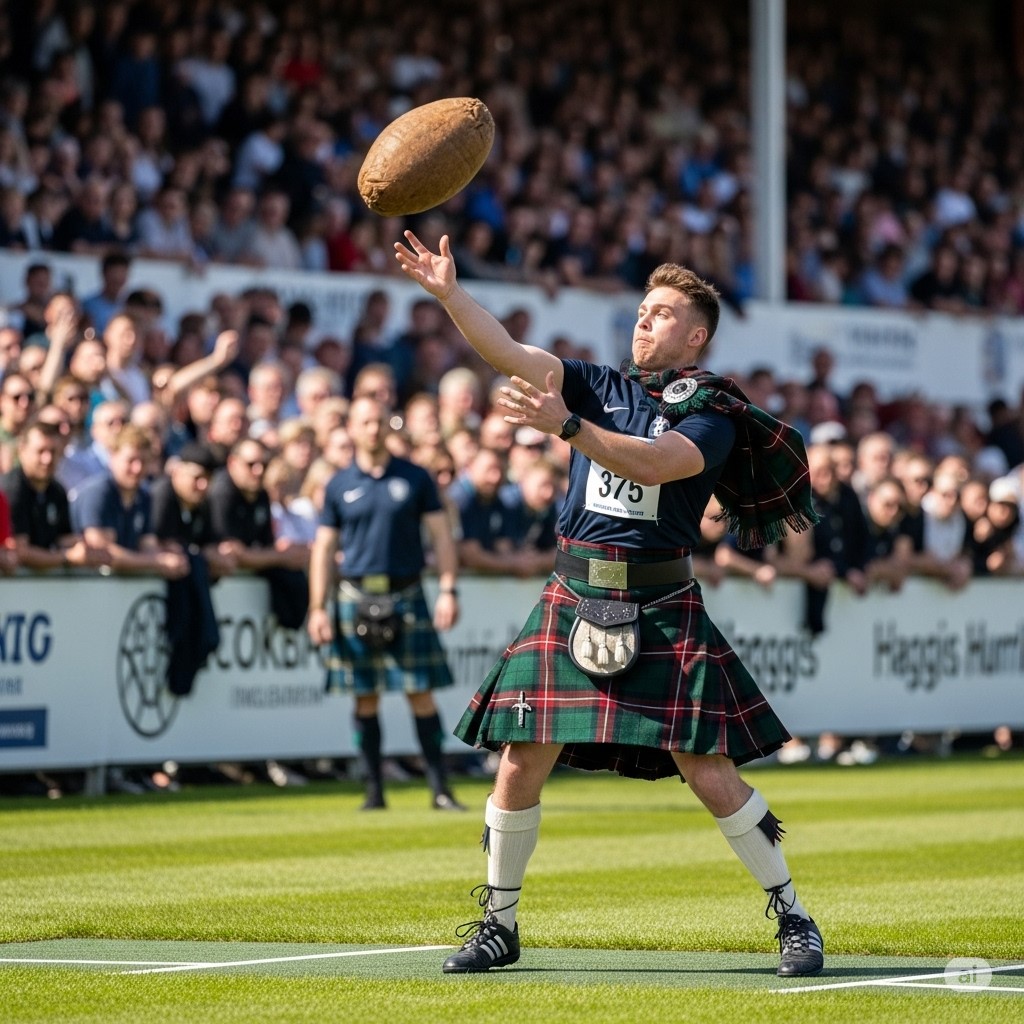
The Wild World of Haggis Hurling: Tradition, Competition, and Culture
Haggis Hurling is a bizarre yet fascinating sport that continues to captivate enthusiasts around the world. This eccentric competition involves throwing a haggis—a traditional Scottish dish—as far as possible while maintaining its integrity. Though it might sound like a quirky tradition, Haggis Hurling has deep cultural roots, growing international appeal, and a surprisingly organized structure. This article explores the origins, global popularity, amateur and professional play, political and social significance, and the official rules of this unique sport.
Origins and Historical Background
The roots of Haggis Hurling trace back to 18th-century Scotland. Legend suggests that wives would throw haggis to their husbands working in the fields. To avoid getting their kilts dirty by coming home, men would catch the haggis in their aprons. This pragmatic activity eventually became a competitive pastime. While no written records confirm the exact beginning, oral tradition and folklore uphold this origin story.
Another theory claims that Haggis Hurling began during Highland Games festivals. At these events, local villagers would devise humorous and creative contests to entertain themselves and visitors. One such contest involved hurling haggis, initially as a joke. However, the game gained traction and eventually became an annual event at certain festivals.
The sport enjoyed intermittent popularity through the 19th and early 20th centuries. In 1977, it experienced a revival thanks to Robin Dunseath, who invented a formal set of rules and claimed historical legitimacy for the sport. While his claims were largely fabricated for marketing, they sparked widespread interest and modern formalization.
Growing Global Popularity of Haggis Hurling
Although Haggis Hurling originated in Scotland, it has expanded beyond its homeland. Today, enthusiasts can be found in Canada, the United States, Australia, and even parts of Europe. Scottish expatriate communities have played a significant role in spreading the sport. These communities celebrate their heritage through local Highland Games, where Haggis Hurling often features prominently.
In Canada, the sport enjoys particular popularity during Robbie Burns Day celebrations. In Nova Scotia and Ontario, competitions attract both locals and tourists. Similarly, in the United States, Haggis Hurling events are held at Scottish festivals in states like North Carolina, New Hampshire, and Oregon.
Australia has embraced Haggis Hurling with a surprising level of enthusiasm. The Bundanoon Highland Gathering in New South Wales hosts one of the Southern Hemisphere’s largest Haggis Hurling events. Europe has also caught on. In Germany and the Netherlands, cultural exchange programs have led to annual hurling events tied to Scottish heritage weeks.
Amateur Involvement Worldwide
Amateur Haggis Hurling thrives in schools, clubs, and community events. In Scotland, schools occasionally include the sport in physical education programs. Children hurl synthetic haggis—made of soft materials—for safety reasons. Teachers use the activity to teach about Scottish culture while engaging students physically.
Community clubs often hold casual competitions. These events foster local pride and camaraderie. Participants range from teenagers to retirees, often dressed in traditional Scottish attire. Winning brings bragging rights and sometimes a novelty trophy.
In Canada and the United States, youth sports programs have incorporated Haggis Hurling as a novelty event. Summer camps and heritage days allow children to learn the basic techniques. They also absorb cultural knowledge through these entertaining activities.
Schools with a strong focus on cultural studies sometimes stage Haggis Hurling contests during special events. These programs educate students on Scottish history and traditions. Students appreciate the hands-on, interactive learning experience.
Professional Leagues and Formal Competitions
Although Haggis Hurling is primarily an amateur pursuit, several professional leagues and structured competitions exist. Scotland leads the way with the World Haggis Hurling Championship held annually during the Highland Games at Airth. This event draws serious competitors, many of whom train year-round.
The Professional Haggis Hurlers Association (PHHA), established in 1999, maintains the sport’s integrity. The organization sets professional standards, enforces rules, and sanctions official competitions. Members include athletes from Scotland, Canada, the United States, and Australia.
In Canada, the Great Canadian Haggis Hurl-Off attracts hundreds of spectators each year. Participants undergo rigorous qualification rounds. Judges scrutinize their technique, distance, and whether the haggis remains intact. Winners receive not only prizes but also international recognition.
The U.S. Haggis Hurling League, though smaller in scale, continues to grow. It coordinates with local Scottish festivals to host ranked events. Athletes in the league travel across states to compete and improve their standing.
Australian leagues have started forming, particularly in New South Wales and Victoria. Local councils often sponsor these competitions, seeing the sport as both a cultural showcase and a tourist attraction.
Political and Social Significance of Haggis Hurling
Haggis Hurling holds both political and social importance, particularly in Scotland. The sport symbolizes national pride and cultural identity. During debates on Scottish independence, traditional customs like Haggis Hurling have been cited as evidence of a unique Scottish ethos.
The Scottish National Party has occasionally referenced traditional sports, including Haggis Hurling, to promote cultural preservation. Their emphasis on heritage supports policies that fund local festivals and historical events.
Socially, the sport brings communities together. Multigenerational participation strengthens family ties and fosters inclusivity. During events, people from all walks of life come together to cheer, laugh, and compete. This camaraderie builds social capital and reinforces shared identity.
Charity events often incorporate Haggis Hurling. These fundraisers not only entertain but also support noble causes. Organizations use the sport’s humor and uniqueness to attract donations and media attention.
Moreover, Haggis Hurling empowers individuals with disabilities. Adaptive hurling competitions allow for participation through modified equipment. These inclusive events show the sport’s versatility and its potential to unify diverse groups.
Official Rules of Haggis Hurling
While variations exist, most formal competitions follow a standard set of rules. These rules ensure fairness, safety, and consistency. Below are the typical guidelines followed by official leagues:
Equipment
- The haggis must weigh between 1 and 1.5 pounds.
- It must be composed of authentic ingredients unless safety or health codes require alternatives.
- In amateur events, a synthetic haggis may be used for safety.
Throwing Area
- Competitors must stand behind a designated line.
- The field is marked in 5-meter increments.
- Spectators and officials must remain outside the throwing zone.
Throwing Technique
- The haggis must be thrown by hand, using a spinning or overhead motion.
- Competitors must not cross the throwing line during the release.
- Distance and accuracy both contribute to the final score.
Scoring
- Distance is measured from the throwing line to the first impact point.
- Judges deduct points if the haggis bursts open upon landing.
- The throw must land within a 35-degree sector to qualify.
Disqualifications
- Crossing the throwing line during the throw
- Using non-regulation haggis
- Tampering with equipment
Attire
- Competitors are encouraged to wear kilts.
- Footwear must comply with safety regulations.
These rules ensure uniformity and maintain the sport’s traditional flavor. Competitions often include demonstrations for new spectators, increasing public engagement.
Conclusion
Haggis Hurling may seem whimsical, but it embodies deep cultural roots, international appeal, and structured competition. From its humble origins in Scottish fields to organized leagues across continents, the sport continues to thrive. It unites communities, supports education, and even contributes to charitable causes. Whether through youth programs or professional events, Haggis Hurling captures imaginations and inspires participation.
With its humorous nature and heartfelt tradition, this unique sport stands as a testament to cultural resilience and creative expression. Haggis Hurling is more than a quirky competition—it’s a living, breathing celebration of heritage that continues to grow across the globe.