
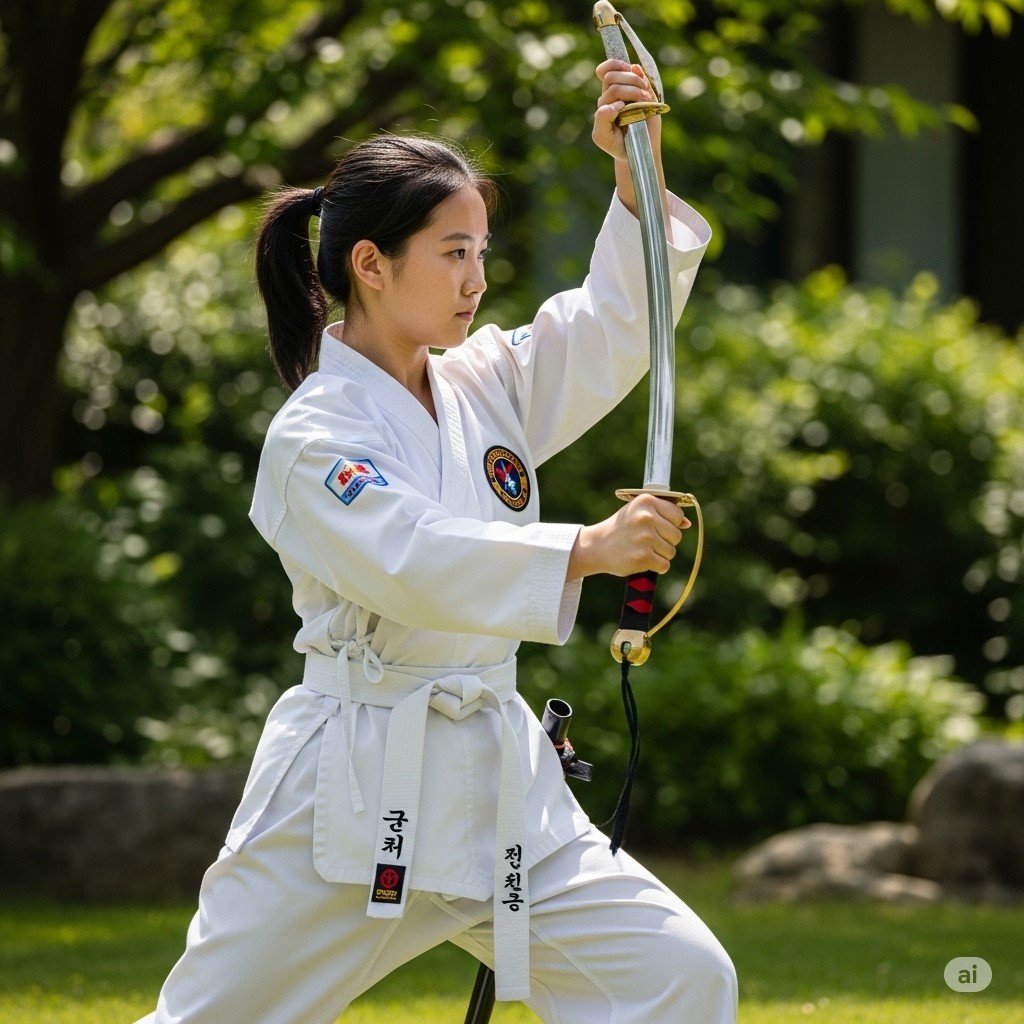
Haidong Gumdo: A Global Sword Art Blending Tradition and Modern Sport
Haidong Gumdo is more than just a martial art. It is a dynamic sport rooted in centuries of Korean tradition. This sword-based discipline combines grace, discipline, and power. Although lesser known than taekwondo, it has steadily grown in global popularity. Today, it is practiced on nearly every continent. From its deep historical roots to modern competition rules, this article explores every facet of Haidong Gumdo.
Origins and History of Haidong Gumdo
The roots trace back to ancient Korea. It developed during the Goguryeo Dynasty, which lasted from 37 BCE to 668 CE. During this era, Korea was a warrior-based society. Swordsmanship played a vital role in both battlefield strategy and personal development.
Unlike Japanese kendo, which evolved from samurai traditions, Haidong Gumdo focuses on the battlefield techniques of ancient Korean warriors. It emphasizes wide, powerful cuts and battlefield agility. These techniques were once vital in large-scale battles fought on horseback or foot.
Modern Haidong Gumdo was officially founded in 1982 by Grandmaster Kim Jeong-Ho. He aimed to preserve Korea’s sword traditions and adapt them for modern practice. Under his leadership, the World Haidong Gumdo Federation was established in 1996. This organization played a crucial role in standardizing the art and spreading it globally.
Global Popularity and Where Haidong Gumdo Is Practiced
Although it started in South Korea, Haidong Gumdo quickly spread to other countries. Today, practitioners can be found in the United States, Canada, Brazil, Germany, Australia, and South Africa, among others. Each country has its own national Haidong Gumdo federation affiliated with the world body.
The sport gained traction in North America during the early 2000s. Martial arts schools in the U.S. began offering classes alongside traditional disciplines like karate and kung fu. Europe followed suit, especially in Germany and the United Kingdom, where strong martial arts communities embraced the sport.
South America, particularly Brazil, has also seen rapid growth. The combination of rich cultural appreciation and strong martial arts traditions made the region fertile ground for Haidong Gumdo. Meanwhile, in Africa, South Africa leads in development, with regular seminars and national championships.
In Asia outside of Korea, countries like Malaysia, the Philippines, and Indonesia now host schools and tournaments. These regions value the blend of spiritual and physical development that Haidong Gumdo offers.
Amateur Haidong Gumdo: Youth, Schools, and Training
Amateur participation is the backbone of Haidong Gumdo’s global growth. Many schools offer introductory programs for children as young as five. Youth classes focus on basic forms, discipline, and motor skills. As students progress, they learn cutting techniques, stances, and sparring.
In Korea, Haidong Gumdo is offered in public schools and after-school programs. This early exposure ensures a steady pipeline of dedicated practitioners. In other countries, local dojangs (training halls) partner with educational institutions to offer classes.
Amateur tournaments occur frequently. These competitions include forms (known as “gumbup”), sparring with padded swords, and cutting demonstrations. Scoring rewards precision, power, and correct form. Safety is paramount, especially for younger participants.
Female participation continues to rise. Many girls and young women find empowerment in mastering a traditionally male-dominated weapon art. Gender equity has become a significant focus in amateur training programs worldwide.
Amateur associations also emphasize community. Annual training camps, grading tests, and demonstrations create a sense of belonging. These events often include cultural presentations, like traditional Korean drumming and dress.
Professional Leagues and Competitive Circuits
Although Haidong Gumdo is primarily practiced as a traditional martial art, professional leagues have begun to emerge. South Korea leads the way with the Korea Haidong Gumdo Association organizing national-level events. These competitions draw elite athletes who have trained for decades.
Globally, countries like Germany and the United States host invitational tournaments. These events offer cash prizes, sponsorships, and media coverage. Competitors are judged in multiple categories: forms, cutting accuracy, synchronized demonstrations, and sparring.
The World Haidong Gumdo Federation continues to promote professionalism. International championships occur every two years. These events rotate among host nations and draw hundreds of participants. The last championship in Seoul attracted over 800 athletes from 32 countries.
Media coverage of these events remains niche. However, social media platforms have allowed professional competitors to build personal brands. YouTube channels, Instagram reels, and TikTok videos showcase stunning performances and technical breakdowns.
Efforts to secure Olympic recognition have not yet succeeded. However, global visibility continues to grow. Organizers hope to follow the path of taekwondo, which gained Olympic status in 2000.
Political and Social Significance
Haidong Gumdo holds deep political and social significance, especially in Korea. It serves as a cultural ambassador, highlighting Korea’s martial heritage on the world stage. This role has increased since the Korean government began funding cultural exports in the 1990s.
For many Koreans, practicing Haidong Gumdo is a way to reconnect with their history. It reinforces national pride and traditional values like honor, respect, and perseverance. These qualities align well with modern educational goals.
Outside Korea, Haidong Gumdo fosters multicultural appreciation. Many non-Korean practitioners learn about Korean history, language, and customs. In this way, it functions as both sport and soft diplomacy.
The sport also promotes mental health and discipline. Practitioners report improvements in focus, stress management, and self-esteem. These benefits make it especially appealing in school programs and therapeutic settings.
Haidong Gumdo is also used in community outreach. Programs in low-income neighborhoods teach the art as a tool for empowerment. These initiatives reduce violence, build confidence, and offer positive role models.
In addition, women’s empowerment is a growing theme. Female masters now lead many dojangs worldwide. Their visibility challenges gender norms and inspires new generations of practitioners.
Rules and Structure of Haidong Gumdo Competitions
The rules of Haidong Gumdo competitions focus on precision, discipline, and safety. Events typically fall into several categories: forms, cutting, sparring, and demonstrations.
Forms (Gumbup): Practitioners perform pre-determined patterns simulating combat scenarios. Judges score based on technique, power, rhythm, and fluidity. Uniform movement and accurate stances are crucial.
Cutting (Begisul): Competitors use real swords to cut through bamboo, paper, or straw targets. The goal is a clean, controlled slice. Judges consider angle, accuracy, and follow-through.
Sparring (Gyeorugi): Participants use padded swords and protective gear. Matches are scored by clean strikes to target zones such as the head, torso, and limbs. Unlike kendo, Haidong Gumdo sparring emphasizes flow over rigidity.
Demonstrations (Cheonryun): Teams perform synchronized routines set to music or traditional drums. These performances showcase creativity, timing, and group coordination. They are a crowd favorite in tournaments.
Time limits apply to all events. Scoring is handled by trained judges, often high-ranking masters. Penalties are given for poor control, off-balance stances, or safety violations.
Uniforms include the traditional black dobok with a blue or red belt indicating rank. Higher-ranking practitioners may wear distinctive sashes or embroidery. Safety equipment includes helmets, gloves, and chest protectors.
Weapons must meet specific standards. Swords used in cutting must be sharp but safe, often made from high-grade steel. Practice swords for sparring are padded and measured for balance.
Rankings follow a colored belt system, from white for beginners to black for advanced levels. Advancement requires passing both physical and written exams.
Judges and referees are certified by national or international federations. This ensures consistency and fairness in all events.
The Future of Haidong Gumdo
The future of Haidong Gumdo looks bright. With increasing youth participation and global reach, it is poised for continued growth. Technological advancements like virtual reality training and AI-assisted analysis may enhance learning.
Martial arts movies and TV series also boost interest. When sword-based characters gain popularity, enrollment in Haidong Gumdo schools rises. This trend mirrors what happened with kung fu after Bruce Lee’s films.
Cross-training with other martial arts adds to the appeal. Many practitioners of karate, taekwondo, and aikido find that it complements their skills. It enhances balance, focus, and upper-body coordination.
Online instruction expands access. Students in remote areas can now learn from top masters through digital platforms. This innovation reduces geographic barriers and spreads the art further.
Meanwhile, research continues into the health benefits of Haidong Gumdo. Early studies suggest improvements in posture, cardiovascular health, and joint mobility. These findings support its use in physical therapy and senior fitness programs.
In conclusion, Haidong Gumdo stands at the intersection of tradition and innovation. It honors Korea’s martial legacy while adapting to a modern, global audience. Through discipline, skill, and community, it continues to inspire practitioners around the world.
Whether for fitness, competition, or cultural connection, Haidong Gumdo offers something meaningful. As more people discover its power and beauty, its legacy will only grow stronger.