
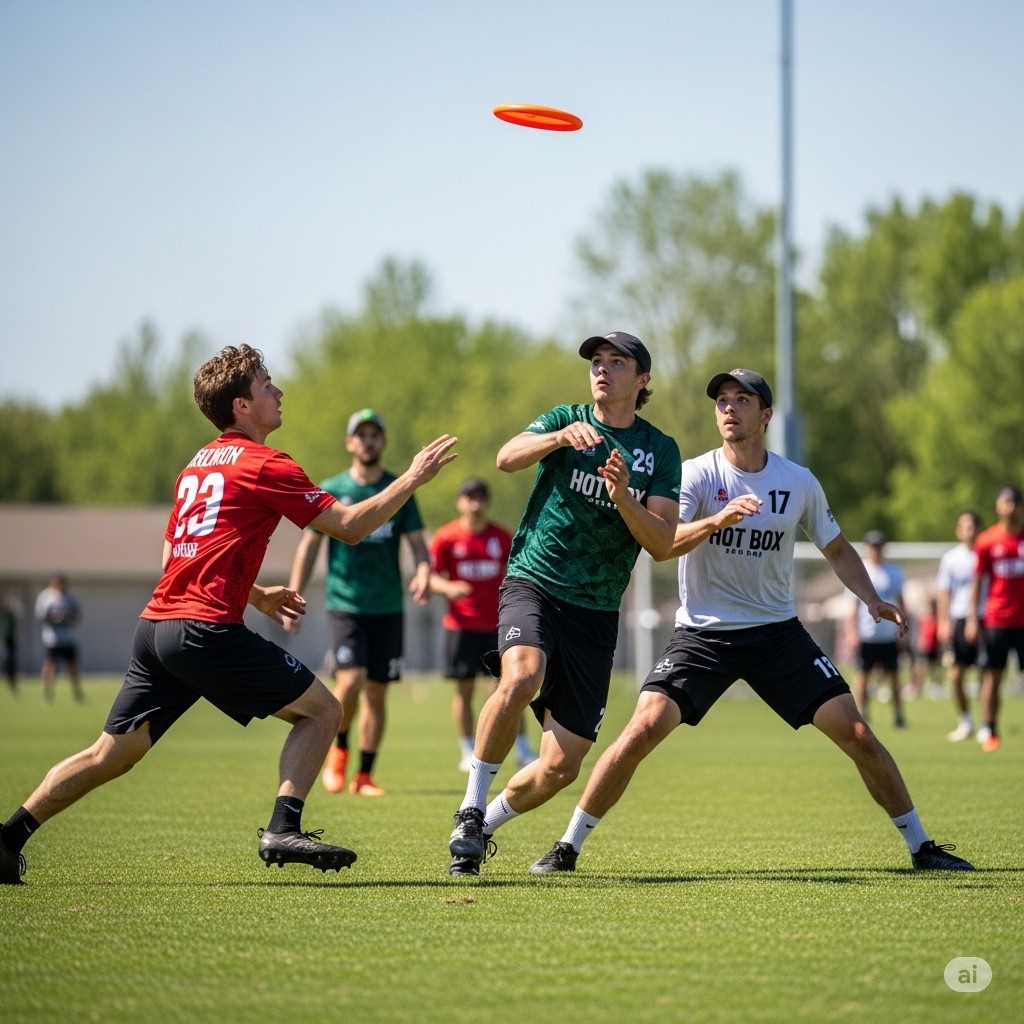
Hot Box: The Fast-Paced Sport Redefining Field Games
Hot Box has emerged as one of the most exciting and accessible field sports in the modern world. The sport has gained popularity across continents, bringing communities together and energizing athletes of all ages. Whether played in a schoolyard, park, or professional arena, it captivates participants and spectators alike. This blog post will explore the detailed history, global presence, youth participation, professional leagues, social impact, and rules of Hot Box.
Origins and History of Hot Box
It originated as a training drill in the sport of Ultimate Frisbee. Athletes needed a way to practice throwing, pivoting, and cutting in small spaces. Out of this necessity, Hot Box was born. Its roots can be traced to Ultimate players in North America in the 1980s.
As players experimented, the game evolved into a stand-alone sport. They reduced the field size and simplified the rules. These changes made it easier to play with fewer people. Over time, it developed its own identity, distinct from Ultimate Frisbee.
College campuses and Ultimate tournaments helped spread the game. Players would warm up with Hot Box or use it for casual fun between competitive matches. This informal exposure fueled its popularity. The game grew organically without a governing body in the early years.
Eventually, the sport crossed borders. It appeared in Europe, South America, and Asia by the late 1990s. As its reach expanded, variations of Hot Box emerged. Each region added local flavor, yet core principles remained consistent. Today, it boasts a rich cultural and historical foundation.
Global Popularity of Hot Box
The simplicity and low-cost nature have made it a global phenomenon. With a disc, cones, and a small group of players, anyone can organize a game. This accessibility has fueled its adoption in over 40 countries.
In North America, it remains especially popular on college campuses. University Ultimate clubs often schedule weekly Hot Box sessions. These games attract beginners and veterans alike.
Europe has embraced the sport enthusiastically. Countries like Germany, the UK, and France host regular tournaments. Scandinavian countries use it in community fitness programs.
In South America, Brazil and Argentina lead the way. Their beach-friendly environments are perfect for Hot Box. Games on sandy fields add an extra layer of athleticism.
Asia has seen growing interest in recent years. Japan, South Korea, and India have organized clubs and inter-city competitions. Enthusiasts cite the sport’s fast pace and minimal equipment as key benefits.
Hot Box has also reached Australia and New Zealand. Both countries have tied the sport into school athletics and public health initiatives. As a result, it continues to flourish worldwide.
Amateur Play: Youth, Schools, and Community Involvement
It is particularly popular in youth programs and schools. Physical education teachers appreciate the game’s simplicity. It develops agility, coordination, and teamwork without needing expensive gear.
Many middle and high schools have added Hot Box to their PE curriculum. Students learn the basics quickly. The game encourages fair play and collaboration.
After-school clubs often organize Hot Box games. In urban areas, where space is limited, the compact field size is a major advantage. Community centers use it to engage at-risk youth in positive activity.
Summer camps and recreational leagues also promote Hot Box. Kids of all ages can join. The emphasis is on movement, decision-making, and having fun.
College intramural programs feature Hot Box as a key sport. It attracts athletes from different backgrounds. Even those unfamiliar with Ultimate Frisbee quickly become fans.
Parents and educators appreciate the game’s inclusiveness. Boys and girls can compete together. There are no physical barriers to entry, making it a diverse and inviting sport.
Professional Leagues and Competitive Structures
Although still developing, professional Hot Box leagues have started to form. These leagues aim to formalize the sport and elevate its profile.
In the United States, the American Hot Box Association (AHBA) leads the charge. It was founded in 2017 and now oversees club-level competition in ten states. Teams compete in regional divisions before advancing to national championships.
Canada has launched its own league, the Canadian Hot Box Circuit (CHBC). Based in Toronto, the league features both co-ed and single-gender teams. Broadcast partnerships help bring games to a wider audience.
Europe follows suit. The European Hot Box Federation (EHBF) coordinates annual championships. Countries like Germany, the Netherlands, and the UK send representative teams. The EHBF has standardized rules across the continent.
In Asia, Japan and South Korea have begun organizing professional events. These include city-based teams and college alumni squads. Corporate sponsorship is helping fund operations.
South America has also seen developments. The Latin Hot Box League (LHBL) debuted in 2022. Games in Buenos Aires and Rio de Janeiro draw enthusiastic crowds. The league is working on youth outreach and talent development.
Professional Hot Box is still in its infancy. However, its rapid growth suggests strong long-term potential. Fans enjoy the game’s intensity and accessibility.
Social and Political Significance of Hot Box
It holds more than just recreational value. Socially, it fosters inclusion and community. Politically, it plays a subtle role in promoting cooperation and youth engagement.
The game’s non-contact nature makes it ideal for co-ed participation. Players of different genders, backgrounds, and skill levels can compete equally. This inclusivity promotes mutual respect and understanding.
Hot Box has been used in peace-building initiatives. In conflict zones, NGOs use sport to connect youth from opposing groups. The shared goal of teamwork builds bridges.
Public health programs also incorporate Hot Box. Governments promote it as a fun way to stay active. Communities battling obesity and inactivity have adopted it in outreach campaigns.
Educational institutions value its moral lessons. Players learn self-regulation and honesty. Since there are often no referees, integrity becomes vital.
Politically, Hot Box has supported urban renewal. Abandoned lots and parks have been revitalized into play spaces. This boosts civic pride and reduces crime.
Sports diplomacy is another frontier. Hot Box matches between nations have occurred during cultural festivals. These friendly games help build diplomatic rapport.
In essence, it contributes to both social unity and political goodwill. It offers far-reaching benefits beyond athletic performance.
Rules and Gameplay of Hot Box
The rules are simple yet allow for complex strategy. The game usually involves four to six players per side. It is played on a square field, often 40 feet by 40 feet.
A small “box” or end zone (10 feet square) is placed in the center. The object is to complete a pass inside the box to score.
Teams start on opposite sides of the square. A disc is thrown off to begin play. Players pass the disc to advance. Running with the disc is not allowed.
Once inside the central box, a player must catch a pass to score. Only one foot needs to be in the box for a point to count.
After scoring, the opposing team takes possession from behind their start line. Turnovers occur through drops, interceptions, or out-of-bounds passes.
Games can be played to a set score or within a time limit. Most casual games go to five or seven points.
Fouls must be called by players as there are no referees. Sportsmanship is essential.
Stalling is regulated. A player must throw the disc within 10 seconds of receiving it. Teammates count out loud to enforce this.
Substitutions occur between points. Games often rotate players in casual settings. Professional matches follow substitution rules similar to Ultimate.
The field must be clear of hazards. Players often set up boundaries with cones or markers. Safety is a top priority.
Conclusion
Hot Box has come a long way from its origins as a warm-up drill. It now stands as a vibrant, fast-paced sport with a global presence. From schoolyards to professional arenas, it inspires joy, teamwork, and community.
As more countries embrace the game, it continues to evolve. Its rules are simple. Its impact is profound. Hot Box represents the best of modern sport: inclusive, energetic, and meaningful.