
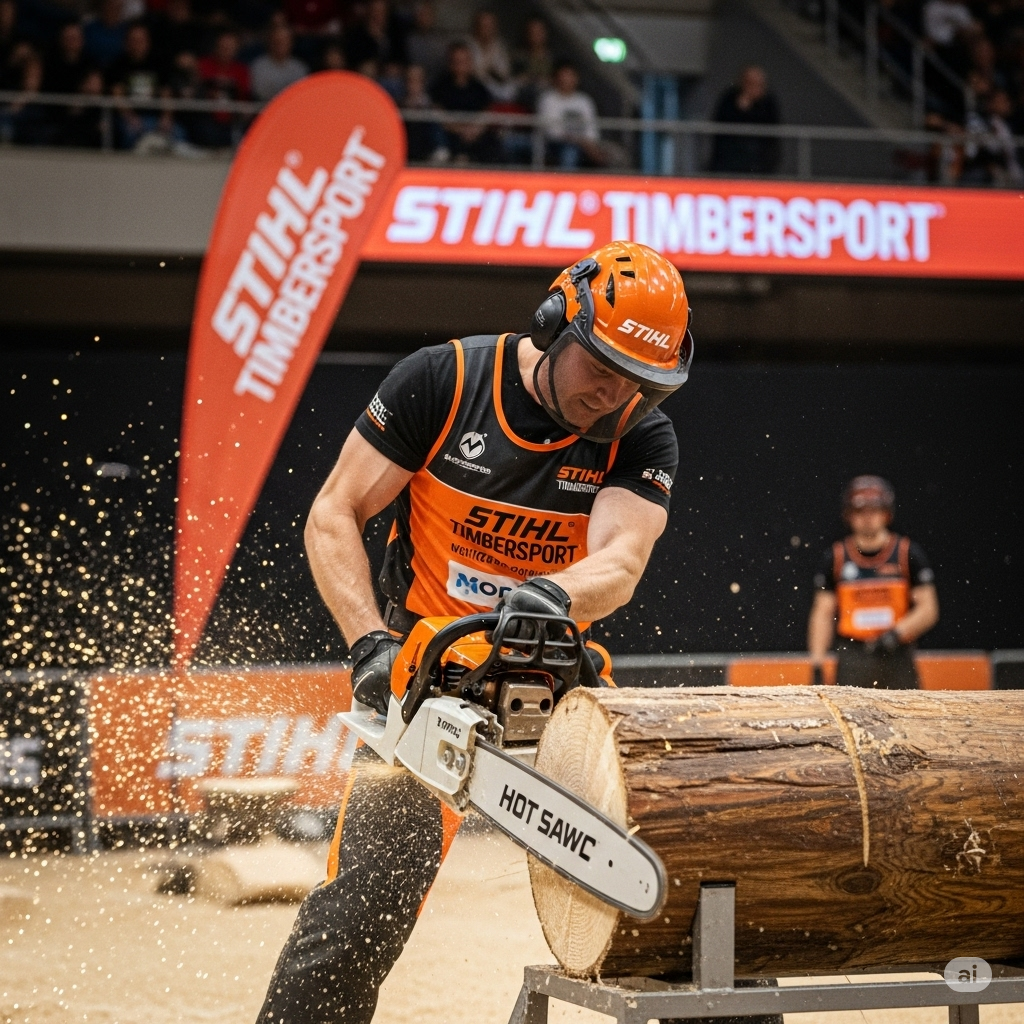
Hot Sawing: The Explosive Sport of Precision and Power
Hot Sawing is one of the most thrilling and intense events in the world of competitive lumberjack sports. This high-octane discipline involves cutting through massive logs using customized, high-powered chainsaws. The roar of engines, the blur of spinning chains, and the rush of adrenaline make Hot Sawing a must-see event. Over the years, it has grown in popularity and continues to attract fans and competitors globally. In this blog post, we’ll dive deep into the origins, growth, rules, amateur participation, professional leagues, and the cultural impact of Hot Sawing.
Origins and History of Hot Sawing
The roots trace back to the logging camps of North America in the early 20th century. Loggers often competed informally to determine who could fell a tree or cut logs the fastest. These friendly competitions laid the foundation for modern lumberjack sports.
As chainsaws became more powerful in the 1950s, some competitors began modifying their saws to gain an edge. These early modified chainsaws, fueled by gasoline and nitromethane blends, became the first “hot saws.” The competitions gained structure and rules. Eventually, Hot Sawing emerged as a standalone event in lumberjack competitions.
In the 1970s and 1980s, it became a staple at timber sport events in Canada, the United States, and Australia. The sport began to evolve rapidly with innovations in engine technology. Competitors began building saws from motorcycle, snowmobile, and even jet ski engines. This evolution transformed Hot Sawing into the high-speed spectacle it is today.
Global Popularity and Geographic Reach
Hot Sawing enjoys a dedicated following across North America, Europe, Oceania, and parts of Asia. In the United States and Canada, the sport is regularly featured at state fairs, logging festivals, and national championships. Events such as the STIHL TIMBERSPORTS Series have helped bring the sport into mainstream awareness.
Australia and New Zealand also boast strong Hot Sawing communities. Timber sports are integral to rural festivals in these countries. Competitions are major attractions at events like the Royal Easter Show in Sydney and the New Zealand Agricultural Show.
In Europe, Germany, Austria, and Switzerland have embraced lumberjack sports, including Hot Sawing. Germany hosts several competitive series where Hot Sawing is a marquee event. Scandinavia has also developed a competitive scene, drawing on the region’s deep forestry traditions.
Asia has started to engage with the sport, especially in Japan and South Korea. Here, timber sports have become symbolic of rural heritage and industrial pride. With growing interest, regional contests and exhibitions now feature Hot Sawing more frequently.
Amateur Hot Sawing and Youth Involvement
Amateur Hot Sawing thrives in many parts of the world. Local logging festivals and community fairs often include entry-level competitions. These events provide opportunities for beginners to test their skills and compete.
In the United States, many high schools with forestry programs introduce students to lumberjack sports. Vocational schools and agricultural colleges often include it in their training programs. This early exposure helps nurture a pipeline of future competitors.
Youth competitions are also growing in Canada and Australia. Several organizations run junior leagues to foster safe and educational participation. Coaches and mentors teach safety, equipment handling, and technique.
Amateur leagues frequently host weekend competitions. These gatherings help build camaraderie and offer a platform to move into semi-professional and professional levels. Safety gear, supervision, and structured rules ensure that youth participants learn in a controlled environment.
Online communities and social media have also fueled interest. Many amateurs share videos, tips, and tutorials. This virtual space allows for year-round learning and engagement even outside of traditional competition seasons.
Professional Leagues and Competitive Circuit
The professional Hot Sawing scene is structured and fiercely competitive. The most prominent organization is the STIHL TIMBERSPORTS Series. Originating in the United States, this league now operates internationally, including in Europe and Oceania.
In the STIHL TIMBERSPORTS Series, Hot Sawing is the final event of the competition. Athletes must complete three cuts through a 19-inch log using a customized saw. Times are typically under ten seconds, with the fastest around five seconds. Precision is crucial; missed cuts or overcuts result in disqualification.
Australia has its own league, governed by the Australian Axemen’s Association. They host numerous timber sports competitions throughout the year. Hot Sawing is consistently one of the most anticipated events.
In Europe, the German Timbersports Championship and the Nordic Timber Games feature elite Hot Sawing competitors. These events are broadcast on television and online streaming platforms, attracting large audiences.
Japan has also begun organizing professional events, often in conjunction with forestry exhibitions. These competitions are drawing both regional and international competitors, further cementing the sport’s global footprint.
Sponsorships play a big role in professional Hot Sawing. Equipment companies, fuel manufacturers, and outdoor brands often back competitors. This financial support allows athletes to invest in better gear and travel to international events.
Political and Social Significance of Hot Sawing
Hot Sawing carries more than just entertainment value. It reflects the historical importance of the logging industry in many countries. In rural areas, the sport honors the skills, endurance, and ingenuity of early timber workers.
Politically, Hot Sawing can represent a form of economic and cultural identity. In regions where forestry is a major employer, the sport helps maintain public interest in the industry. This visibility can influence funding for vocational programs and logging safety initiatives.
Socially, Hot Sawing events often serve as community gatherings. These competitions draw people from diverse backgrounds and help strengthen local ties. Family traditions frequently revolve around participation and support for local athletes.
Some Indigenous communities have also adopted Hot Sawing into cultural festivals. This inclusion fosters respect for traditional land skills while bridging them with modern athletic competition.
The sport promotes environmental awareness as well. Many events include education about sustainable forestry practices. Competitors and fans alike become advocates for responsible wood harvesting.
In education, Hot Sawing helps promote STEM principles. Engineering, physics, and mechanics are integral to building and optimizing saws. This intersection of academics and athletics makes the sport a unique educational tool.
Rules and Structure of Hot Sawing
While variations exist between leagues, the rules are fairly consistent. Competitors use a custom-built saw powered by engines from motorcycles, snowmobiles, or watercraft.
The objective is to cut three complete discs—called cookies—from a horizontal log. The log must measure at least 19 inches in diameter. Athletes start with both hands on the log and may only touch the saw after the signal.
The saw must be manually operated. No remote controls or electronic starts are allowed. Fuel mixtures often include methanol or nitromethane. However, strict safety standards govern fuel handling.
Competitors have a limited time to complete the cuts. Times are measured in seconds, and even a hundredth of a second can determine the winner. The cuts must fall within marked boundaries. Incomplete, uneven, or off-center cuts lead to penalties or disqualification.
Safety gear is mandatory. This includes chainsaw chaps, steel-toe boots, helmets, face shields, and hearing protection. Technical inspections ensure that saws meet competition standards.
Judges evaluate both the time and accuracy of the cuts. Appeals and replays may occur in high-stakes competitions. Integrity and sportsmanship are essential. Violations result in warnings, disqualifications, or bans.
Conclusion
Hot Sawing is more than a competition; it’s a celebration of craftsmanship, tradition, and raw power. With deep historical roots and a growing global presence, the sport continues to evolve. From youth leagues to professional championships, it inspires athletes, engineers, and communities alike.
Its explosive nature, combined with precision and strategy, sets it apart in the world of competitive sports. Whether you’re a fan, a student, or an aspiring competitor, Hot Sawing offers something unique and deeply rewarding. As the sport expands globally, its impact—cultural, educational, and social—continues to grow.