
Introduction
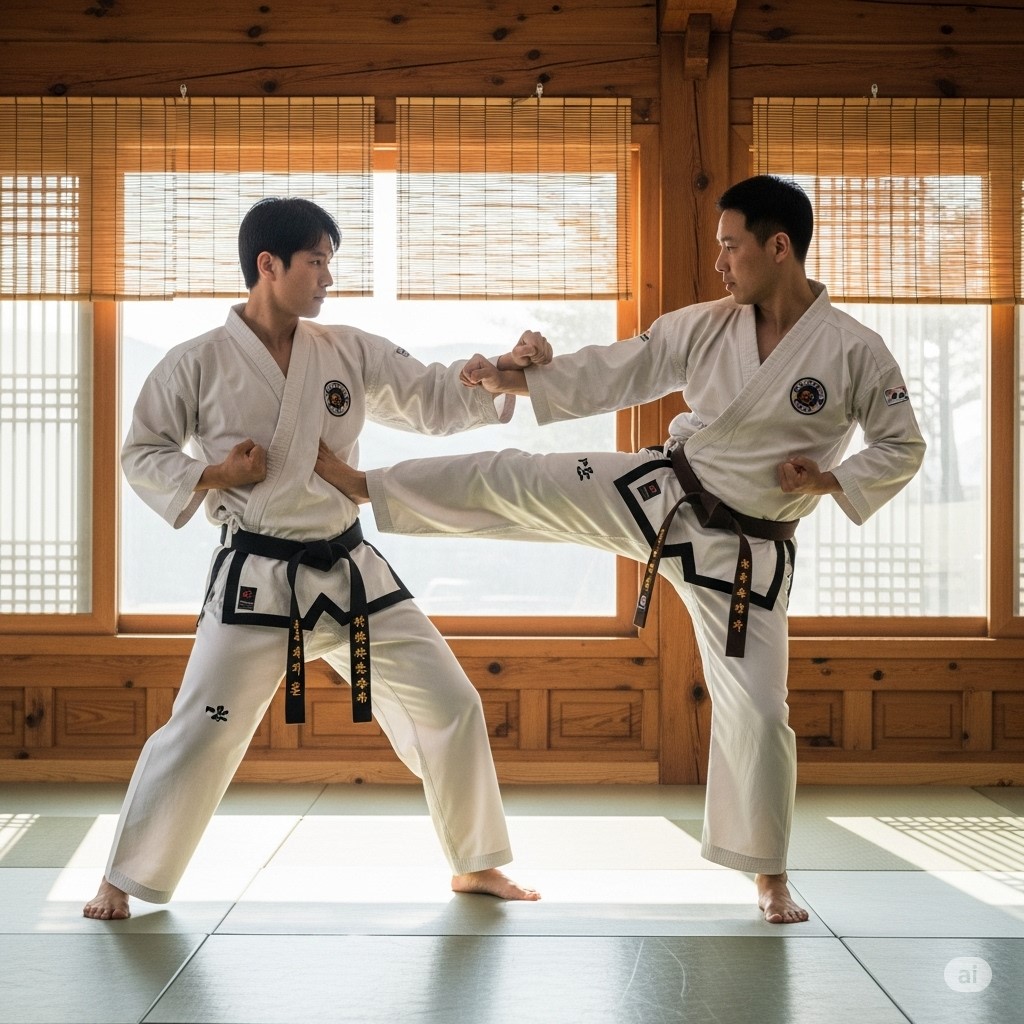
Hwa Rang Do emerged from ancient Korean martial traditions, blending combat, philosophy, and discipline into a modern sport. With roots in the Silla Dynasty, Hwa Rang Do revived warrior code principles. As a result, practitioners train mind and body together. Globally recognized, Hwa Rang Do attracts students of all ages. Moreover, its focus on character development appeals to parents. Consequently, Hwa Rang Do schools thrive internationally. Firstly, this post explores the origin and history in detail. Additionally, it covers popularity, amateur play, professional leagues, political and social significance, and official rules. Read on to immerse yourself in the world of Hwa Rang Do.
1. Origins and History
Hwa Rang Do traces its lineage back to ancient Korea. In the Silla Kingdom (57 BC–935 AD), elite youth warriors known as “Hwa Rang” (Flowering Knights) trained in martial arts, philosophy, and leadership. They upheld loyalty, honor, and sacrifice.
Centuries passed. Then modern martial arts master Joo Bang Lee founded Hwa Rang Do in the 1960s. He synthesized traditional Korean styles with insights from Chinese arts and scholarly studies. Therefore, the art’s foundation became very broad.
In 1960 Lee formalized the system. He wrote manuals that documented techniques, forms, and ethics. Additionally, schools spread through South Korea by the late 1960s. In the 1980s practitioners brought Hwa Rang Do to the United States, Europe, and Australia. Over decades, tournaments and demonstrations showcased its comprehensive skills.
Founded on ancient values, the modern sport preserved the warrior’s way. Simultaneously, it adopted educational frameworks. As a result, it remains relevant and structured for contemporary athletes.
2. Global Popularity and Distribution
Hwa Rang Do enjoys growing popularity worldwide. Initially rooted in Korea, it today has a global presence. For example, the United States hosts dozens of dojang (schools). Many cities—from Los Angeles to Boston—offer classes. On the East Coast, several universities feature martial arts clubs where Hwa Rang Do is practiced.
Similarly, in Europe there are schools in the UK, Germany, France, Spain, and Italy. In the UK, the British Hwa Rang Do Association organizes regular certification courses. Meanwhile, in Germany, schools based in Berlin and Frankfurt hold monthly sparring seminars.
Further, in Australia clubs in Sydney and Melbourne provide classes for children and adults. In Asia beyond Korea, dojang exist in Japan, Taiwan, Philippines, and Singapore. Even Latin America has small communities. Brazil and Mexico host regional tournaments annually.
Moreover, participation now includes online training platforms and virtual seminars. For example, instructors in Korea offer live classes globally. Consequently, the sport reaches individuals in remote communities.
Globally, over 5,000 practitioners train regularly. That number continues to grow. Word of mouth and social media drive its popularity. Emphasis on real-self defense and ethical character appeals to parents and martial artists alike.
3. Amateur Hwa Rang Do: Youth and School Programs
Across the globe, amateur Hwa Rang Do programs target youth. Many dojang offer children’s classes starting at age 6. They focus on basic self defense, discipline, and fitness. Typically, classes meet two to three times weekly after school. They include dynamic warm-ups, fundamental techniques, and partner drills.
Schools sometimes integrate Hwa Rang Do into physical education. For instance, in one U.S. school district, an elective martial arts credit includes Hwa Rang Do. Students learn sword forms, empty hand techniques, and character lessons.
Further, youth camps occur during summer months. These camps emphasize self-confidence and teamwork through structured drills and games. Participants learn forms, board breaks, and grappling. They engage in mini-tournaments and earn rank promotions.
Amateur tournaments frequently take place. They feature point sparring, pattern demonstrations, and creative weapons displays. Adults and children both participate. Events may be regional or national, with brackets based on age and rank. They foster community and encourage skill development.
Additionally, instructors attend ongoing training workshops to maintain teaching standards. As a result, youth programs remain high-quality and safe.
4. Professional Leagues and Competitions
Professional Hwa Rang Do leagues remain small compared to mainstream sports. However, growth continues. In South Korea, the Korean Hwa Rang Do Federation hosts elite pro events. Participants compete in full‑contact sparring using protective gear. Winners claim national titles.
In the United States, the North American Hwa Rang Do Council formed in 2005. It oversees pro events like the “Dragon Cup.” That tournament includes weapons exhibitions, mixed rules sparring, and team sparring. Competitors earn prize money and titles such as “Grand Champion Fighter.”
Europe also saw growth. The European Hwa Rang Do League began in 2018. Locations rotate between Germany, Spain, and Italy. Leagues focus on safety, so they emphasize scoring hits with light contact gear.
Furthermore, Asia‑Pacific region features pro showcases in Australia and Japan. Australia’s annual “Southern Cross Challenge” invites athletes from multiple nations to compete in forms, sparring, and weapons. It combines cultural exchange with competition.
Broadcasts exist on niche martial arts networks and streaming platforms. As a result, more viewers discover the sport, thus fueling sponsorship interest. Over time, more professional opportunities emerge.
5. Political and Social Significance
Politically, Hwa Rang Do holds symbolic meaning in Korea. It embodies national heritage, linking modern identity to the ancient Silla Dynasty. The art serves government cultural diplomacy efforts. Korean consulates sponsor demonstrations at embassies and international festivals.
Internationally, Hwa Rang Do helps connect diasporic Korean communities. Dojang often serve as cultural centers. They host traditional Korean celebrations alongside martial arts training. As a result, practitioners of all backgrounds learn language, customs, and values.
Socially, practitioners report increased self‑esteem, better focus, and improved physical health. Parents praise the sport’s respectful atmosphere. That model helps reduce school bullying. Schools adopting Hwa Rang Do report improved student behavior.
Women in particular find Hwa Rang Do empowering. The unarmed and weapons training build both confidence and competence. Many centers offer women‑only self‑defense classes.
Moreover, the art fosters intercultural understanding. International students and practitioners train side by side. That breaks down stereotypes. Youth exchange programs take place. For example, US students visited Korea to train alongside Korean masters. Likewise, Korean instructors visited US camps. These exchanges strengthen ties between nations.
6. Rules of Hwa Rang Do
The rules structure differs between amateur and professional levels. Both focus on safety, respect, and skill demonstration.
6.1 Rank System
Practitioners progress through color belt ranks before reaching black belt. Youth begin as white belts, then advance through yellow, green, blue, purple, brown. They eventually earn black belts. Adults follow a similar sequence, but ranking requirements adapt to age group.
🔖 Promotion assessments test forms (hyung), sparring, weapons, self‑defense, and theory. They include physical tests such as push‑ups, sit‑ups, and flexibility drills.
6.2 Sparring Rules
Amateur sparring involves point-contact glove matches. Protective gear includes headgear, mouthguard, shin and forearm pads. Matches last 2–3 minutes with 1-minute breaks. Scoring awards points for clean strikes to torso and head. Grappling is allowed; takedowns must end in controlled standing positions. Illegal moves include joint locks targeting fingers and toes.
Professional sparring uses full contact. Fighters wear headgear, mouthguards, and gloves. They strike with both hands, elbows, and feet. Wresting, takedowns, and ground control are allowed. Rounds last 3 minutes, up to 5 rounds. Knockouts and submissions are possible.
6.3 Forms (Hyung)
Practitioners perform designated hyung sequences, each with set movements. Judges evaluate accuracy, power, rhythm, and expressiveness. They score based on technical precision and martial spirit. Competitions may include weapons hyung such as sword, staff, or knife forms. Each competitor executes solo in front of judges during tournaments.
6.4 Weapons Rules
Weapons training includes wooden sword (mokgeom), staff (bong), and knife (danum). In amateur settings, practitioners use padded or wooden replicas. They perform set forms. Contact weapons sparring is not allowed. Duration runs 1–2 minutes.
Professional weapons matches use blatant contact in controlled arenas. Fighters wear protective jackets and helmets with metal mesh. They score points for strikes to target zones. Judges penalize excessive force.
6.5 Team and Creative Events
Some events involve group demonstrations. Teams perform choreographed sequences with synchronized forms and mock battle scenes. Judges evaluate creativity, technical skill, and teamwork. These events promote performance art as well as combat skill.
7. How ‘Amateur’ Hwa Rang Do Looks Worldwide
Worldwide, amateur practice emphasizes training and character development. Dojang typically offer two class tracks: youth and adult. Children start with games that build coordination. Then they learn basic strikes, kicks, blocks, and falls.
Adults begin with foundational drills, stretching, and cardio conditioning. After a few months, they move into partner drills. Under instructor supervision they practice light sparring, self‑defense scenarios, and basic weapons forms.
Across nations, youth ranking tests follow roughly same requirements. However, timing may vary depending on school calendar. Many dojang stage spring and fall graduations. They issue certificates signed by senior Masters.
Schools often invite parents to sit in and observe classes. They help families understand art philosophy. Parental feedback frequently mentions improvements in discipline and self-control among their children.
Participation in tournaments helps students set goals. Competitions may be organized at school‑level, studio‑level, regional, or national. Young competitors face others in their age and belt division. Events include sparring, forms, and board breaking.
Amateur leagues also host summer camps. During these camps participants learn from senior masters. They also acquire Korean language terms to reinforce cultural connections.
8. Professional Leagues In Depth
Despite being smaller scale compared to MMA or Taekwondo, professional Hwa Rang Do leagues demonstrate distinct formats:
8.1 Korean Hwa Rang Do Federation Pro Series
Held annually since 2000, this national-level league features a 12-fighter bracket system—both men and women. Each match uses full-contact sparring rules. The federation issues cash prizes and national champion belts. The finals occur during Korea’s annual martial arts festival in October.
8.2 North American Hwa Rang Do Council (NAHDC)
Established in 2005, NAHDC runs quarterly pro showcases. The biggest event, the Dragon Cup, invites international fighters. Competitions include one-on-one and tag-team matches. Judges score rounds and recognize submissions or knockouts. In addition, the Dragon Cup highlights performance arts such as warrior forms, staff hyung, and self‑defense demonstrations.
8.3 European Hwa Rang Do League (EHRDL)
Since 2018, this rotating league features small tournaments across three countries annually. The EHRDL also certifies referees and judges. Each event draws 50+ athletes in sparring and forms categories.
8.4 Asia-Pacific Circuit
Events occur in Australia and Japan. The Southern Cross Challenge in Australia gathers 30+ fighters from surrounding countries. It features mixed rules matches and weapons demonstrations. Meanwhile, in Japan the “Hwarang Taikai” included pro and amateur divisions until 2022, when sponsorship challenges halted its run. Organizers hope to revive it soon due to strong local interest.
8.5 Broadcast and Sponsorship
Pro matches broadcast on niche sports channels and via live stream. Sponsors include martial arts gear brands, sports drinks, fitness apparel lines. Media exposure remains limited but consistent. Athletes gain visibility in martial arts magazines and blogs. Over time, sponsorship deals help offset competition costs.
9. Political and Cultural Significance
Hwa Rang Do holds cultural and social importance both domestically and abroad.
In South Korea, the art connects to national pride. The Silla-era Hwarang symbolize unity and moral virtue. The Korean government and cultural organizations support Hwa Rang Do events. They see it as a cultural export that conveys traditional values.
Abroad, Hwa Rang Do schools form mini cultural centers. They teach Korean greetings, bowing etiquette, history lessons. Consequently, families experience deeper cultural appreciation.
Academically, martial arts scholars study the sport. They note its dual emphasis on moral and mental training. They compare it favorably to other martial systems. In 2023, a paper at the International Martial Arts Symposium praised its holistic approach.
Politically, some local governments sponsor Hwa Rang Do demonstrations to promote community health. For instance, a South Korean ambassador joined a 2024 event in Berlin. That demonstration drew media attention and helped forge new training ties within the EU.
Additionally, the art fosters unity and empowerment in marginalized communities. A program in Brazil uses it to engage at-risk youth. Participants learn self-defense while building academic and social skills. Reports show reduced school dropout rates within the program.
10. Detailed Rules Summary
For clarity, below is a breakdown of key rules categories for Hwa Rang Do competition:
| Category | Amateur (Point-contact) | Professional (Full-contact) |
|---|---|---|
| Gear | Headgear, gloves, shin/forearm pads, mouthguard | Headgear, gloves, mouthguard; optional light chest/leg padding |
| Match time | 2–3 minutes per round, 2–3 rounds | 3 minutes per round, up to 5 rounds |
| Striking zones | Torso and head only | Full body with restrictions on groin and throat |
| Allowed attacks | Punches, kicks, light takedowns; no elbows/ground ops | Punches, kicks, elbows, takedowns, ground control |
| Scoring | Point per clean contact; judge scores total | Winner by KO, submission, or judges’ decision |
| Illegal techniques | Joint locks on small joints; strikes to throat/groin | Same plus excessive force or illegal targets |
| Forms (hyung) | Predefined empty-hand and weapons kata | Same; evaluated by judges on technical skill |
| Weapons allowed | Mokgeom, bong, danum | Same; contact allowed in pro bouts |
| Team events | Non-contact choreographed group routines | Same plus pro-level weapon battle exhibitions |
Ranking progression
Promotion tests evaluate six categories: forms, sparring, weapons, self-defense, physical fitness, and theory. Requirements vary by belt and age. Higher rankings require knowledge of Korean terminology and history.
Grading occurs at belt exams. Regional or international examiners assess candidates. Passing students receive a certificate and new belt.
11. Training Curriculum and Philosophy
Hwa Rang Do training aims to balance physical strength with mental resilience. Every class begins with joint mobility and intense cardio. Then, drills focus on movement patterns and basic strikes. Frequently, instructors include partner sparring and conditioning circuits.
Student progress includes developmental goals such as improved flexibility, speed, balance, and rotational power. Self-defense scenarios teach disarming techniques and escapes. Weapons training begins early—students start with a wooden knife form before progressing.
Philosophy lessons accompany physical training. Concepts like loyalty, respect, perseverance, and service integrate into every belt level. Students perform community service hours to advance at higher ranks.
Seminars and camps invite senior masters to teach specialized skills, such as acrobatics, joint manipulation (Na robae), and battlefield meditation.
12. Comparing Hwa Rang Do to Other Martial Sports
Unlike singular martial arts like boxing or karate, Hwa Rang Do builds hybrid mastery. It blends stand-up striking, grappling, weapons, and forms. Consequently, practitioners develop versatile defensive and offensive skill sets.
Whereas MMA emphasizes bleeding-edge combat, Hwa Rang Do adds formal hyung and philosophical training. That focus gives it educational depth beyond competition.
Similarly, compared to Taekwondo, Hwa Rang Do has fewer fans but deeper curriculum. Taekwondo focuses on kicking sport. In contrast, Hwa Rang Do covers ground fighting and weapons. That makes it more comprehensive.
Importantly, Hwa Rang Do has a global instructor network that encourages cross-training. Students often practice allied arts, such as grappling or yoga, to support their development.
13. Challenges and Opportunities
Despite its virtues, Hwa Rang Do faces challenges:
- Small scale. Limited reach compared to mainstream martial arts.
- Resource-intensive training. Learning weapons and grappling requires equipment and specialized instructors.
- Media exposure. Few televised events; reliance on social and streaming platforms.
Nevertheless, opportunities exist:
- Online expansion. Virtual classes and global seminars increase access.
- Cultural partnerships. Collaborations with Korean cultural institutes boost outreach.
- Youth programming. Schools adopting martial arts credit and well-rounded character education present growth.
Countries like India, Kenya, and Russia now show early interest. Latin America remains an exciting future target.
14. Looking Ahead
The future of Hwa Rang Do appears promising. More youth adopting its character-based curriculum promotes its growth. Continued international events could validate it as a recognized combat sport. Further integration into academic settings may bolster expansion.
Planned developments include:
- A unified international championship with national teams.
- Research partnerships to study health and psychological benefits.
- Collaboration with cultural ministries to increase visibility.
Ultimately, the spirit of the Hwa Rang Do warrior endures within each practitioner. That promise ensures the art’s relevance for future generations.
Conclusion
This extensive review has covered every facet of Hwa Rang Do. You’ve read about its ancient origins, its modern evolution, and how it functions globally. We explained youth programs, professional leagues, and meaningful political and social roles. In addition, we detailed its formal rules, training curriculum, and future potential. Whether you’re a martial artist, parent, or martial arts historian, Hwa Rang Do has much to offer. Its blend of physicality, weapon training, and ethical education stands apart. Keep exploring this remarkable art, and carry forward the legacy of the humble Flowering Knights.