
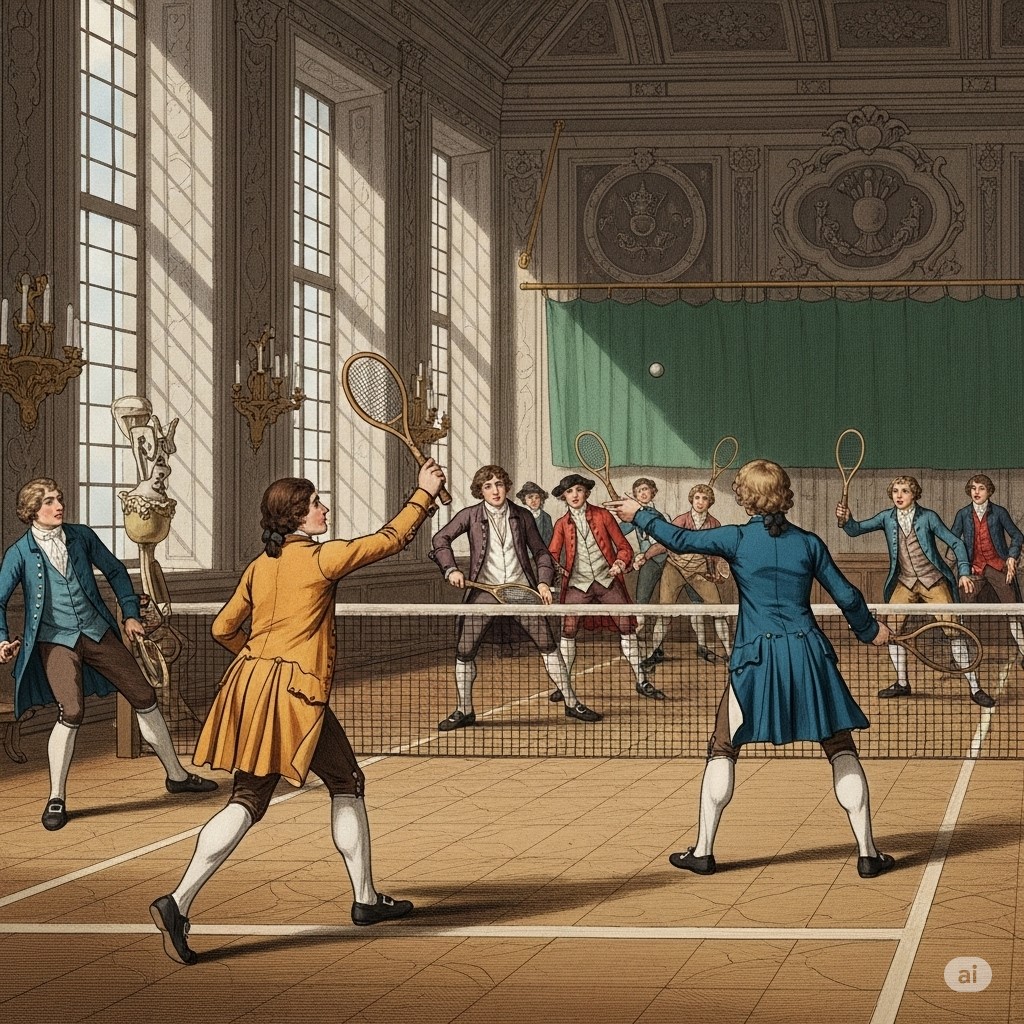
Jeu De Paume: The Legacy of an Ancient Sport
Jeu De Paume, a precursor to modern tennis, holds a unique place in sports history. This ancient game combines athleticism, tradition, and strategy. Originating in medieval France, Jeu De Paume has evolved over centuries. It continues to captivate players and historians alike. Today, enthusiasts preserve its legacy through competitive play and cultural appreciation. In this post, we explore its rich history, global presence, amateur landscape, professional leagues, political and social relevance, and official rules. Jeu De Paume is not just a game; it is a living connection to a centuries-old tradition.
Origins and Historical Evolution
The origins of Jeu De Paume trace back to 11th-century France. Monks first played it in monastery courtyards using their hands. The term means “game of the palm,” reflecting its original style. Over time, players adopted gloves, then paddles, and finally racquets.
By the 14th century, the game had become immensely popular among French nobility. King Louis X was an avid player and even died after a strenuous match. Courts were constructed across France, especially in Paris. The sport soon spread to England, Spain, and Italy.
During the Renaissance, Jeu De Paume flourished. Architectural innovations led to indoor courts with sloping roofs and galleries. These unique features defined the sport’s playing style. By the 17th century, over 1,000 courts dotted Paris alone.
Despite its popularity, the game began to decline in the 18th century. Lawn tennis gained prominence due to simpler rules and outdoor play. However, dedicated followers kept the traditional version alive. The Royal Tennis courts in England and France continued to host matches.
Global Popularity and Current Reach
Today, Jeu De Paume is played in select countries. France, England, Australia, and the United States have preserved the sport. Each country maintains a small but dedicated community.
In France, courts exist in Paris, Bordeaux, and Fontainebleau. The French Tennis Club keeps the game alive through events and youth programs. England hosts the sport at Hampton Court and Queen’s Club. Australia’s Ballarat court showcases the game in the Southern Hemisphere.
The United States maintains courts in Boston, Philadelphia, and New York. Clubs like the Tuxedo Club and Racquet Club of Philadelphia promote the sport. Though niche, global tournaments attract players from each country.
Overall, about 50 active courts remain worldwide. Each one represents a historic monument and cultural heritage site. The sport’s global presence reflects a shared commitment to tradition.
Amateur Participation and Youth Development
Amateur play sustains the core of the Jeu De Paume community. Clubs offer lessons, host local tournaments, and encourage lifelong participation. The game attracts players interested in history, strategy, and craftsmanship.
Youth development programs introduce new generations to the sport. In France, summer camps and school partnerships promote early training. Clubs organize workshops to teach court etiquette and basic skills.
England emphasizes junior leagues and school outreach. Institutions like Oratory School in Reading include the sport in their curriculum. Students compete in inter-school tournaments, fostering friendly rivalry.
In the United States, youth initiatives include trial days and coaching clinics. Many clubs waive fees for student participants. This approach lowers barriers to entry and sparks interest.
Volunteers and experienced players mentor new amateurs. Instruction focuses on technique, rules, and sportsmanship. Through mentorship and structured programs, youth become part of a proud tradition.
Professional Leagues and Competitive Landscape
Despite its small scale, Jeu De Paume maintains a professional circuit. The World Championship, held every two years, draws elite players. This tournament rotates between countries with active courts.
The United Kingdom hosts several prestigious events. The British Open and the Queen’s Club Gold Racquet attract international competitors. These tournaments maintain high standards and preserve historic rivalries.
France’s premier competition is the Championnat de France. Players compete for national titles and rankings. Events often take place in historic venues like the Paris Jeu De Paume Club.
The United States contributes through the U.S. Open and the Boenning Trophy. Each event follows official rules and invites top-ranked players. The sport’s governing body, the International Real Tennis Professionals Association (IRTPA), oversees rankings and event coordination.
Australia holds the Australian Open in Ballarat. Although smaller in scale, the competition showcases local talent. Visiting professionals often support local development.
Players earn recognition, not substantial financial rewards. Sponsorships remain rare, but prestige and heritage motivate participants. Professionals often coach, organize events, and promote the sport.
Political and Social Significance
Jeu De Paume holds notable political and social significance. One of the most iconic events in French history involved this game. In 1789, during the French Revolution, members of the Third Estate took the famous Tennis Court Oath.
They vowed not to disband until a new constitution was established. This act occurred in a Jeu De Paume court in Versailles. The event symbolized unity, resistance, and democratic ideals. Today, the site remains a symbol of national pride.
Socially, the sport has long been associated with elite circles. Aristocrats, royals, and intellectuals embraced the game. It fostered social connections, strategic thinking, and cultural exchange.
In modern times, the sport’s social fabric has evolved. Players now include diverse backgrounds and professions. Clubs encourage inclusivity while honoring tradition. Events blend competition with heritage celebrations.
The sport also promotes intergenerational bonding. Families pass down techniques, equipment, and stories. Older members mentor young players, strengthening community ties.
Preserving Jeu De Paume reflects broader cultural values. It highlights the importance of history, craftsmanship, and continuity. The game functions as a living museum and social hub.
Rules and Gameplay of Jeu De Paume
Jeu De Paume resembles modern tennis but features distinct elements. The game takes place in an enclosed court with sloped roofs, galleries, and unique angles. Each court is slightly different, adding complexity.
Matches use solid balls made of cork and felt. Players use wooden racquets with asymmetrical heads. Equipment design affects play style and technique.
The scoring system mirrors tennis: love, 15, 30, 40, deuce, and game. A match consists of sets, and players must win by two games. However, the serve and return differ significantly.
The server begins from the service end and must hit a sloping roof, called the penthouse. The ball must land within a specific area. If it touches the gallery or grille, it remains in play.
Unique to Jeu De Paume is the concept of chases. If a ball bounces twice before being returned, a chase is called. The receiving player must later play the ball past the chase point to win it.
Players must strategize around the court’s layout. Angled shots, rebounds, and galleries create opportunities. Every rally involves tactical decisions.
Etiquette is integral to the game. Players must show respect, maintain silence during points, and acknowledge good shots. Sportsmanship enhances the experience and preserves the game’s dignified spirit.
Officiating includes a marker who keeps score and calls chases. In professional matches, umpires assist in decision-making. Accuracy and tradition guide rule enforcement.
Mastery of the game requires mental agility, physical fitness, and historical awareness. Players must adapt to the court, opponent, and evolving strategy.
Conclusion: A Timeless Heritage Sport
Jeu De Paume embodies a rare blend of history, skill, and cultural significance. From medieval monasteries to modern championships, the game has endured. Its unique courts, complex rules, and rich tradition make it more than a sport.
Today, a global network of clubs and players continues the legacy. Youth programs, amateur leagues, and international tournaments ensure the sport’s survival. Political events and social history further deepen its meaning.
For those seeking connection to the past, strategic challenge, and a refined experience, Jeu De Paume offers it all. By supporting this timeless game, communities honor centuries of innovation and camaraderie.
Jeu De Paume is not just played; it is cherished, preserved, and passed on. Its influence stretches beyond the court, inspiring unity, excellence, and pride. For the few who play and the many who admire, it remains a symbol of sporting heritage and human achievement.