
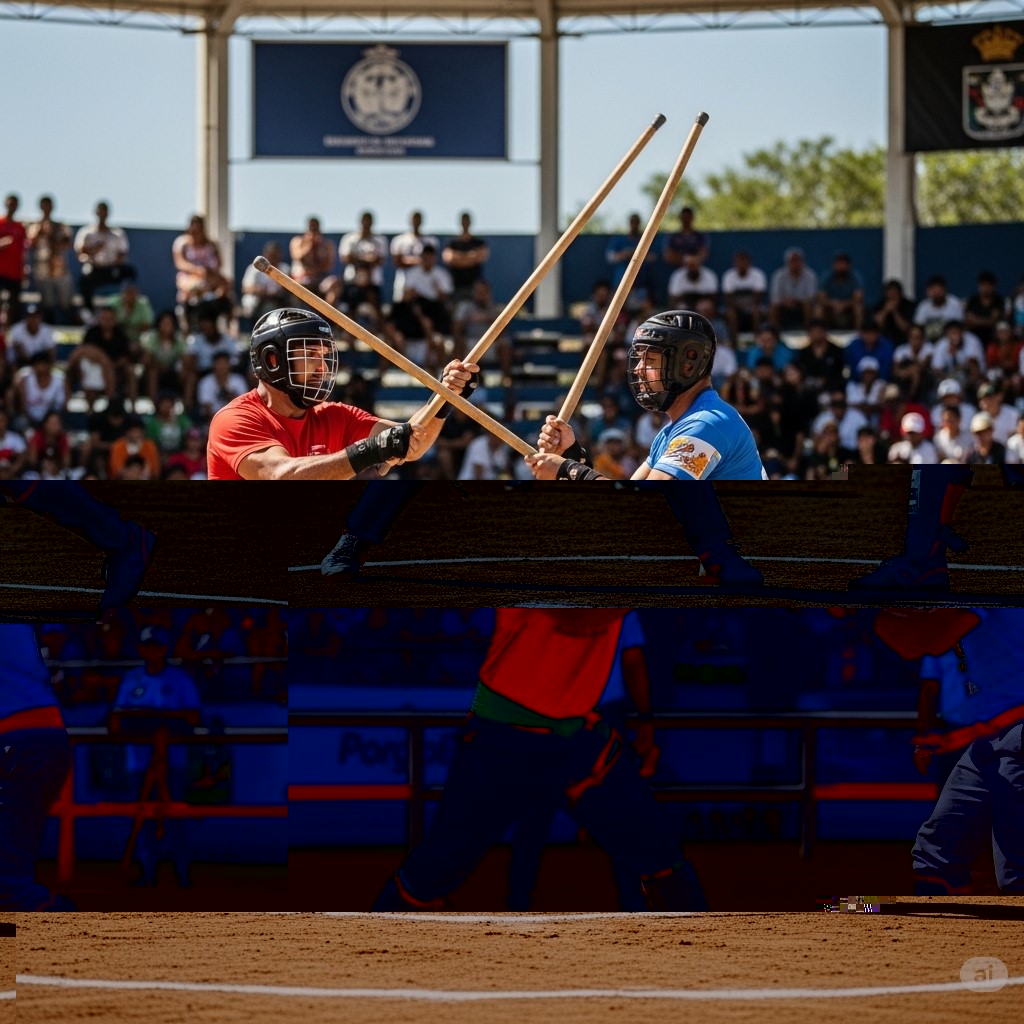
Jogo Do Pau: The Ancient Art of Portuguese Stick Fighting
Jogo Do Pau is a centuries-old martial art that hails from the Iberian Peninsula. This traditional form of stick fighting holds a deep cultural and historical significance in Portugal. Known for its distinctive use of wooden staffs, Jogo Do Pau emphasizes timing, agility, and precision. Over the years, it has evolved into both a cultural practice and a competitive sport. Despite its niche presence, the discipline continues to grow globally. In this post, we explore the history, global presence, amateur scene, professional leagues, societal impact, and rules of Jogo Do Pau.
Origins and History of Jogo Do Pau
The roots of Jogo Do Pau trace back to medieval Iberia. Originally, villagers used staffs for self-defense in rural communities. Due to frequent feuds and a lack of formal policing, the staff became a vital tool. By the 15th century, these fighting techniques developed into a codified system.
Farmers and shepherds refined the art while guarding flocks and property. The long stick, often made of hardwood like chestnut, served as both tool and weapon. Over time, distinct styles emerged in northern Portugal and Galicia.
During the 18th and 19th centuries, the sport saw a decline. Firearms and urbanization reduced its necessity. However, it experienced a resurgence in the 20th century. Martial arts enthusiasts and cultural preservationists revitalized the practice. Schools opened in major cities, and formal instruction returned.
Jogo Do Pau was passed down orally for generations. Masters taught apprentices within family lines. Formal documentation came later, preserving techniques and philosophy.
Global Popularity and Spread of Jogo Do Pau
Though it originated in Portugal, Jogo Do Pau has reached audiences beyond Iberia. Portuguese emigrants played a vital role in spreading the sport. Communities in France, Brazil, and the United States now maintain active clubs.
In France, martial arts schools often incorporate Jogo Do Pau into broader training programs. Brazil has seen particular growth, especially in cities with large Portuguese populations. In the United States, cultural centers and martial arts dojos offer regular training sessions.
Moreover, European martial arts (HEMA) circles recognize Jogo Do Pau as a legitimate historical combat form. Exhibitions and seminars are common at international festivals. Instructors travel abroad to conduct workshops and build connections.
Social media has accelerated its reach. Videos and tutorials circulate widely, attracting new practitioners. Online communities provide support and resources for remote learners. As a result, the sport enjoys renewed visibility worldwide.
Amateur Jogo Do Pau in the World
Amateur participation forms the backbone of the sport. Most practitioners begin in community clubs or martial arts schools. These clubs focus on fundamentals, such as footwork, defense, and proper striking technique.
In Portugal, youth programs introduce children to the discipline early. Schools sometimes partner with local clubs to offer extracurricular training. Safety gear and lighter sticks make it accessible for young learners.
Outside Portugal, many amateur groups follow similar models. Classes emphasize discipline, cultural heritage, and physical fitness. Instructors often combine tradition with modern teaching methods.
Annual gatherings and friendly tournaments foster camaraderie. These events allow amateurs to test skills in a non-intimidating setting. Judging criteria typically include control, technique, and movement.
Online platforms help amateurs stay connected. Training videos and forums allow skill development beyond geographical barriers. Community support keeps the tradition vibrant.
Professional Leagues and Organizations
Professional leagues are relatively new to Jogo Do Pau. However, structured competition has grown in recent decades. Portugal hosts the largest number of professional associations. The Portuguese Federation of Traditional Martial Arts (FPAMT) oversees much of the formal competition.
Leagues operate in several major cities, including Lisbon, Porto, and Braga. They host regional and national tournaments. These events draw skilled practitioners and often receive media coverage.
France and Brazil have emerging professional scenes. Organizations like Ligue de Bâton Portugais in France promote standardized training and events. Brazil’s Federação Brasileira de Artes Marciais Tradicionais also supports Jogo Do Pau initiatives.
Prize money and sponsorship remain limited. Nonetheless, the professional tier has elevated the sport’s profile. Demonstrations at cultural festivals often feature top-tier competitors.
Judges in professional leagues undergo certification. They assess matches based on form, speed, and technique. Rules ensure safety while maintaining authenticity.
Political and Social Significance
Jogo Do Pau carries significant social and political weight. Historically, it symbolized rural resilience and communal protection. Villagers relied on it for defense when state authorities were absent.
During periods of political unrest, practitioners used the art to resist oppression. It became a symbol of autonomy and local identity. Cultural pride continues to fuel its practice today.
In modern times, the sport promotes heritage preservation. Government grants and cultural funds often support training programs. This investment ensures the survival of traditional arts.
Socially, the sport fosters community bonds. Clubs serve as gathering points for people of all ages. They offer mentorship, discipline, and physical health benefits.
Jogo Do Pau also empowers marginalized communities. It reconnects people with their cultural roots and builds confidence. For many, it’s more than a sport; it’s a lifestyle and philosophy.
Rules and Structure of the Sport
Jogo Do Pau follows structured rules to ensure safety and fairness. Matches involve two participants using long wooden staffs. Protective gear includes helmets, gloves, and padding.
Fights begin with formal salutes. This shows respect between competitors. The match consists of timed rounds, usually lasting three minutes.
Scoring is based on technique, contact accuracy, and defense. Judges observe footwork, control, and strike placement. Excessive force or unsafe moves result in penalties.
The primary target zones include the head, shoulders, and torso. Legs and joints are off-limits. Fighters aim to demonstrate skill rather than brute strength.
Participants train in multiple stances. These include low, middle, and high guard positions. Fluid movement and timing are key elements.
Training also includes solo drills and paired exercises. Sparring sessions are supervised for safety. Techniques derive from traditional patterns called “jogos.”
Competitors must show mastery of offense and defense. Strategy often involves baiting and countering. Quick reflexes and sharp eyes are essential.
Conclusion
Jogo Do Pau represents more than just a martial art. It embodies centuries of Portuguese resilience, skill, and cultural pride. From rural origins to international recognition, its journey is inspiring. Amateurs and professionals alike keep the tradition alive through dedication and passion. As its global presence expands, the sport’s value becomes more evident. With detailed rules, structured training, and deep societal roots, Jogo Do Pau deserves recognition on the world stage.
Whether in a school gym, community club, or professional arena, this unique martial art continues to flourish. For those seeking a disciplined, culturally rich practice, Jogo Do Pau offers an unmatched experience.