
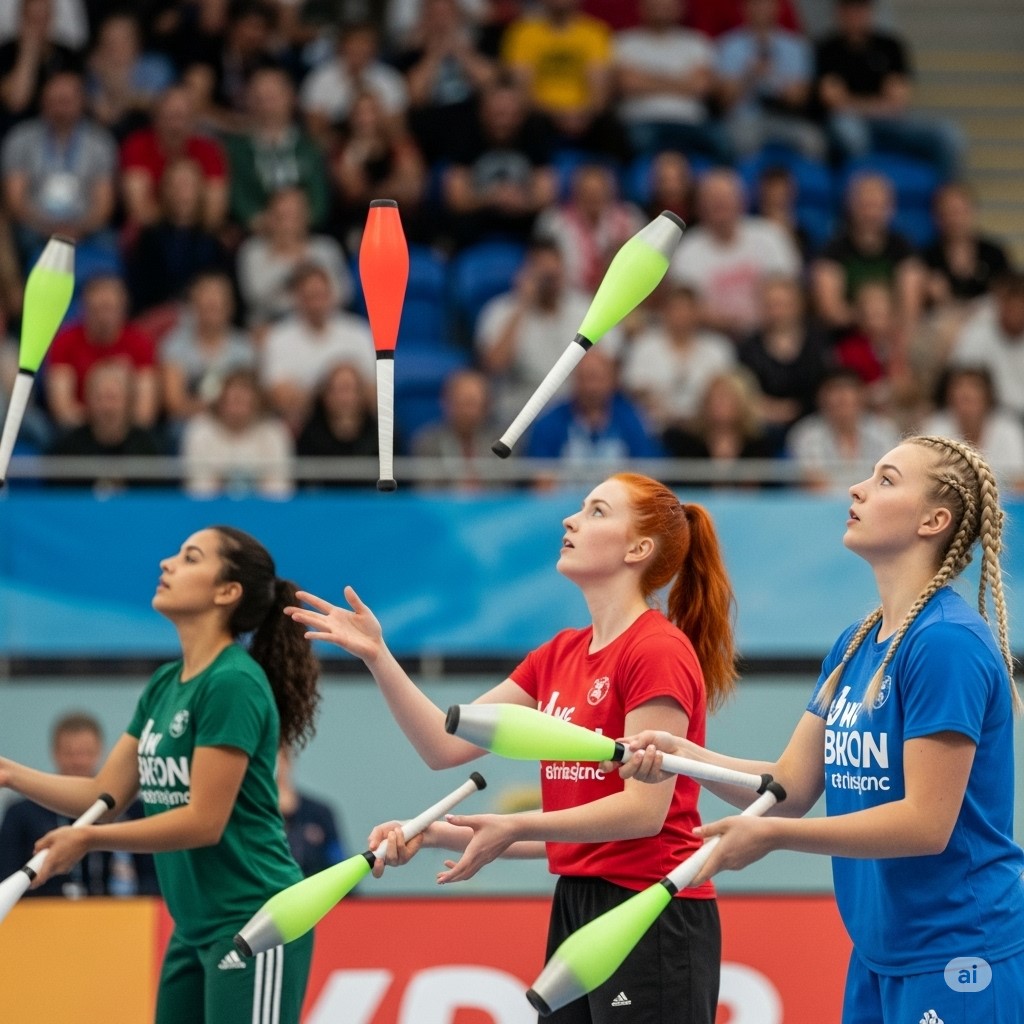
Juggling: The Rise of a Global Sport
Juggling has long fascinated people across the globe. From street performances to professional arenas, its presence is undeniable. In recent years, Juggling has emerged as a recognized sport. This evolution has opened doors for athletes, fans, and communities alike. Its accessibility and visual appeal contribute to growing popularity. As Juggling continues to gain traction, its impact spans cultures, ages, and borders.
Ancient Origins and Cultural Roots
Juggling has ancient roots, with the earliest evidence dating back to 2000 BCE in Egypt. Tomb paintings depict women tossing balls in rhythmic sequences. Over time, the practice spread through Asia, Europe, and the Americas. Chinese warriors included Juggling in military training. In ancient Greece, jesters entertained crowds with objects in the air.
Medieval Europe saw Juggling associated with jesters and minstrels. It became a form of court entertainment. During the Renaissance, it gained artistic significance. Jugglers incorporated fire, knives, and other daring props. This evolution laid the foundation for modern competitive formats.
A Shift Toward Sport
In the 20th century, Juggling underwent a major transformation. Performers began to train with athletic discipline. Speed, accuracy, and consistency became focal points. Events transitioned from entertainment to competition. Athletes developed routines with increasing complexity.
The founding of the International Jugglers’ Association (IJA) in 1947 marked a milestone. The IJA began hosting annual festivals and competitions. These events standardized formats and introduced scoring systems. Athletes could now compete for recognition and titles.
Juggling’s Global Popularity
Juggling is practiced in over 70 countries today. It thrives in North America, Europe, and parts of Asia. Germany, the United States, and Japan have vibrant Juggling communities. Online platforms have helped connect enthusiasts worldwide. Social media plays a major role in expanding the sport’s visibility.
Festivals draw thousands of participants and spectators each year. The European Juggling Convention (EJC) attracts jugglers from more than 40 countries. Held annually, it rotates locations across Europe. The IJA Festival in the U.S. remains a staple event. It features workshops, showcases, and intense competitions.
South America has also embraced Juggling. Countries like Brazil and Argentina host regional competitions. Local clubs offer training and outreach programs. Africa and Southeast Asia are emerging hubs. These regions show increased interest due to internet accessibility and grassroots movements.
Amateur Juggling and Youth Participation
Amateur Juggling thrives in schools, camps, and community centers. Many youth programs introduce basic techniques using scarves and beanbags. These tools reduce the difficulty level, allowing beginners to focus on coordination.
School curriculums in Finland and Japan include Juggling units. Physical education instructors use it to develop motor skills. Camps and after-school clubs provide opportunities to practice in relaxed environments. Students often organize talent shows to showcase progress.
Youth competitions are growing. Organizations like the World Juggling Federation (WJF) have junior divisions. These encourage young jugglers to train seriously. Events focus on creativity, technique, and sportsmanship. Mentorship programs pair beginners with experienced jugglers.
Universities host clubs and intramural leagues. Collegiate teams compete in inter-school tournaments. These events help identify future professional talent. Schools with strong programs often produce national champions.
Professional Leagues and Global Structures
The professional Juggling scene continues to evolve. Several leagues and federations promote competitive formats. The World Juggling Federation (WJF) leads the way. Founded in 2000, it emphasizes athleticism and precision. Its scoring system rewards clean catches and high-difficulty moves.
WJF events include freestyle routines, endurance tests, and speed competitions. Athletes perform in front of certified judges. Scores reflect technique, creativity, and execution. Video submissions have broadened access to global competitions.
The International Jugglers’ Association (IJA) hosts the annual Stage Championships. These blend performance art and athletic skill. Categories include solo, team, and prop-specific divisions. Winners receive international recognition and cash prizes.
Other notable leagues include the Japanese Juggling Association and the European Juggling Association. These organizations coordinate regional events and support elite athletes. Sponsorship and media coverage continue to grow. Live-streamed events and highlight reels attract new audiences.
Social and Political Impact
Juggling plays a unique role in society. It bridges age gaps, cultures, and socioeconomic backgrounds. Community programs use it as a tool for engagement. For example, Juggling workshops aid refugee integration efforts in Europe. The activity fosters teamwork and builds trust.
Nonprofits leverage Juggling for education and therapy. Programs for at-risk youth focus on discipline and focus. In prisons, Juggling helps reduce stress and improve inmate behavior. Therapists use it to support individuals with motor skill challenges.
Politically, Juggling symbolizes freedom of expression. Street performers in authoritarian regimes have used it to share coded messages. In public protests, jugglers often attract attention to political causes. The visual nature makes it an effective form of peaceful demonstration.
International cooperation among Juggling organizations promotes cultural exchange. Festivals unite people across borders. Participants often share meals, music, and stories. This builds empathy and mutual understanding. These events exemplify global unity through sport.
Rules and Competitive Structure
Competitive Juggling follows structured rules. Categories include solo, group, prop-based, and endurance challenges. Events are timed and judged based on difficulty, accuracy, and presentation.
Each competitor begins with a declared routine. Judges evaluate based on pre-set criteria. Drops result in point deductions. Creativity earns bonus points. Time limits usually range from 1 to 5 minutes.
Common props include balls, clubs, rings, and diabolos. Some contests involve knives, torches, and unicycles. The number of props increases the routine’s difficulty. Advanced competitors often juggle seven or more objects.
Judging panels consist of former champions and technical experts. They score competitors on a 10-point scale per category. Instant replay verifies controversial calls. Safety is a priority, especially in fire or knife events.
Relay events feature teams passing props in sequence. This format emphasizes coordination and timing. Mixed doubles highlight gender inclusivity. Some competitions include audience voting, merging sport with performance art.
World records are tracked and verified by organizations like Guinness and the WJF. Categories include longest juggle, most catches, and highest throw. Record attempts attract media attention and inspire future athletes.
Conclusion
Juggling has grown from a simple pastime to a respected global sport. Its journey includes centuries of cultural evolution and modern innovation. Participation spans from curious children to elite professionals.
Today, it unites people worldwide. Its accessibility, low entry cost, and visual appeal drive growth. Professional leagues, youth programs, and international festivals support its expanding community.
As it continues to evolve, Juggling proves that athleticism and artistry can coexist. It offers more than entertainment. It provides purpose, connection, and opportunity. Whether in a school gym or a world stage, the future of Juggling looks bright.