
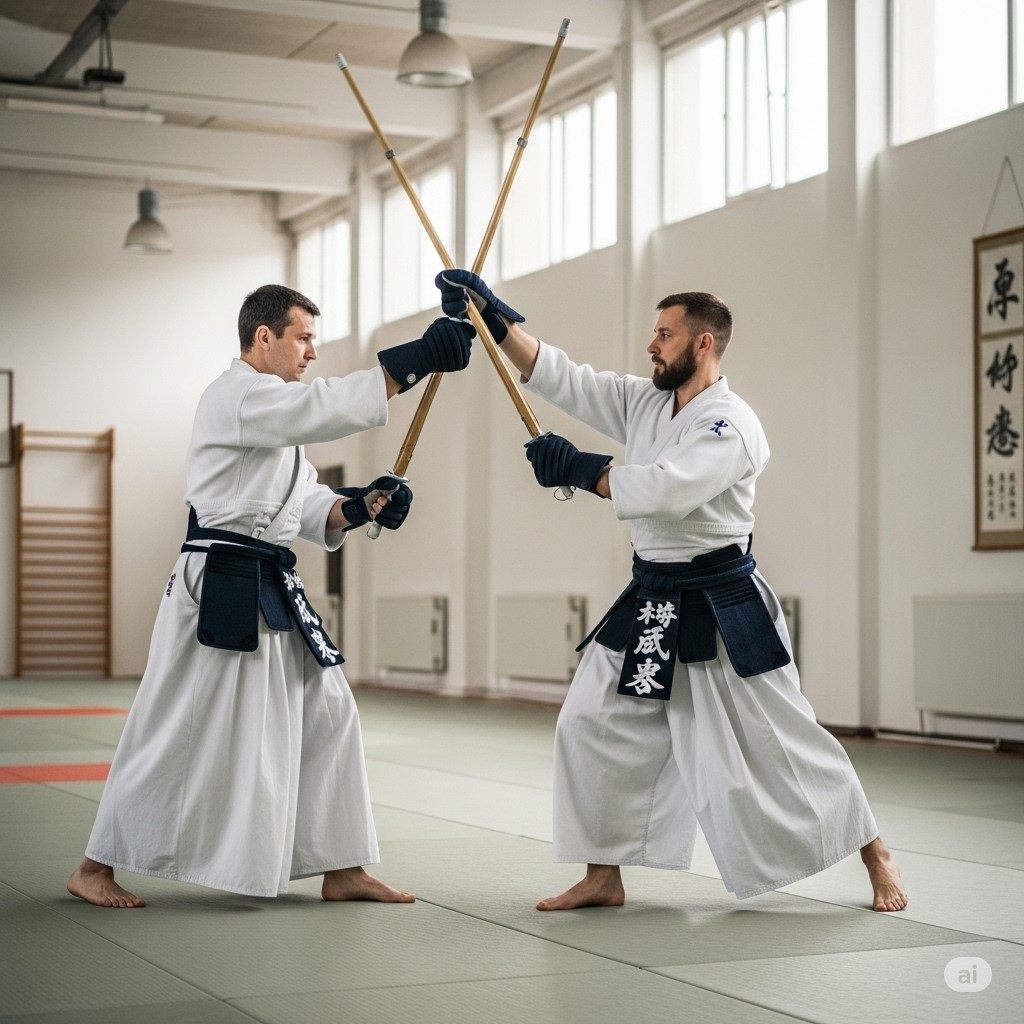
Jukendo: The Traditional Martial Art That Combines History, Discipline, and Modern Sport
Jukendo is a Japanese martial art rooted in the techniques of bayonet fighting. It has evolved from battlefield necessity to a disciplined sport with international appeal. This fascinating discipline blends military tradition, cultural heritage, and athletic competition. Today, Jukendo finds its place among the martial arts practiced by civilians and military personnel alike.
Origins and Historical Roots
Jukendo’s history begins with Japan’s samurai class and military traditions. The word “Jukendo” translates to “way of the bayonet,” and its origins lie in the Japanese army’s training during the Meiji Era. After the adoption of Western-style firearms in the 19th century, Japanese soldiers began training in bayonet combat to prepare for close-quarters battle.
French military techniques inspired early Japanese bayonet training. However, Japanese instructors adapted these methods to fit local martial philosophies. The practice emphasized discipline, respect, and physical conditioning. The bayonet fighting techniques became formalized into a distinct system. This development gave birth to what we now call Jukendo.
During the early 20th century, Jukendo training became mandatory for Japanese soldiers. It was incorporated into military education and served as a vital part of hand-to-hand combat preparedness. World War II increased its prominence. After the war, the martial art underwent significant changes.
Japan faced restrictions on military training. However, martial arts were preserved by transforming them into sports. Jukendo survived by adapting to peacetime. It became part of civilian martial arts, with rules and competitions that emphasized safety and skill. This transformation helped Jukendo evolve into a modern sport.
Global Popularity and Reach
Jukendo remains deeply rooted in Japan, but it has slowly gained recognition worldwide. Its popularity is not as extensive as judo or kendo. Nonetheless, enthusiasts across the globe have started practicing it. Several countries, including France, Germany, and Australia, have small but growing Jukendo communities.
Japan continues to lead in Jukendo development and training. The All Japan Jukendo Federation oversees domestic competitions and educational activities. International outreach occurs through martial arts festivals and cultural exchanges. Events like the World Martial Arts Masterships have introduced Jukendo to new audiences.
Many practitioners discover Jukendo through kendo or other Japanese martial arts. As awareness grows, more dojos are incorporating it into their curriculum. Martial arts centers outside Japan offer classes and workshops. Instructors certified by the Japanese federation lead these programs, ensuring quality instruction.
Social media and online platforms have helped spread Jukendo to new demographics. Videos of matches, tutorials, and demonstrations offer insights into this unique martial art. These efforts help attract younger generations and international students.
Amateur Jukendo in Schools and Communities
Amateur Jukendo plays a critical role in keeping the sport alive. In Japan, many high schools and universities include it as part of their extracurricular programs. Students learn fundamental techniques, participate in team competitions, and develop discipline through rigorous training.
The sport emphasizes respect for instructors and opponents. Uniforms, rituals, and etiquette reflect traditional values. This structure appeals to educators who seek character-building activities for students. Boys and girls both participate, although male athletes currently dominate in numbers.
Community centers and martial arts clubs also offer Jukendo training. Classes vary in intensity, from casual to competitive. Beginners start with footwork and basic thrusting techniques. They gradually progress to sparring and tournaments. Safety is a priority, so protective gear is mandatory.
Outside Japan, Jukendo often appears as part of cultural exchange programs. Japanese embassies, cultural institutes, and international martial arts associations promote it abroad. Workshops allow amateurs to train under skilled instructors. These events build interest and foster global networks.
Amateur competitions follow standardized rules set by the All Japan Jukendo Federation. Judging criteria include accuracy, speed, and form. Matches encourage sportsmanship and mental focus. Amateurs often view the sport as both physical exercise and cultural engagement.
Professional Leagues and Competitions
Professional Jukendo remains relatively limited compared to other martial arts. Most high-level practitioners are associated with police academies, the Self-Defense Forces, or university faculties. These professionals participate in major tournaments organized by national and regional federations.
The All Japan Jukendo Championships represent the pinnacle of competitive achievement. Participants train year-round and receive institutional support. The event attracts spectators, martial arts experts, and media coverage. Winners gain national recognition and often serve as ambassadors of the sport.
Some elite Jukendo practitioners also compete in international martial arts tournaments. Although not officially an Olympic sport, Jukendo appears in demonstrations at global events. These exhibitions showcase its techniques and cultural value. They also serve to recruit new practitioners and generate public interest.
Unlike sports with franchise-based leagues, Jukendo follows a more traditional model. Professional ranking depends on skill level, competition success, and contribution to the martial arts community. Top practitioners earn teaching licenses and mentor younger students. Their status reflects both athletic and academic achievement.
Efforts are underway to formalize professional circuits in countries with growing interest. France and Germany have begun organizing national-level competitions. They collaborate with Japanese federations to maintain authenticity and safety standards.
Political and Social Significance
Jukendo carries both political and social meaning. Politically, it reflects Japan’s efforts to preserve tradition while embracing modernization. The martial art bridges Japan’s military past and its pacifist post-war identity. Its transformation into a civilian sport exemplifies this balance.
Socially, Jukendo promotes values like discipline, honor, and perseverance. It teaches individuals to respect others and strive for self-improvement. These principles resonate with educators, parents, and community leaders. Martial arts like Jukendo play a role in youth development and crime prevention.
In military institutions, Jukendo reinforces camaraderie and physical conditioning. It strengthens bonds among trainees and prepares them for high-stress situations. Its controlled aggression and clear rules offer a safe outlet for competitive energy.
Culturally, the sport preserves elements of Japan’s heritage. Rituals, uniforms, and techniques connect participants to samurai traditions. Even outside Japan, Jukendo serves as a tool for cultural diplomacy. Demonstrations at embassies and international festivals promote mutual understanding.
The martial art also plays a role in gender equality discussions. Although men dominate the sport, more women are entering competitions. Efforts to increase female participation are gaining momentum. Gender-balanced training environments reflect broader societal changes.
Rules and Structure of Jukendo
Jukendo matches take place in a marked ring, usually eight to ten meters in diameter. Participants wear protective armor similar to kendo. Gear includes a helmet (men), chest protector (do), gloves (kote), and a padded vest. The weapon used is a wooden replica of a bayonet-equipped rifle called a mokujukento.
Each bout typically lasts three minutes. Competitors aim to score valid thrusts to designated target areas. These include the throat, chest, and sides of the torso. Points are awarded for clean, accurate strikes made with proper form and spirit.
Judges observe matches from different angles. They evaluate each strike’s accuracy, timing, and intensity. A valid point must show commitment and control. Hesitant or off-target thrusts do not count. The first competitor to score two points wins the match. If time expires, the one with the higher score wins.
Penalties exist for dangerous behavior, stepping out of bounds, or ignoring instructions. Fouls result in warnings or disqualification. Matches emphasize control and technique over brute strength.
Training involves drills, kata (forms), and sparring. Beginners focus on footwork, grip, and posture. Advanced students refine timing, distancing, and strategy. Conditioning exercises improve stamina and precision.
Rankings follow a system similar to other Japanese martial arts. Practitioners test for kyu (beginner) and dan (advanced) ranks. Examinations include technical demonstrations, written tests, and sparring performance. Higher ranks authorize practitioners to teach and judge competitions.
Competitions range from local tournaments to national championships. Team events encourage cooperation and school pride. Spectators enjoy the sport’s fast pace and ritualistic flair.
Jukendo places strong emphasis on etiquette. Bowing, proper language, and respectful conduct are expected at all times. These customs foster humility and mutual respect.
Conclusion
Jukendo is a martial art with deep historical roots and a dynamic future. It evolved from military bayonet training into a disciplined sport practiced worldwide. While its global popularity remains modest, dedicated communities continue to grow.
Schools, clubs, and cultural organizations promote Jukendo as a tool for physical and mental development. Its structured rules, competitive environment, and cultural significance offer lasting value. As efforts to expand its reach continue, Jukendo may one day rival more established martial arts on the global stage.
This traditional discipline combines athleticism, tradition, and modern sport in a unique way. Jukendo deserves greater attention and appreciation from martial arts enthusiasts and cultural scholars alike.




