Introduction
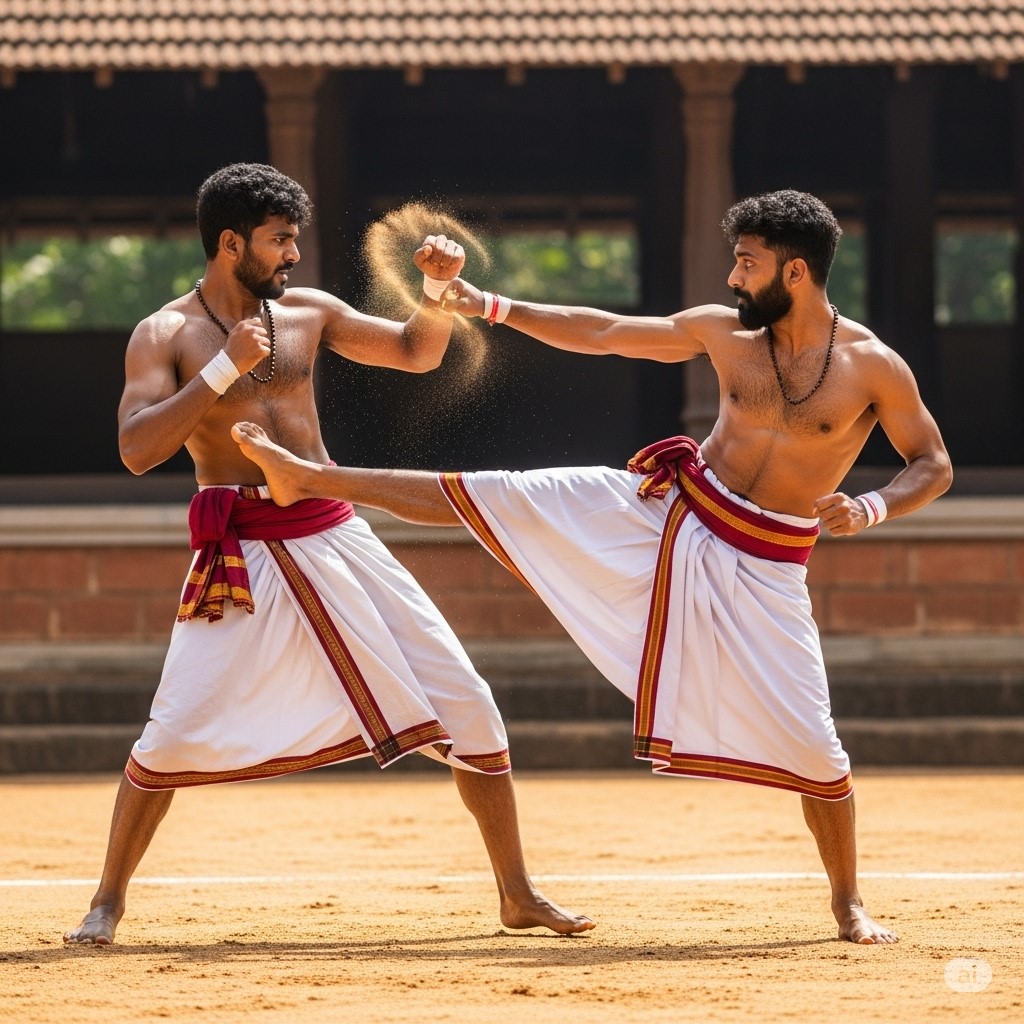
Kalarippayattu is a powerful and ancient martial art form. Kalarippayattu traces its roots back over 3,000 years. This martial art stands as a symbol of discipline, creativity, and tradition. It involves striking, kicking, grappling, and healing practices. It forms a unique blend of physical prowess and mental discipline. Furthermore, it is popular today across the globe. This sport resonates with people from many different backgrounds.
Origin and History
The origin is rich and multilayered. The earliest traces are found in South India, particularly in the state of Kerala. Legends say that Lord Parashurama, a warrior deity, taught Kalarippayattu to the people in the region. This martial art was initially used by soldiers and warriors. Later, it became a form of training for all members of the community. Kalarippayattu was not just about physical prowess. It was also a way to foster unity, discipline, and moral character.
Popularity and Global Presence
Today, it is recognized across the world. The sport is practiced by many enthusiastic individuals who appreciate its rich history and discipline. Some people practice Kalarippayattu for health and fitness. Others pursue it to connect with their cultural heritage. Furthermore, many schools, clubs, and organizations teach Kalarippayattu to children and adults alike. This growing popularity signals a renewal of interest in traditional martial arts and their role in modern societies.
Amateur Kalarippayattu and Youth Training
For children and young people, it offers numerous benefits. This sport helps them grow strong, flexible, and resilient. Boys and girls learn discipline, patience, and fairness. Furthermore, Kalarippayattu helps foster a deep understanding of their own capabilities and their moral responsibilities toward their community.
Professional Leagues and Global Tournaments
Some organizations sponsor leagues and tournaments to showcase the skills of Kalarippayattu practitioners. These leagues enable them to compete with their peers from different countries. Furthermore, the growing number of tournaments attracts media coverage and helps bring this ancient martial art to a broader, international view.
Political and Social Significance
In many societies, Kalarippayattu holds a powerful political and social significance. It stands as a symbol of resistance against oppressive regimes. Furthermore, it strengthens community ties and helps foster unity. This form of martial art resonates strongly with many people who wish to connect with their roots while preserving their cultural heritage.
Rules of Kalarippayattu
While there are many schools of Kalarippayattu, the sport typically operates under a set of well-understood rules. Combatants must show fairness and discipline at all phases of their match. Furthermore, there are a range of prohibited moves to avoid causing permanent harm to an opponent. Proper training under a qualified master helps practitioners learn these controls and techniques safely and responsibly.
Conclusion
In conclusion, Kalarippayattu stands as a testament to human creativity, discipline, and spirit. This ancient martial art resonates across generations and borders, retaining its significance in a modern world. It brings people together, fostering unity, understanding, and peace. Furthermore, it offers an opportunity for individuals to grow both physically and mentally while honoring their rich cultural heritage.