
The Way of the Sword: A Deep Dive into the World of Kendo
Kendo, the traditional Japanese martial art of swordsmanship, blends combat, discipline, and philosophy. Practiced by millions globally, it represents more than just a sport. It is a way of life, emphasizing honor, respect, and self-improvement. This unique martial discipline continues to grow in popularity across continents. In this blog post, we explore the rich history of Kendo, its global reach, the rules and structure, amateur and professional levels, and its social and political importance.
The Origins and Historical Evolution of Kendo
It finds its roots in the samurai class of feudal Japan. During the Kamakura period (1185–1333), the samurai emerged as the ruling military class. These warriors trained rigorously in swordsmanship, which later evolved into Kenjutsu.
Kenjutsu was the foundational martial art that eventually inspired Kendo. Initially, bamboo swords and protective armor were not used. Real swords or wooden bokken served as the main tools for training. Injuries and fatalities were common.
By the Edo period (1603–1868), Japan entered a long phase of peace. Swordsmanship transformed from battlefield necessity to spiritual discipline. During this time, dojos began to develop, and formal schools of sword techniques, known as Ryu, gained prominence.
Naganuma Shirozaemon Kunisato played a key role in Kendo’s early transformation. In the 18th century, he introduced the use of bamboo swords (shinai) and protective armor (bogu). This allowed practitioners to spar safely with full force.
In the late 19th century, Japan modernized rapidly. The samurai class dissolved, but their martial traditions remained. The Meiji government recognized the educational value of Kendo and incorporated it into school curricula.
In 1920, the Dai-Nippon Butoku Kai established the modern rules and named the art “Kendo,” meaning “The Way of the Sword.” After World War II, it was banned temporarily by the Allied occupation. However, it soon resurfaced, emphasizing character development over combat training.
The Global Reach and Popularity of Kendo
Today, it is practiced in over 60 countries. While Japan remains the epicenter, the sport has strong communities in South Korea, the United States, Brazil, Germany, and France.
The International Kendo Federation (FIK), formed in 1970, promotes the sport worldwide. The FIK organizes the World Kendo Championship every three years. This global tournament brings together top athletes from around the world to compete and share their cultural values.
In South Korea, Kendo is integrated into school systems and military training. The country consistently produces top-tier athletes. Brazilian Kendo continues to grow, fueled by Japanese immigrant communities. European countries like France and Germany have developed national federations and hold regular championships.
The United States has witnessed a steady rise in Kendo dojos across major cities. Universities, especially on the West Coast, offer clubs that compete in regional and national tournaments. Kendo’s global spread demonstrates its universal appeal.
Amateur Kendo: Youth and School Participation
Amateur Kendo thrives at the grassroots level. Many practitioners begin at a young age, often through school or community programs. In Japan, it is part of the physical education curriculum in many junior high and high schools.
Youth Kendo fosters discipline, respect, and perseverance. Kids learn the basics of footwork, striking, and etiquette before engaging in sparring. Matches are structured to ensure safety and fair play.
In the U.S., youth programs have gained traction. Local dojos offer classes tailored to different age groups. Many children progress to compete in junior championships organized by the All United States Kendo Federation (AUSKF).
European nations have also adopted youth Kendo programs. National bodies provide standardized training and certification for instructors. This ensures a high-quality learning environment.
Parents often find value in the sport’s emphasis on character development. Youth tournaments focus on sportsmanship as much as technical skill. Instructors act as mentors, instilling lifelong values.
Professional Leagues and Competitive Structures
Unlike sports with salaried leagues, Kendo does not feature professional leagues in the traditional sense. However, it includes a highly competitive structure at the national and international levels.
Japan hosts the All Japan Kendo Championship, the most prestigious event in the country. Winners gain national fame and often become influential figures in the Kendo world. This championship features intense matches showcasing the highest level of skill and spirit.
South Korea’s National Sports Festival includes a major Kendo tournament. This event is taken seriously, with university and regional teams training year-round.
The World Kendo Championship, managed by the FIK, stands as the global equivalent. Held every three years, it includes individual and team events for men and women. Countries send their best athletes to compete, and matches are broadcast internationally.
University Kendo is another key component. In Japan, universities such as Tsukuba and Kokushikan have elite Kendo teams. These institutions participate in the All Japan Student Kendo Championship.
While financial compensation is rare, top-level practitioners receive sponsorships, coaching roles, and teaching positions. High-ranking sensei often earn respect comparable to professional athletes in other sports.
Social and Political Significance of Kendo
Kendo carries immense cultural and social weight in Japan. It is more than sport; it is a medium for transmitting tradition, ethics, and identity. Many Japanese people view Kendo as a path to personal enlightenment.
The sport emphasizes virtues like loyalty, humility, and respect. Practitioners bow to each other before and after matches. They also maintain their equipment meticulously, reflecting their discipline.
In post-war Japan, Kendo became a symbol of peaceful resilience. Although rooted in combat, it was reframed as a tool for building character. This shift aligned with Japan’s broader efforts at redefining its national identity.
Kendo has also served as a diplomatic bridge. International tournaments often include cultural exchanges. Practitioners from different nations share techniques and traditions, fostering mutual understanding.
In schools, Kendo helps address behavioral issues by channeling aggression into structured training. Students learn to control their emotions, a skill applicable in all areas of life.
Military institutions, especially in South Korea, use Kendo for mental conditioning. The sport teaches focus under pressure, making it a valuable training tool for soldiers.
Rules and Structure of Kendo Matches
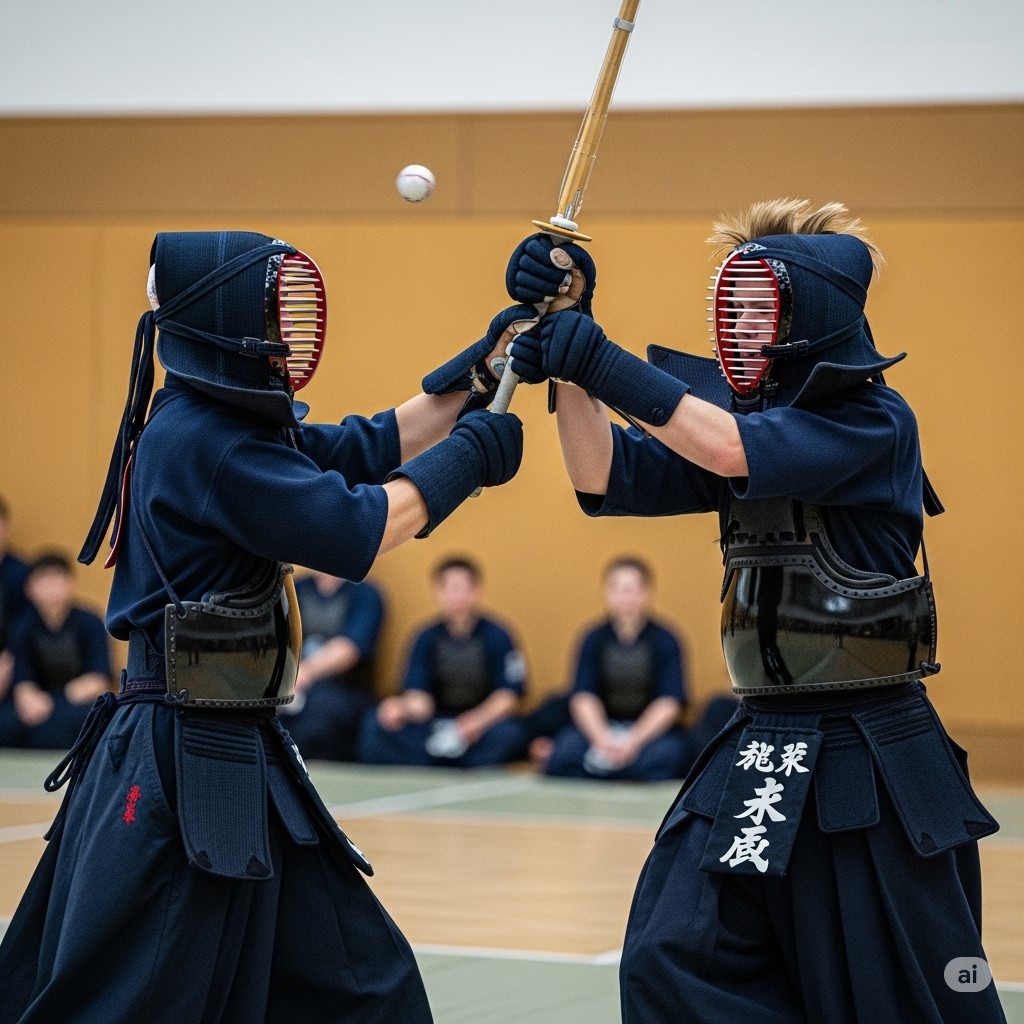
Matches are fast-paced and require both physical and mental agility. Two players face off, each armed with a shinai. They wear bogu for protection.
The primary scoring areas are the men (head), kote (wrist), do (torso), and tsuki (throat). Strikes must be delivered with precision, proper form, and spirit. Judges award points based on these criteria.
Matches are typically best of three points. The first player to score two valid points wins. If no clear winner emerges, the match may go into encho, or overtime.
Players must demonstrate proper zanshin, or continued awareness, after a strike. This shows they remain mentally engaged. Without zanshin, a point may be denied.
Judges use flags to signal scores. Three referees oversee each match. At least two must agree for a point to be awarded.
Penalties exist for rule infractions, such as stepping out of bounds or excessive force. Accumulating penalties can result in disqualification.
Training includes repetitive drills, sparring, and kata (pre-arranged forms). This balance of structure and fluidity defines the sport.
Conclusion
Kendo, with its deep roots in Japanese history and culture, stands as a martial art that transcends borders. It has evolved from ancient battlefield techniques into a refined sport practiced globally. From school gyms in Tokyo to community centers in Paris and university halls in California, its influence continues to spread.
Amateur Kendo provides a gateway for young people to develop character and discipline. The sport’s competitive scene, while not professional in a commercial sense, maintains rigorous standards. Socially and politically, Kendo promotes values that resonate far beyond the dojo.
As more people seek meaningful physical pursuits, it offers a unique blend of combat and contemplation. Its emphasis on respect, self-improvement, and perseverance makes it relevant in any culture.
Whether you are a seasoned martial artist or a curious beginner, Kendo welcomes you. The way of the sword is not merely about winning matches. It is about mastering the self and forging a path of honor, integrity, and lifelong learning.