
Introduction
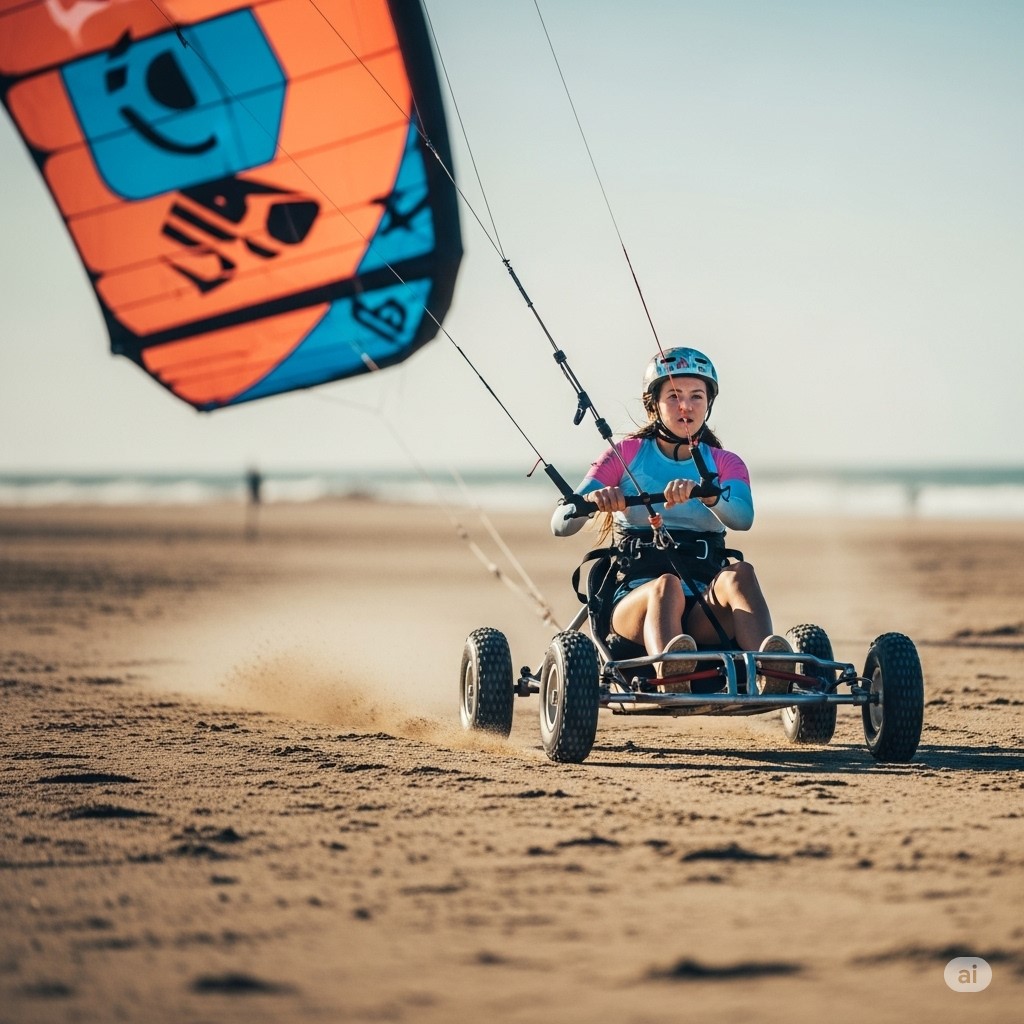
It is a growing sport that combines speed, skill, and a rush of adrenaline. This unique activity involves a small, lightweight buggy powered by a large kite. It offers a blend of traditional buggy riding with the magic of kite-flying. The sport brings people together, sparks creativity, and strengthens community bonds. Furthermore, Kite Buggy shows us the power of nature alongside human innovation.
Origin and History of Kite Buggy
The sport traces its roots back to the 1970s. During this era, innovators began strapping kites to small buggies. This blend opened up a new world of possibilities for riders. The first recorded use of a kite to power a buggy was in France, where a small group of enthusiastic riders tried their first ride. Shortly afterwards, this new sport started spreading across Europe and the rest of the world.
In the 1990s, the popularity of Kite Buggy grew. Large kite makers began designing kites specifically for this sport. This encouraged many people to try their hand at this exhilarating activity. Furthermore, clubs and leagues started forming, fueling its growing popularity. The sport’s rich history reflects its ability to connect people across borders and unite them under their shared passion.
Where Kite Buggy Is Played Today
Today, it is a truly global sport. From the shores of France and Spain to the vast deserts of the USA and Australia, you can find riders exploring flat spaces with their kites. Some of the most popular locations for Kite Buggy include St. Peter-Ording in Germany, Fano Beach in Denmark, and the Black Rock Desert in Nevada.
Additionally, many South American and South African riders enjoy this sport. The strong winds and wide-open spaces make their locations perfect for high-speed rides. Furthermore, large events and competitions bring people together to celebrate their passion for the sport. This shows us that it is more than just a solitary activity — it is a community event.
Amateur Kite Buggy and Youth Participation
Amateur riders make up a significant portion of the Kite Buggy community. Often, clubs sponsor training sessions for beginners. This helps new riders learn safely and efficiently. Some schools even incorporate it into their physical education programs. This allows children to appreciate nature while developing physical skills and confidence.
Additionally, many youth leagues enable children to compete in small tournaments alongside their peers. This prepares the future generation of riders to carry forward their passion for the sport. Furthermore, many clubs sponsor workshops and events designed to foster a strong community of riders. This guarantees the continued growth and popularity of Kite Buggy.
Professional Leagues and Competitions
Across the globe, several professional leagues oversee competitions. The most recognized leagues include the European Kite Buggy Association (E.K.B.A) and the North American Buggy Association (N.A.B.A.). These leagues sponsor events and tournaments that bring together the best riders from many countries.
Furthermore, professional riders travel to these competitions in search of glory and prestige. This helps raise the profile of the sport and shows the high level of skill needed to perform well in this discipline. The leagues enable riders to push their abilities while honoring fairness and sportsmanship.
Political and Social Significance
Lastly, Kite Buggy holds political and social significance for many communities. This sport brings people together across borders and helps foster understanding and collaboration. Furthermore, it shows us the power of renewable energy, adding a green dimension to a growing sport. This resonates with growing worries about climate change and conserving our resources.
Additionally, many clubs sponsor initiatives to aid children in developing confidence and interpersonal skills. This helps create strong, healthy, and compassionate communities. Furthermore, by honoring the traditions of their sport, riders celebrate unity and peace across the globe.
General Rules of Kite Buggy
The main objective of a Kite Buggy competition is simple: ride faster and farther than your competitors. The following set of rules guides all riders during a match. First, riders must remain within their designated track. Furthermore, the use of prohibited equipment, or interference with a competitor, is prohibited.
Additionally, riders must follow the signals of the race officials and obey all instructions. Furthermore, wearing protective equipment, such as a helmet, is a requirement for everyone’s safety. This guarantees fairness while adding a degree of control to a sport powered by the elements.
Overall, it is a growing sport filled with passion, community, and opportunity. Furthermore, it shows us how human creativity can blend with nature’s power to produce something truly unique.