Ladies Gaelic Football: A Deep Dive Into Its Past, Present, and Global Impact
Ladies Gaelic Football is one of the fastest-growing women’s sports in the world. While not as globally recognized as soccer or basketball, it has carved out a passionate following. The sport shares the physicality and strategy of rugby and the fluid movement of soccer. Though it has Irish roots, the game now spans continents. Interestingly, some athletes transition between Gaelic Football and other combat sports like Jujitsu, showcasing their athletic versatility.
The Origins of Ladies Gaelic Football
The sport’s history dates back to the early 20th century. Although men’s Gaelic Football had existed for centuries, women were largely excluded. Informal matches between women began surfacing in the 1920s and 1930s. However, societal norms often discouraged women from participating in contact sports.
In 1974, a pivotal change occurred. The Ladies Gaelic Football Association (LGFA) was founded in Hayes’ Hotel in Thurles, County Tipperary. This marked the beginning of organized women’s Gaelic Football. The first All-Ireland Ladies Football Championship took place the same year. Tipperary won the inaugural title. Since then, the sport has seen exponential growth.
The Sport’s Global Rise
Initially confined to Ireland, Ladies Gaelic Football began spreading internationally by the 1980s. Irish immigrants carried the sport abroad. Today, it thrives in countries such as the United States, Canada, Australia, and the United Kingdom. Gaelic Athletic Associations (GAAs) in these countries have set up clubs and leagues.
In the U.S., New York and Boston are hotspots. Clubs like the New York Ladies GAA and Boston Shamrocks compete in regional tournaments. Meanwhile, in Australia, the sport benefits from favorable weather and a sports-loving culture. Over 30 clubs operate across major cities like Sydney, Melbourne, and Perth.
Canada also hosts an active Gaelic football scene. Toronto and Vancouver lead the way with local leagues and youth programs. In the UK, cities such as London, Birmingham, and Glasgow maintain strong club presences.
Youth and School-Level Participation
Ireland leads in youth and school-level participation. Gaelic games are embedded into the education system. From primary school to secondary school, girls have access to structured programs. The Cumann na mBunscol organizes competitions at the primary school level. At the secondary level, the Post Primary Schools Championships are highly competitive.
Clubs work closely with schools to nurture young talent. The LGFA also conducts development camps. These camps help identify future stars and provide advanced coaching.
Outside Ireland, youth development continues to improve. In the United States, the Continental Youth Championships (CYC) bring together young athletes from across North America. Similarly, in Australia, youth academies offer training and match opportunities. Schools in Irish immigrant communities have begun integrating the sport into physical education programs.
Professional Leagues and Opportunities
Despite its popularity, Ladies Gaelic Football remains largely amateur. Players do not receive salaries. Most athletes juggle full-time jobs or studies while competing at elite levels. However, the situation is evolving. Sponsorships and media deals are slowly transforming the landscape.
The Lidl Ladies National Football League is the premier competition in Ireland. It runs from January to April and features county teams. The All-Ireland Senior Championship follows, beginning in June and ending in September. Dublin, Cork, and Mayo are historically strong teams.
Abroad, no fully professional leagues exist yet. However, semi-professional models are emerging. In Australia, for example, some clubs have begun offering stipends and benefits. The Gaelic Players Association (GPA) and the Women’s Gaelic Players Association (WGPA) advocate for better player support.
The Political and Social Significance
Ladies Gaelic Football holds deep political and social significance. In Ireland, the sport symbolizes national identity. Gaelic games have historically represented resistance to British rule. Women’s participation adds a feminist layer to this legacy.
During the 1970s and 1980s, female athletes challenged traditional gender roles. Playing a contact sport gave women visibility and voice. As Ireland modernized, the sport mirrored societal shifts. Women moved from the sidelines to center stage.
In Northern Ireland, the sport has fostered cross-community engagement. Clubs often include members from both Catholic and Protestant backgrounds. This unity contrasts with the region’s divisive past.
Internationally, Ladies Gaelic Football connects the Irish diaspora. It provides a cultural anchor for immigrants. The sport also empowers women in male-dominated environments. Female athletes gain leadership roles within clubs and communities.
The Rules of Ladies Gaelic Football
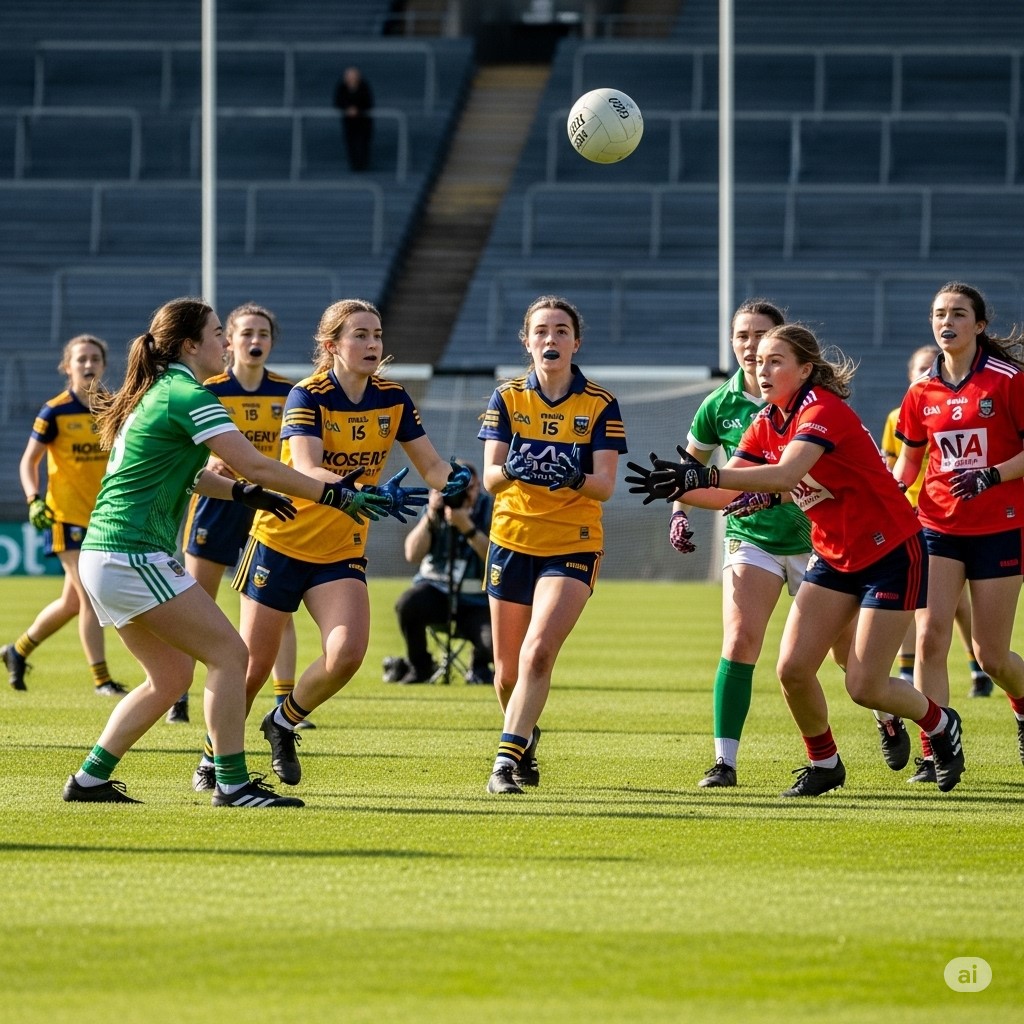
The sport combines elements of soccer, basketball, and rugby. Each team fields 15 players: one goalkeeper, six defenders, two midfielders, and six forwards. Matches consist of two 30-minute halves.
The ball used resembles a soccer ball. Players can carry, bounce, or hand-pass the ball. After four steps, a player must bounce or solo the ball. Soloing involves dropping the ball onto the foot and kicking it back into the hand.
Scoring involves two methods. A goal, worth three points, is scored by kicking the ball into the net. A point, worth one, is scored by sending the ball over the crossbar.
Physical contact is allowed but limited. Shoulder-to-shoulder tackles are permitted. However, aggressive play leads to penalties. Yellow and red cards are used for fouls.
Games often feature fast breaks, quick passes, and strategic positioning. Substitutions are allowed, and teams often rotate players to maintain energy.
Comparisons With Other Sports
Ladies Gaelic Football shares similarities with several sports. Like Jujitsu, it requires mental discipline and body control. Athletes must think quickly and adjust to fluid situations. Compared to soccer, the game moves faster and involves more hand usage.
Basketball influences the sport’s passing techniques. Rugby’s physicality also appears in tackles and player positioning. These blended elements create a unique sporting experience.
Many female athletes come from multisport backgrounds. Some switch between Gaelic Football, Jujitsu, and soccer. This crossover strengthens the sport’s overall skill level.
Media Coverage and Sponsorships
Media attention has grown significantly. TG4, an Irish-language broadcaster, airs most major matches. RTÉ and Sky Sports have also increased coverage.
Social media plays a key role. Athletes use platforms to engage fans and promote the sport. Hashtags like #LGFA and #SeriousSupport boost visibility.
Sponsorship deals have increased in recent years. Lidl, a major supermarket chain, sponsors the national league. Other brands like AIG and SuperValu support county teams.
Sponsorships help fund travel, training, and equipment. Although players remain unpaid, these investments improve conditions. The long-term goal is to achieve professional status.
Training and Conditioning
Elite players follow rigorous training programs. Sessions include cardio, strength training, and skill drills. Coaches emphasize endurance and agility.
Mental training is equally important. Athletes develop focus and resilience. Visualization and mindfulness exercises are common.
Injury prevention receives special attention. Proper warm-ups, cool-downs, and physiotherapy reduce injury risk. Teams often have medical staff on hand.
Nutritional planning supports performance. Athletes follow tailored diets. Hydration and recovery meals are part of the routine.
Cross-training with sports like Jujitsu enhances overall athleticism. Balance, coordination, and spatial awareness improve. These skills translate well on the Gaelic pitch.
Challenges and Opportunities
Despite growth, challenges persist. Gender disparities in funding and media coverage remain. Facilities for women often lag behind those for men.
However, advocacy groups push for change. The 20×20 campaign in Ireland aimed to increase visibility for women’s sports. Progress has been made, but work remains.
International expansion offers opportunities. As more countries adopt the sport, global competitions could emerge. Youth development is key to this growth.
Digital platforms provide new promotional tools. Livestreams, online tutorials, and virtual coaching expand the sport’s reach.
The Future of Ladies Gaelic Football
The future looks promising. Participation rates are climbing. Young girls see female athletes as role models. Schools and clubs collaborate more than ever.
Technological advances aid performance and promotion. Data analytics help coaches fine-tune tactics. Social media draws in new fans.
Calls for professionalism grow louder. With increased investment, paid leagues could become a reality. This would attract even more talent and elevate the sport.
Cultural relevance remains strong. The sport continues to reflect Irish identity. At the same time, it adapts to global trends.
Athletes from different backgrounds, including Jujitsu, bring diverse skills. This enriches the game and broadens its appeal.
Conclusion
Ladies Gaelic Football is more than just a sport. It embodies resilience, tradition, and progress. From its humble beginnings to global reach, the journey is inspiring. Every pass, goal, and tackle tells a story.
With continued support, the sport can reach new heights. Its blend of skill, strategy, and spirit captivates audiences. As more girls take to the pitch, the legacy grows.
Whether in Dublin, New York, or Sydney, the passion remains the same. The rise of Ladies Gaelic Football proves that excellence knows no gender. Even practitioners of Jujitsu find common ground in its challenges and triumphs. The sport unites, empowers, and inspires. And it’s only just beginning.