
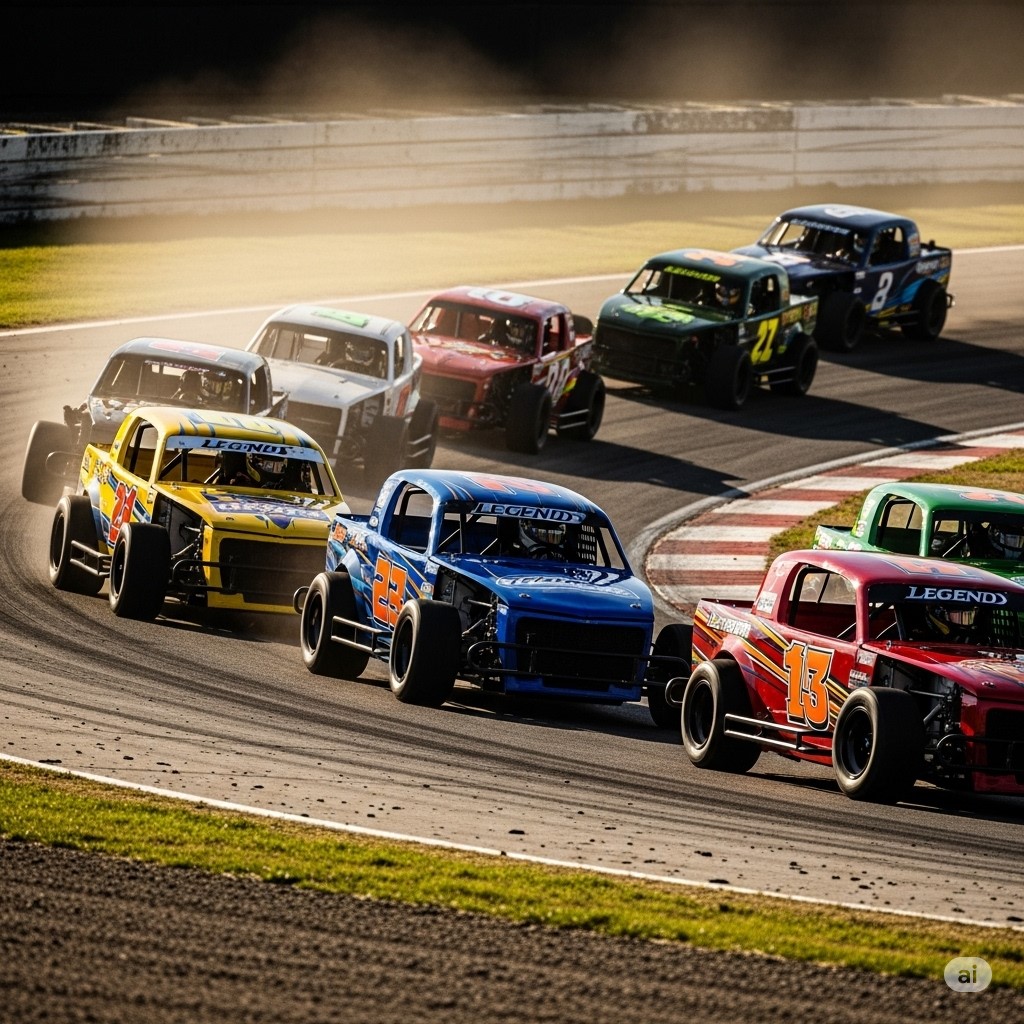
Legends Car Racing: A Thrilling Motorsport with Deep Roots and Global Appeal
Legends Car Racing delivers high-speed excitement and grassroots appeal. It combines affordability, accessibility, and fierce competition. Born from the desire to make motorsports more inclusive, Legends Car Racing has grown significantly. This fast-paced, small-car racing style now enjoys a global fan base. With leagues across continents and a robust amateur scene, it has earned a respected place in the racing world.
Origins and History of Legends Car Racing
Legends Car Racing began in 1992 in Charlotte, North Carolina. Officials at Charlotte Motor Speedway created the series to reduce racing costs. They wanted a new entry-level class for aspiring drivers. The result was a scaled-down car modeled after 1930s and 1940s American coupes.
These cars were built by US Legend Cars International. The company, founded by racing pioneer Humpy Wheeler, built cars on Yamaha motorcycle engines. The design kept costs low while offering real racing performance. The goal was clear: bring more drivers into the sport without a massive financial burden.
In its early years, the series gained momentum in the southeastern United States. It soon spread across the country. Tracks in the Midwest and West Coast began hosting events. Word of mouth fueled its growth, as did televised events and motorsport media coverage.
By the late 1990s, the sport expanded beyond the United States. Racing leagues formed in Canada, the United Kingdom, and mainland Europe. Australia and South Africa followed. As its reach expanded, so did its reputation as a serious proving ground.
Global Popularity and Reach
Today, Legends Car Racing spans five continents. Over 30 countries host organized races. The sport thrives in the United States, United Kingdom, Finland, Sweden, and South Africa. It also maintains a growing presence in Asia and the Middle East.
What drives this global popularity? First, the affordability factor cannot be overstated. The cost of a Legends car is far lower than most other motorsport vehicles. Second, the racing itself is electrifying. The small size of the cars and the emphasis on driver skill keep fans engaged.
In Europe, national and regional championships attract full fields of racers. In the UK, the National Legends Championship enjoys significant support. Scandinavian countries host competitive leagues that run throughout summer.
In South Africa, Legends racing has become a staple of the local motorsport calendar. The cars perform well in hot climates and on various surfaces. Australia’s racing scene, long known for its passion, has embraced Legends cars as a key junior development series.
Meanwhile, in the United States, it remains one of the most competitive amateur series. Tracks from coast to coast run weekly or monthly races. The INEX-sanctioned races ensure standardization and fairness worldwide.
Amateur Legends Car Racing
Amateur racers fuel the Legends Car Racing ecosystem. Drivers as young as 12 begin their careers behind the wheel of these cars. Many school programs, youth clubs, and grassroots racing organizations use Legends cars for development.
Junior Divisions exist in many countries. These leagues cater to drivers aged 12 to 16. They follow strict safety and training standards. Parents and coaches emphasize both fun and discipline. The goal is to prepare youth racers for national competition.
School-affiliated racing programs, especially in the United States, provide students hands-on mechanical and driving experience. These programs serve as excellent springboards into higher forms of motorsport. Some schools have built entire engineering curriculums around Legends cars.
Weekend racers also find a home in the Legends community. Many hobbyists enjoy the camaraderie and competition. Retired drivers and motorsport fans often join local leagues to stay involved. These amateur events are often as competitive as professional ones.
Racetracks like Charlotte Motor Speedway and Las Vegas Motor Speedway host popular amateur races. These events draw large crowds and generate local economic activity. They also serve as scouting grounds for professional teams.
Professional Leagues and Competitions
Several professional organizations now oversee Legends Car Racing events. INEX, the International Events and News Exchange, is the sport’s largest sanctioning body. Based in the United States, INEX manages thousands of races annually.
The U.S. National Championship, held in Las Vegas, is one of the premier events. Top drivers from across the country and the globe gather to compete. The event spans several days and includes multiple race classes.
In the UK, the National Legends Cars Championship offers full-season competition. Drivers travel to circuits like Brands Hatch and Donington Park. This league has produced several professional racing talents.
European leagues are often region-specific but adhere to INEX standards. Finland, for instance, has produced many technically skilled drivers. Their training and experience in cold-weather conditions give them unique advantages.
South African Legends racing features high-speed road and oval tracks. The country’s diverse geography adds layers of complexity. Tracks like Zwartkops Raceway and Killarney International Raceway test both speed and skill.
Australian competitions center around iconic tracks like Sydney Motorsport Park. Drivers often race in conjunction with larger motorsport events, gaining additional exposure.
Social and Political Significance
Legends Car Racing carries notable social impact. It democratizes access to motorsport. Unlike Formula 1 or NASCAR, entry does not require millions in sponsorship. Young drivers from modest backgrounds find opportunity here.
This accessibility promotes diversity. More women and minority drivers now enter the sport through Legends series. It provides an inclusive platform often missing in elite motorsports.
The sport also strengthens local communities. Events bring together families, businesses, and fans. Local sponsorships thrive. Small towns with racetracks experience economic boosts during race weekends.
Politically, Legends racing fosters cooperation across borders. International events promote goodwill and cultural exchange. The shared passion for racing bridges gaps and encourages dialogue.
Governments in several countries support grassroots motorsport programs. In the U.S., youth development programs receive grants and educational funding. These investments highlight the sport’s educational and vocational relevance.
Detailed Rules of Legends Car Racing
Understanding the rules of Legends Car Racing enhances appreciation for the sport. INEX sets the official rulebook. The goal is to ensure fair play and safety across all events.
Car Specifications:
- All cars must be 5/8-scale replicas of 1930s–1940s coupes and sedans.
- Cars weigh around 1,300 pounds and run on 1250cc Yamaha engines.
- Modifications are limited to ensure parity. Suspension, brakes, and tires must meet exact specifications.
Race Classes:
- Young Lions (ages 12–16)
- Semi-Pro (entry-level adults)
- Masters (40 and older)
- Pro (experienced or sponsored drivers)
Race Format:
- Races typically occur on short oval or road courses.
- Events include practice, qualifying, heat races, and a main feature race.
- Points accumulate over the season to determine champions.
Safety Rules:
- Drivers must wear full safety gear including fire suits, helmets, and HANS devices.
- Cars must have roll cages, fire extinguishers, and approved harness systems.
Driving Conduct:
- Aggressive or unsafe driving results in penalties or disqualification.
- Drivers must respect yellow and red flags. Blocking and bumping are regulated.
Technical Inspections:
- Cars undergo pre- and post-race inspection.
- Any deviation from specs leads to fines, suspension, or disqualification.
These rules maintain the sport’s integrity and ensure competitive balance. Fans appreciate the close finishes and strategic driving these rules encourage.
Conclusion
Legends Car Racing has evolved from a cost-cutting experiment to a respected global motorsport. Its rich history, international reach, and commitment to accessibility make it unique. The sport continues to attract young talent, grow amateur leagues, and hold professional events worldwide.
Its social impact is undeniable. Legends racing supports education, fosters diversity, and boosts local economies. With a strong rule set and dedicated organizations like INEX, its future remains bright.
Whether you’re a fan, driver, or aspiring racer, Legends Car Racing offers something special. It’s more than a sport. It’s a movement—powered by passion, precision, and people from all walks of life.