
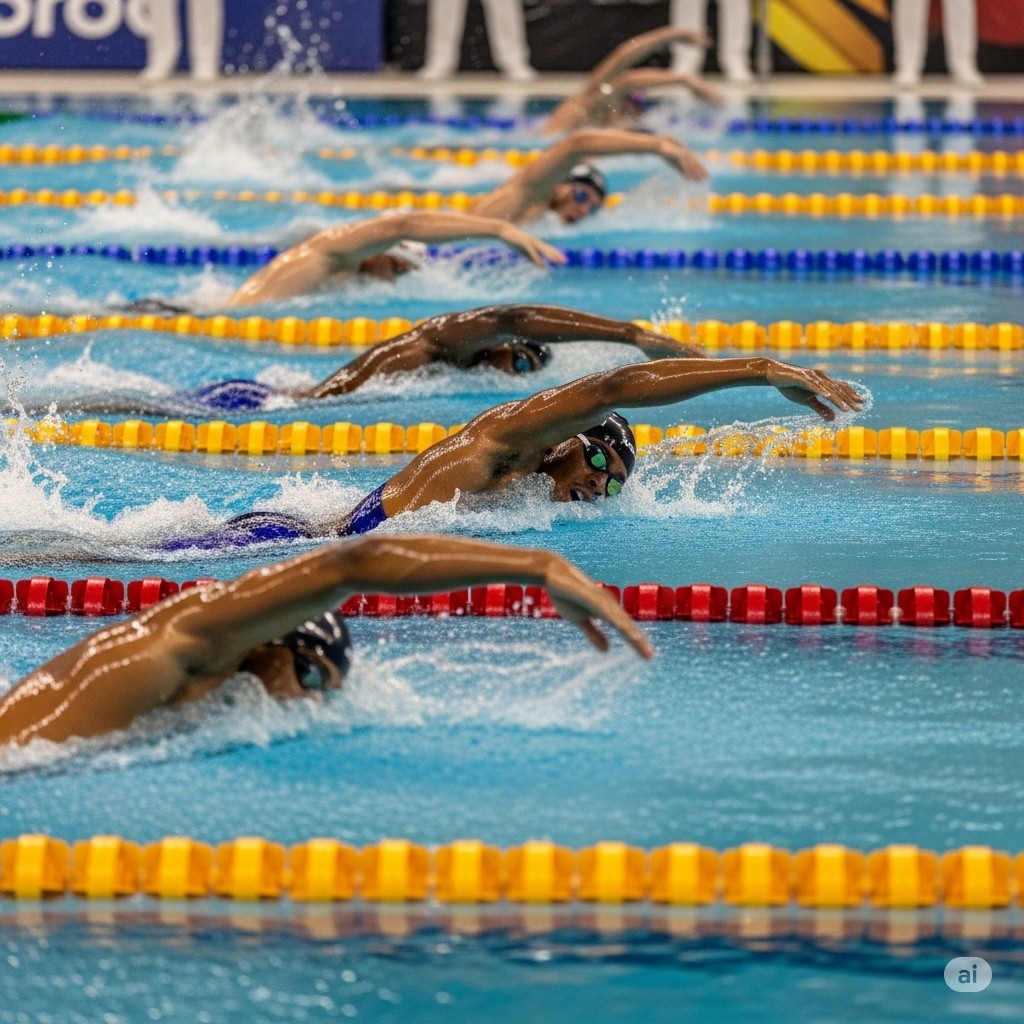
Medley Relay Swimming: A Dynamic and Thrilling Aquatic Sport
Medley Relay Swimming is one of the most dynamic and thrilling events in competitive swimming. Combining four different strokes in a single race, this sport tests versatility, speed, and teamwork. Whether you’re a fan or a participant, the excitement never fades. From its historical beginnings to its global influence, this swimming discipline continues to capture attention worldwide. Medley Relay Swimming not only challenges athletes physically but also symbolizes unity, determination, and sportsmanship. In this blog post, we’ll explore its history, global popularity, amateur and youth involvement, professional leagues, social and political significance, and its rules.
The Origin and History of Medley Relay Swimming
Medley Relay Swimming developed in the early 20th century. The sport grew as swimming techniques evolved and competitions diversified. In the 1950s, international swimming bodies formalized the medley relay format. The inclusion of four strokes—backstroke, breaststroke, butterfly, and freestyle—offered a complete test of a team’s capabilities.
The International Swimming Federation (FINA) played a major role in establishing standardized rules. Initially, national competitions experimented with different stroke orders and team sizes. Over time, the current format emerged. By 1960, Medley Relay Swimming was introduced in the Olympic Games for men. Women’s medley relay events followed in 1964.
This discipline’s history also reflects the broader evolution of swimming. Advances in technique, training, and technology have continually pushed performance boundaries. The medley relay, with its stroke transitions, has contributed significantly to innovation in competitive swimming.
Global Popularity and Reach of the Sport
Medley Relay Swimming enjoys immense popularity across the globe. Nations with a strong swimming culture like the United States, Australia, and Japan have embraced it wholeheartedly. European countries such as the UK, Germany, and Hungary also maintain high levels of participation and competition.
The Olympic Games has significantly boosted its profile. Medals in medley relay events are often seen as markers of national swimming strength. Additionally, the sport draws massive television audiences. Broadcasts reach millions during world championships and Olympics.
Asia and South America are also seeing rapid growth. China and Brazil invest heavily in swimming programs, including medley relay teams. These nations recognize the importance of international success in swimming.
Swimming federations in Africa and the Middle East are promoting medley relays through regional competitions. The World Aquatics Championships and the Commonwealth Games have broadened exposure and participation. As a result, Medley Relay Swimming now spans every continent.
Amateur and Youth Involvement Around the World
Amateur Medley Relay Swimming thrives in community pools and school programs. Grassroots development remains vital to the sport’s future. Across the United States, high school and collegiate swimming teams compete in medley relays. The NCAA holds several relay events in its championships.
In Australia, youth clubs introduce swimmers to all four strokes early on. Kids compete in medley relays by age group. This early exposure fosters versatility and builds foundational skills. Canada follows a similar model through school leagues and provincial competitions.
In Europe, swim schools emphasize technique and teamwork. Countries like Sweden and the Netherlands integrate relays into junior championships. Many swimming clubs in Asia offer after-school programs. India and Singapore have seen a surge in youth participation, often supported by government initiatives.
African nations are also making strides. Programs in South Africa and Egypt encourage medley relay participation through swim academies and schools. These efforts contribute to broader health and education goals.
The International School Sport Federation (ISF) supports youth medley relays. Annual world school championships promote global engagement. These events often serve as a pipeline to elite performance.
Professional Leagues and International Competitions
Professional Medley Relay Swimming has gained momentum through international competitions. The Olympics remains the pinnacle. Teams of four elite swimmers represent their countries in both men’s and women’s 4×100 medley relays.
The FINA World Championships are another prestigious event. Held every two years, they feature fierce medley relay competition. Medals at this level reflect a country’s depth in all strokes.
The International Swimming League (ISL) has revolutionized professional swimming. Launched in 2019, the ISL features club-based teams from around the world. Medley relays are a highlight event. The league’s fast-paced format and team scoring create thrilling viewing.
In Europe, the LEN European Aquatics Championships showcase elite medley relays. Similarly, the Pan Pacific Championships bring together top swimmers from the Pacific Rim. These events are critical for world rankings and Olympic qualification.
Japan’s National Championships and Australia’s Swimming Trials are also key events. National teams are often selected based on performance in domestic medley relay races.
Sponsorship and media coverage are growing. Brands align with relay teams and individual swimmers. This commercial support enhances the sport’s profile.
Social and Political Significance
Medley Relay Swimming holds deeper meanings beyond competition. Socially, it exemplifies teamwork and inclusiveness. Each swimmer’s stroke contributes to the collective effort. This mirrors values of unity and cooperation in diverse communities.
The sport has inspired initiatives promoting youth development, gender equality, and access to sports. Mixed medley relays, introduced recently, have men and women on the same team. This format challenges traditional gender roles and showcases collaboration.
Politically, medley relay success often symbolizes national strength. Olympic victories can boost a country’s global image. Governments invest in swimming infrastructure and training to achieve this visibility.
Swimmers have used their platforms for advocacy. From climate change to racial justice, athletes have voiced important causes. Their teamwork in the pool translates to solidarity outside of it.
During the Cold War, medley relay races between the U.S. and USSR symbolized ideological battles. Today, they reflect globalization and multicultural teamwork.
Sports diplomacy continues through swimming exchanges and international meets. These foster peaceful relations and cultural understanding.
Rules of Medley Relay Swimming
Medley Relay Swimming follows precise rules. A team consists of four swimmers, each swimming a different stroke. The order is fixed: backstroke, breaststroke, butterfly, and freestyle.
Each swimmer must start only after the previous swimmer touches the wall. A false start or early takeoff results in disqualification. Transition timing is critical. Precision can determine the race outcome.
In mixed medley relays, two men and two women compete per team. Teams can decide the order of genders. However, the stroke order remains unchanged.
All strokes have technical requirements. For example, backstroke must begin in the water. Breaststroke and butterfly require simultaneous arm and leg movements. Freestyle allows any stroke except the previous three.
Swimmers must finish within their designated lanes. Obstructing another team leads to penalties or disqualification. Swim caps and suits must conform to regulations.
FINA and national bodies oversee rule enforcement. Judges monitor each leg of the race. Infractions are logged and announced post-race.
Timing systems ensure accuracy. Electronic touchpads record each swimmer’s time and transitions. These systems have minimized disputes and errors.
Conclusion
Medley Relay Swimming captures the essence of athleticism, strategy, and cooperation. It combines speed, technique, and timing into one unforgettable event. From its historical roots to global prominence, it continues to inspire athletes and fans alike. Schools and amateur leagues nurture young talent. Professional competitions elevate the sport to worldwide acclaim.
Beyond medals and records, it reflects important social values. Unity, gender equality, and cultural exchange shine through in each race. The sport’s precise rules and global standards ensure fairness and excitement.
Whether you’re watching an Olympic final or a school meet, the excitement of Medley Relay Swimming never fades. This sport has carved out a unique place in the world of athletics. Its legacy continues to grow, stroke by stroke, relay by relay.