
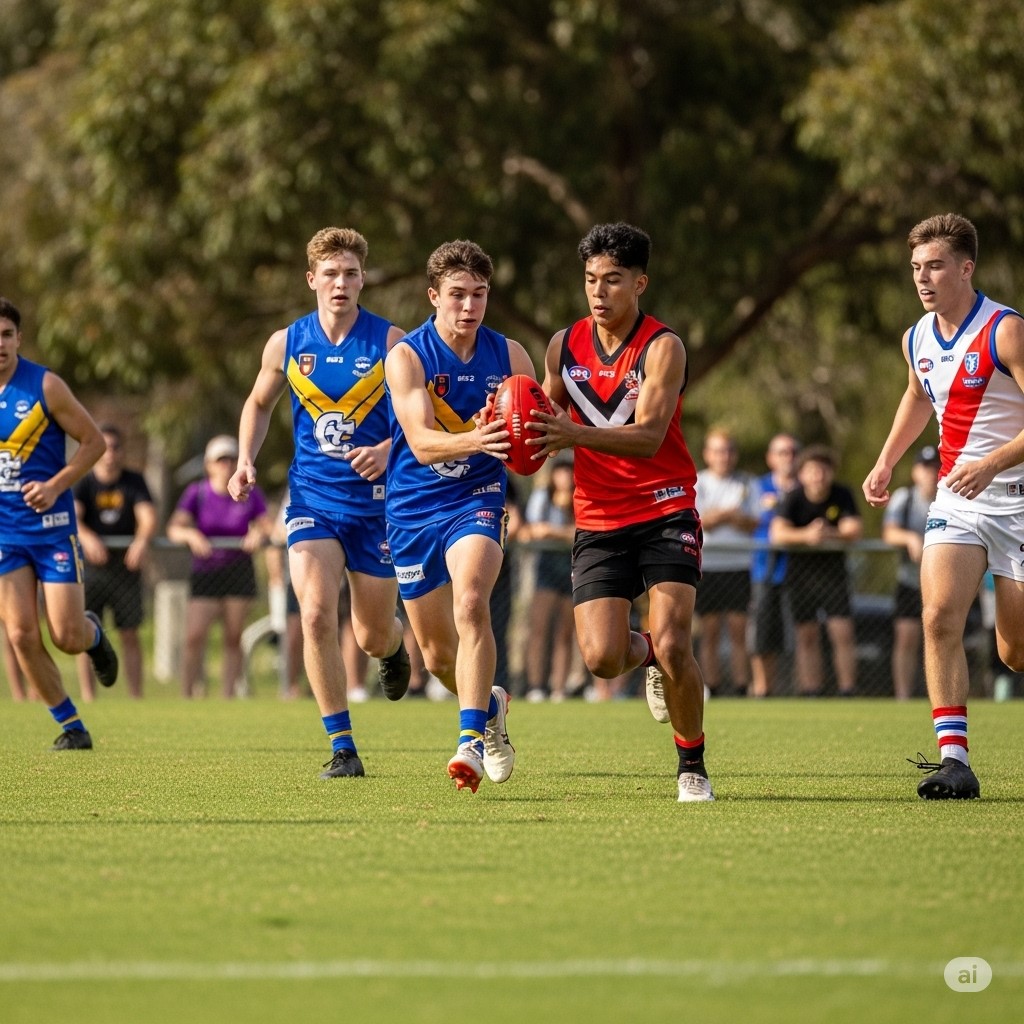
Metro Footy: The Rise of a Global Urban Sport
Metro Footy is a fast-paced, modified version of Australian rules football adapted for urban environments. It offers a streamlined game that retains the energy of its parent sport. First introduced to simplify Aussie Rules for smaller fields and fewer players, Metro Footy has found a global audience. Its growth stems from accessibility, versatility, and an inclusive community culture. As a result, this unique sport is gaining momentum not only in Australia but across continents.
The Origin and History of Metro Footy
The roots of Metro Footy trace back to the early 2000s. Australian expats in the United States wanted to introduce Aussie Rules to new audiences. However, the full version required large teams and fields, limiting its spread. To solve this problem, pioneers designed a compact version of the game. They called it Metro Footy.
This modified form used fewer players and smaller playing spaces. Typically, the game field was a rectangle instead of an oval. Teams had nine players instead of eighteen. These changes allowed games in public parks, schoolyards, and even urban stadiums. The goal was simple: create a more accessible and flexible version of Australian football.
Over time, governing bodies and clubs formalized the format. They set rules to ensure consistency. Leagues formed in the U.S., Canada, and Europe. As interest grew, so did the professionalism and structure of competitions. By the 2010s, Metro Footy had its own identity, separate yet connected to traditional Aussie Rules.
Global Popularity and Geographic Reach
Metro Footy has gained traction worldwide. In North America, the United States Australian Football League (USAFL) has embraced the format. More than 40 clubs across the U.S. now compete in Metro Footy tournaments. Canada follows closely, with leagues in Toronto, Vancouver, and Montreal.
Europe also hosts several Metro Footy teams. The United Kingdom, Ireland, and Germany have active clubs. Local tournaments attract diverse players. Expat Aussies, curious athletes, and local sports enthusiasts come together for the sport.
Asia and Oceania have witnessed growing interest too. Japan and Indonesia host exhibition matches and training camps. New Zealand has seen school-level programs start using Metro Footy to introduce students to the sport.
In Africa, South Africa is emerging as a Metro Footy hub. Grassroots initiatives led by NGOs and Australian expats have helped introduce the sport in Johannesburg and Cape Town. Meanwhile, Latin America sees interest primarily in Argentina and Chile. These countries host informal leagues that play regularly.
This global footprint highlights Metro Footy’s growing appeal. Its adaptability to different environments makes it easy to introduce and sustain across diverse regions.
Amateur Play: Schools, Youth, and Community Leagues
Metro Footy has found a stronghold in schools and youth programs. Because of its reduced field and team size, the game suits educational settings. Teachers use it to teach teamwork, coordination, and fitness.
In the U.S., several high schools now include Metro Footy in their physical education curriculum. Some offer it as an after-school club. Students from diverse athletic backgrounds join. Soccer players, basketball enthusiasts, and football athletes find the game engaging.
Australia also sees youth Metro Footy programs thrive. Although traditional Aussie Rules dominates, many city schools use the Metro format for training and intra-school competitions. The smaller setup allows more children to participate and learn fundamentals.
Community leagues are equally active. Local parks become weekend battlegrounds for amateur players. Games often feature mixed-gender teams, promoting inclusivity. In Canada, community centers run adult Metro Footy leagues during spring and summer. They attract players aged 18 to 50.
Europe mirrors this trend. In cities like London and Berlin, amateur Metro Footy draws participants from all walks of life. The low barrier to entry makes it easy for new players to join. Often, local pubs and businesses sponsor teams, creating a vibrant social scene around the sport.
Professional Leagues and Global Structure
While Metro Footy began as an amateur activity, professional leagues have started to emerge. These leagues bring structure, visibility, and higher competition levels to the sport.
In the U.S., the USAFL introduced a Metro League division. Although not fully professional, it provides a stepping stone for athletes aiming to compete at national championships. Teams receive funding and sponsorships. They often travel across states for matches.
Australia recently established a pilot professional Metro Footy league. Based in Melbourne and Sydney, the league features corporate-backed teams. Players receive stipends, coaching, and media exposure. The games are live-streamed, reaching audiences beyond city limits.
Europe is exploring professionalization too. The AFL Europe body supports semi-professional Metro Footy competitions. These leagues operate in the UK, France, and the Netherlands. They collaborate with local sports councils for funding and promotion.
Although the sport is still maturing at the professional level, its prospects are strong. Increased media coverage and online streaming help attract sponsors and fans. With the right infrastructure, fully professional Metro Footy leagues could become standard within the next decade.
Political and Social Significance of Metro Footy
Beyond the field, Metro Footy plays a role in community building and social cohesion. It brings together people from diverse backgrounds. The inclusive nature of the game fosters understanding and teamwork.
In immigrant communities, the sport serves as a cultural bridge. Australian expats use it to share their culture. Locals embrace the sport, creating shared experiences. In South Africa, for example, the game has become part of community development projects. Coaches use it to teach life skills and promote youth engagement.
Gender inclusion is another strong point. Many Metro Footy leagues field mixed-gender teams. Women take on key roles as players, coaches, and referees. This inclusivity sends a strong social message: sports should be for everyone.
The sport also contributes to public health. It promotes fitness and outdoor activity in urban settings. Cities struggling with sedentary lifestyles find Metro Footy a compelling solution. Its minimal equipment requirements make it accessible to low-income neighborhoods.
Politically, the sport has gained attention too. Local governments support Metro Footy through grants and facilities. The game’s potential to unite communities helps secure funding. Some mayors and councilors even participate in local matches.
Rules and Gameplay Mechanics
Metro Footy maintains the spirit of traditional Aussie Rules but simplifies it for urban play. Each team consists of nine players. The field is rectangular, often about the size of a soccer field.
Games typically last two 20-minute halves. A brief five-minute break separates the halves. Matches are fast-paced with continuous movement.
Scoring follows the basic principles of Aussie Rules. Kicking the ball between the two central goalposts earns six points. If the ball goes between a goalpost and a behind post, the team scores one point.
Players can pass the ball by handballing or kicking. Throwing is not allowed. When a player catches a ball from a kick over 15 meters, it is called a “mark.” The player then earns an unimpeded kick.
Tackling is permitted but must follow safety guidelines. Dangerous tackles result in penalties. Umpires have authority to award free kicks for fouls.
Substitutions are rolling, allowing for continuous player rotation. This keeps the game dynamic and inclusive. Most leagues require all registered players to receive game time.
Team strategy focuses on speed, agility, and ball movement. Coaches emphasize quick passes and spatial awareness. Defense requires coordination and communication to contain the fast flow of play.
Officials include two field umpires, one boundary umpire, and one goal umpire. However, small leagues sometimes operate with fewer officials.
Uniforms include jerseys, shorts, and cleats. Safety gear such as mouthguards is recommended. Helmets are not mandatory but allowed.
Metro Footy’s Future
The future of Metro Footy looks bright. Its adaptability to urban spaces ensures continued growth. Schools and community centers see it as a practical sport. Governments view it as a tool for public health and social unity.
Digital media expands the sport’s reach. Live-streamed games and social media content attract new fans daily. Youth participation is on the rise, ensuring generational continuity.
Professional leagues, though still developing, offer promising opportunities. Sponsorships and partnerships will likely increase. With sustained investment, Metro Footy could become a recognized global sport.
In summary, it is more than a modified version of Australian football. It is a movement. One that brings people together, transforms urban play, and redefines sports inclusivity.
Whether you’re a player, coach, or fan, Metro Footy invites you to be part of something special.