
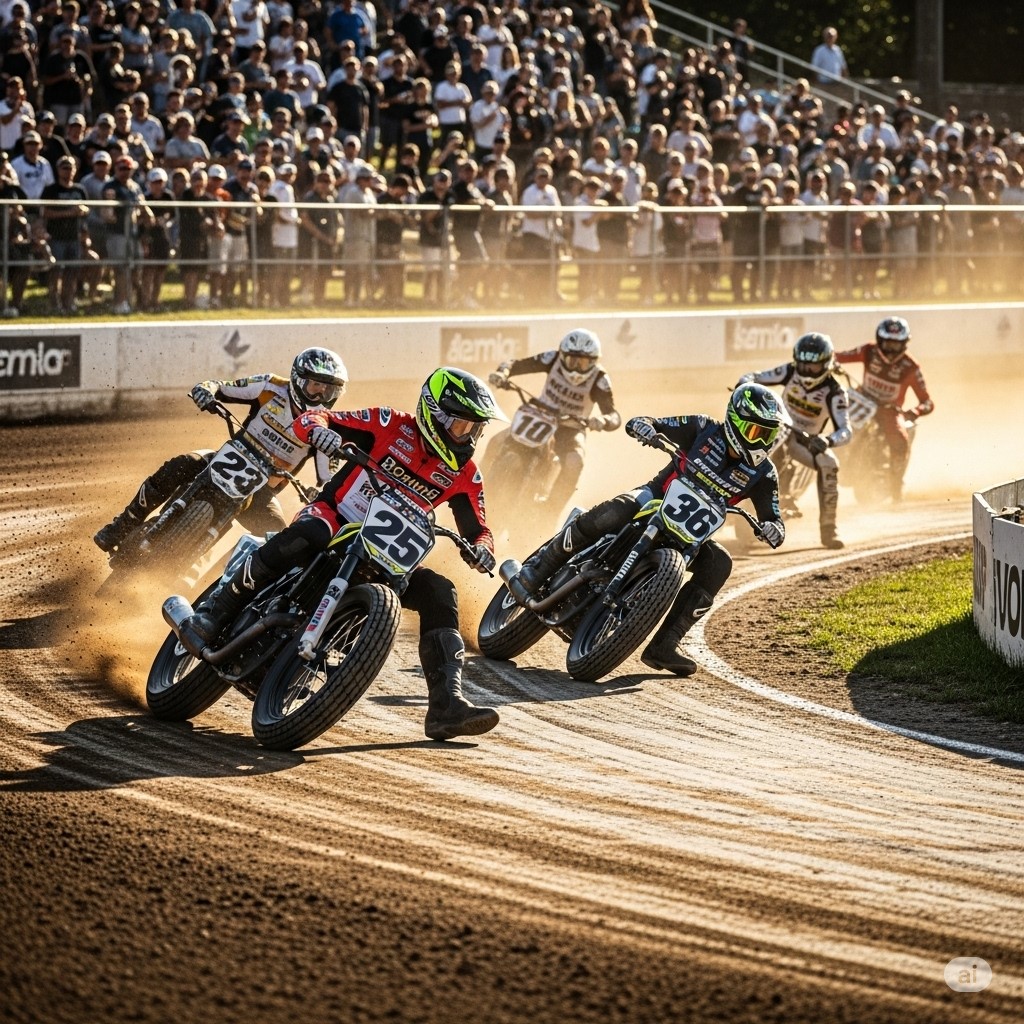
The Thrill of Motorcycle Flat Track Racing: A Comprehensive Overview
Motorcycle Flat Track Racing is one of the most exhilarating and fast-paced motorsports in the world. With its origins deeply rooted in American culture, the sport has evolved over the years. It is becoming a global phenomenon that attracts both amateur and professional racers. In this blog post, we will delve into the origins, history, popularity, and rules of Motorcycle Flat Track Racing. We will also examine the growth of the sport at the amateur level, the significance of various professional leagues, and its social and political impact around the world.
The Origins and History of Motorcycle Flat Track Racing
Motorcycle Flat Track Racing traces its roots back to the early 20th century. This was a time when motorcycle enthusiasts began seeking new ways to push the limits of speed and performance. The sport originated in the United States during the 1920s. Initially, dirt track racing was an informal pastime. It was for motorcycle riders who competed on roads, farm tracks, and any other flat, unpaved surfaces. It didn’t take long for these informal events to gain popularity, leading to the establishment of organized racing leagues.
The first official flat track event took place in 1921 at the famous Ascot Park in Los Angeles, California. These races were simple yet thrilling, with riders navigating oval dirt tracks at breakneck speeds. By the mid-1930s, Motorcycle Flat Track Racing had grown so much that it became part of the American Motorcycle Association (AMA) sanctioned events. Over time, racing techniques improved, bikes evolved, and tracks became more structured, paving the way for the professional races we know today.
The Global Popularity of Motorcycle Flat Track Racing
Motorcycle Flat Track Racing has grown exponentially, becoming a popular sport not just in the United States but across the globe. While its origins remain deeply tied to American culture, the sport’s popularity has reached places like Europe, Japan, and even Australia.
In the United States
In the U.S., Flat Track Racing has a massive following. The American Flat Track (AFT) series, which is the premier professional series in the country, attracts thousands of spectators at events held across the nation. Tracks like the famous Springfield Mile in Illinois and the Daytona International Speedway in Florida are some of the most iconic venues for Flat Track Racing. It remains a staple of the motorsports scene, drawing fans from all walks of life.
In Europe
Europe also boasts a strong Flat Track Racing presence. Countries such as Italy, the UK, and Sweden have thriving communities of racers and fans. The European Flat Track Championship has been a significant factor in promoting the sport across the continent. Motorcycle manufacturers from Europe, such as Ducati and Triumph, have supported the growth of the sport. They design bikes specifically made for Flat Track Racing. This has encouraged both amateur and professional riders to get involved.
In Japan and Australia
Flat Track Racing is gaining momentum in Japan, where a deep passion for motorsports already exists. The sport’s entry into the Australian market has also been successful. Races are regularly held in cities like Melbourne and Sydney. These international communities continue to fuel the growth of the sport. Local riders get to showcase their skills and passion for motorcycle racing.
Amateur Motorcycle Flat Track Racing
Amateur Motorcycle Flat Track Racing has played an essential role in nurturing the future stars of the sport. Riders start young, often competing in local events and school programs. Youth leagues and competitions provide opportunities for young racers to hone their skills, while developing a deep love for the sport.
Youth and Schools
Around the world, Motorcycle Flat Track Racing is included in various school programs and youth competitions. In the U.S., for example, organizations like the AMA promote youth racing through specific age categories, starting from as young as 4 years old. These youth programs are crucial because they introduce young riders to the fundamentals of racing and help them build their careers in the sport.
In Europe, school competitions and grassroots events provide a foundation for young racers to develop their talents. These races often take place on smaller, shorter tracks that help novice riders learn how to navigate sharp turns, accelerate quickly, and improve their overall control of the motorcycle.
Amateur Leagues and Clubs
Local amateur leagues and clubs are vital for keeping the sport accessible and enjoyable for all levels of riders. These clubs often serve as a stepping stone for future professionals, providing a space for racers to test their skills without the pressure of large-scale competition. At the amateur level, there is a focus on fun, safety, and community, with riders of all backgrounds coming together to share their love for Flat Track Racing.
Professional Leagues and Events in Motorcycle Flat Track Racing
As the sport has grown, it has given rise to a number of professional leagues around the world. These leagues host prestigious events that attract top-tier riders and massive crowds. Here’s an overview of the leading professional leagues in the sport.
American Flat Track (AFT)
The American Flat Track series is the pinnacle of Motorcycle Flat Track Racing in the United States. Founded in the 1950s, the AFT has become the most respected professional league, featuring multiple classes and attracting the best riders from around the world. The series holds races at iconic venues like the Daytona International Speedway, with riders competing on tracks ranging from half-mile ovals to mile-long circuits.
AFT races consist of several rounds held throughout the year, with points accumulated over the season to determine the champion. The league’s elite riders often travel from race to race, competing for fame, sponsorships, and prize money. The AFT has become synonymous with high-speed, high-adrenaline racing, drawing fans from across the U.S. and beyond.
FIM European Flat Track Championship
The FIM European Flat Track Championship is the premier league in Europe. It serves as the most significant platform for European riders to compete and gain recognition on the international stage. With races held across several countries, the championship has played a key role in elevating European riders to global prominence. The FIM Championship is also a crucial stepping stone for European riders aspiring to compete in the AMA’s American Flat Track series.
International Series
In addition to national and continental competitions, international events like the Flat Track World Championship have made a significant impact on the sport’s popularity. These races bring together riders from various countries, competing on tracks across the globe. The international nature of these events highlights the global appeal of Motorcycle Flat Track Racing and helps build connections between racers, fans, and sponsors.
The Social and Political Significance of Motorcycle Flat Track Racing
Motorcycle Flat Track Racing has more than just a sporting value. The sport has served as a platform for various social and political movements throughout its history.
Social Impact
The sport has long been associated with blue-collar workers, particularly in the U.S., where it was embraced as a working-class pastime. Over time, the sport transcended its working-class roots, drawing in fans and participants from all walks of life. Today, Motorcycle Flat Track Racing is enjoyed by a diverse demographic, including men and women, people of all races, and various socio-economic backgrounds.
Flat Track Racing has also helped to raise awareness about issues like road safety, environmental sustainability, and the importance of supporting local communities. Riders and fans often come together to raise money for charitable causes, and the sport’s grassroots nature allows for strong local support.
Political Impact
On the political side, Motorcycle Flat Track Racing has faced challenges regarding safety regulations, environmental concerns, and the management of public land. As with any motorsport, the sport’s impact on the environment has led to debates about sustainability. However, the sport has responded by adopting stricter regulations for emissions and promoting more eco-friendly practices in race preparation and event organization.
Flat Track Racing also plays a role in local politics. Communities use it as a tool to boost local economies. Hosting major races and attracting large crowds can provide a significant economic boost to host cities. This leads to job creation, tourism, and local business development.
The Rules of Motorcycle Flat Track Racing
While the thrill of Motorcycle Flat Track Racing is undeniable, understanding the rules of the sport is crucial for both competitors and fans.
Race Format
Races typically involve several heats, with riders competing in small groups of 4 to 6 at a time. The heats are followed by semi-finals, where the top riders from each heat advance to the final race. The final race determines the winner, with riders vying for the fastest lap times and the most points.
Track Specifications
Flat tracks can range from 1/4-mile to 1-mile long, with oval shapes being the most common. The surface is typically made of dirt, but it can also be a combination of soil, clay, and other materials. Tracks are often banked, allowing for high-speed cornering.
Bike Specifications
Motorcycles used in Flat Track Racing must meet specific specifications in terms of engine size, weight, and tire requirements. The bikes used in the sport are designed for maximum speed and control on dirt surfaces. Riders often customize their bikes to optimize performance for each individual track.
Safety Regulations
Safety is a top priority in Motorcycle Flat Track Racing. Riders are required to wear protective gear, including helmets, gloves, leather suits, and boots. Tracks are designed with safety barriers, and race officials monitor each event closely to ensure that safety standards are met.
Conclusion
Motorcycle Flat Track Racing continues to be a thrilling and dynamic sport with a rich history and global reach. From its humble beginnings in the U.S. to its rise as a global phenomenon, the sport has captivated fans around the world. Amateur leagues foster the next generation of racers, while professional events provide thrilling competition at the highest levels. With its deep roots in social and political issues, Motorcycle Flat Track Racing remains a vital part of the global motorsport scene. Whether you’re an aspiring racer or a passionate fan, the sport offers excitement and drama that is unparalleled in the world of motorsports.