
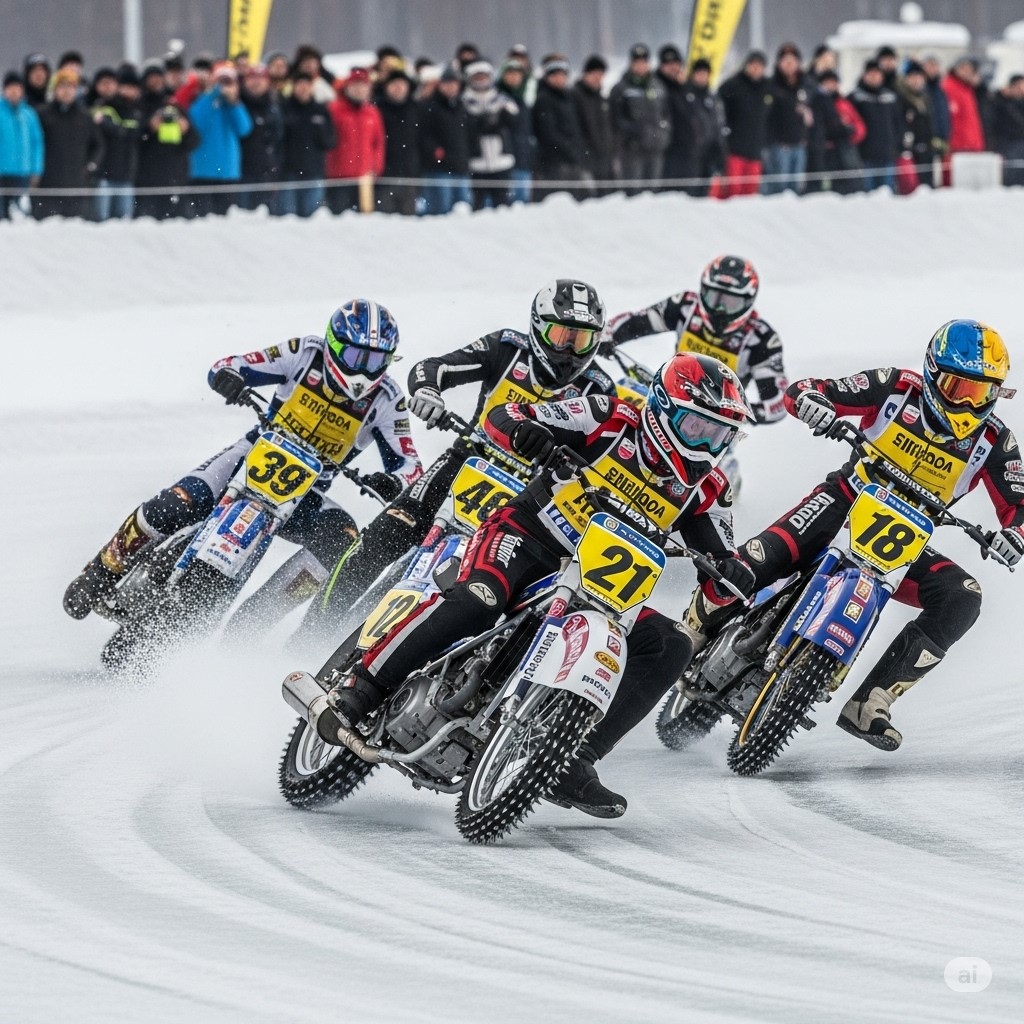
Motorcycle Ice Racing: A Thrilling Winter Sport with Deep Roots
Motorcycle Ice Racing is one of the most exciting and intense winter sports in the world. It combines speed, skill, and fearlessness in a way few other motorsports can match. While it may not receive as much mainstream attention as other racing disciplines, its unique character and dedicated following make it an adrenaline-charged spectacle. Motorcycle Ice Racing continues to gain popularity worldwide, drawing both amateur and professional competitors to frozen tracks each winter.
The Origin and History of Motorcycle Ice Racing
The origins of Motorcycle Ice Racing date back to the early 20th century. Riders in northern Europe, particularly in Russia and Sweden, began modifying motorcycles for use on frozen lakes and rivers. These early pioneers saw the ice not as an obstacle, but as a new frontier for motorsport.
By the 1930s, organized competitions began to form in Scandinavian countries. Studded tires and specialized gear helped improve traction and performance on slippery surfaces. Over time, the sport became more structured. Rules were created, classes were defined, and official championships emerged.
In the post-World War II era, Motorcycle Ice Racing gained serious momentum. The Soviet Union took a keen interest in developing the sport. Government-backed training programs elevated riders to elite status. By the 1960s, international competitions were taking place. Riders from across Europe began to meet regularly in sanctioned events.
Today, the Fédération Internationale de Motocyclisme (FIM) governs international motorcycle racing, including ice racing disciplines. Their support has legitimized and expanded the sport.
Global Popularity and Where It Is Played
Motorcycle Ice Racing is most popular in colder regions of the world. Russia, Sweden, Finland, and Norway are traditional powerhouses. These countries host major championships each year and have established long-standing traditions around the sport.
In Russia, it is a national pastime during winter. Massive crowds gather in frozen stadiums to watch riders duel at breakneck speeds. The city of Tolyatti is home to one of the sport’s most famous tracks.
In Sweden, the sport enjoys strong community support. Towns and villages host local events, often coinciding with winter festivals. Finland and Norway also maintain thriving racing scenes. These countries produce many of the top riders in the world.
Motorcycle Ice Racing has also made inroads into North America. In Canada and the northern United States, amateur leagues and regional competitions take place each winter. Events in Minnesota, Michigan, and Quebec draw enthusiastic crowds and skilled riders.
While less common, the sport is even practiced in parts of Japan and Kazakhstan. Global interest continues to grow as exposure increases through streaming platforms and social media.
Amateur Motorcycle Ice Racing: Youth and Schools
Amateur Motorcycle Ice Racing plays a crucial role in sustaining the sport. It serves as the foundation from which professional talent come from. Community-based leagues and clubs organize the majority of amateur competitions.
In countries like Sweden and Finland, youth training programs start at an early age. Children as young as six ride miniature ice bikes equipped with safety gear. These programs emphasize fundamentals, sportsmanship, and fun.
Many high schools and technical institutes offer motorsport courses. These programs often include hands-on training and race simulations. Students learn both the mechanical and competitive aspects of ice racing.
Local events are held throughout winter, often on frozen lakes. Families, friends, and local businesses sponsor young riders. The community spirit around these events helps foster lasting connections.
In North America, the Ice Racing Association of Canada and several U.S.-based clubs offer junior leagues. These programs welcome newcomers and provide mentorship from seasoned riders. Amateur circuits are diverse, including novice, youth, and senior categories.
These grassroots efforts ensure a steady pipeline of talent. They also build passion and appreciation for the sport.
Professional Leagues Around the World
Motorcycle Ice Racing boasts several professional leagues and championship events. These leagues feature the sport’s best riders and attract international audiences.
The FIM Ice Speedway Gladiators World Championship is the pinnacle of the sport. It features a series of events held across Europe and Russia. Only the top riders qualify for this elite competition. Riders compete individually, accumulating points toward the world title.
In Russia, the national championship is fiercely competitive. Riders often train year-round and benefit from extensive support. Many go on to compete internationally. The Russian league is one of the most demanding in the sport.
Sweden’s national series is also well-respected. It includes multiple rounds in various towns. Riders accumulate points toward a national title. The league is known for its strong community involvement and passionate fans.
Other notable professional competitions include the European Ice Speedway Championship and national series in Finland and the Czech Republic. These events draw elite riders and receive significant media coverage in their respective countries.
Professional leagues are essential to the sport’s development. They set high standards for safety, skill, and sportsmanship.
Political and Social Significance
Motorcycle Ice Racing holds political and social importance in several regions. In Russia and other parts of Eastern Europe, the sport has received state support. Governments see it as a symbol of national pride and cultural identity.
During the Soviet era, top riders were treated as sports heroes. Their achievements were broadcast nationwide. They represented strength, endurance, and Soviet ingenuity. This legacy continues today in modern Russia.
In Scandinavian countries, the sport represents community resilience and tradition. Winter sports are integral to national identity. Motorcycle Ice Racing reflects the innovative spirit of these northern nations.
Socially, the sport brings communities together. Local events serve as gathering points during long winters. Families and friends bond over shared experiences on frozen tracks. Riders often become local celebrities, inspiring younger generations.
In North America, Motorcycle Ice Racing contributes to rural and regional culture. Events boost local economies and foster community pride. The sport creates opportunities for youth engagement and skill development.
Globally, it encourages cross-cultural exchange. Riders from different countries meet, compete, and share techniques. These interactions promote understanding and sportsmanship across borders.
Rules of Motorcycle Ice Racing
Motorcycle Ice Racing has strict rules to ensure safety and fairness. These rules cover everything from equipment to race conduct.
Races typically take place on oval tracks made of ice. The standard track length ranges from 260 to 425 meters. Riders compete in heats, with four to six competitors per race. Each heat lasts four laps.
Motorcycles used in the sport are highly specialized. They feature lightweight frames and powerful engines. Most importantly, their tires have long steel spikes for traction. These spikes can be up to 28 mm in length.
There are two main types of races: full-track and short-track. Full-track races use traditional ice speedway motorcycles. Short-track races allow modified motocross bikes with studded tires.
Riders must wear approved safety gear. This includes helmets, body armor, gloves, and boots. Many also wear steel-soled shoes to help control the bike on ice.
Starting positions are drawn randomly. Riders earn points based on their finishing position in each heat. The top scorers advance to semi-finals and finals.
Collisions and fouls are penalized. Deliberate contact is not allowed. If a rider falls, the race is stopped and restarted, unless the fall resulted from a foul.
Referees enforce the rules strictly. They have the authority to disqualify riders for dangerous conduct. Appeals are an option, but decisions are usually final.
Scoring is consistent across most professional leagues. Points earned determine championship standings. At the end of the season, the rider with the most points is champion.
Conclusion
Motorcycle Ice Racing is more than just a sport. It is a thrilling celebration of human courage, mechanical ingenuity, and winter resilience. From frozen lakes in Scandinavia to icy tracks in Russia, it unites people with a shared love for speed and challenge.
The sport’s rich history, growing global reach, and vibrant amateur scene ensure its continued relevance. Professional leagues showcase top talent and inspire fans around the world. Its political and social roles highlight its deeper impact on culture and community.
With well-defined rules and safety protocols, Motorcycle Ice Racing offers both excitement and structure. It demands skill, focus, and respect—for the machine, the ice, and fellow competitors.
Whether you’re a lifelong fan or new to the sport, there’s no denying its appeal. As Motorcycle Ice Racing gains more attention, it promises to captivate and inspire for generations to come.