
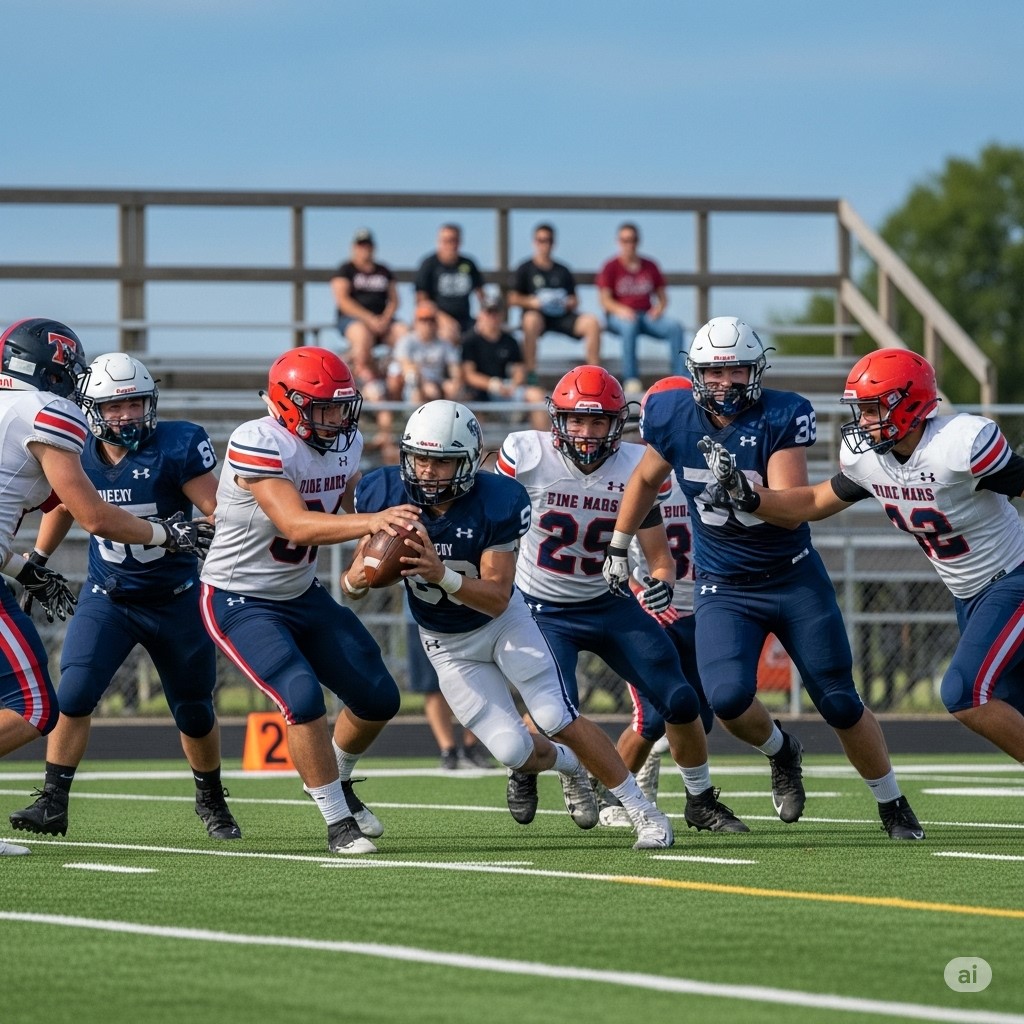
The Rise and Reach of Nine Man Football: A Deep Dive into a Dynamic Sport
Nine Man Football is a lesser-known but highly dynamic version of American football. It thrives in rural communities, small schools, and international circles. While it shares DNA with traditional 11-man football, it features unique rules, a smaller roster, and fast-paced play. As a result, this version of the sport offers new opportunities and fresh excitement. It has steadily grown in popularity, carving out its own identity. From humble beginnings to modern leagues, its journey is as compelling as the sport itself.
In this blog post, you’ll learn everything about Nine Man Football. We will explore its origins, rule differences, growth at youth and amateur levels, professional leagues, and even its societal impact. Whether you’re a seasoned fan or just discovering the game, this guide will provide a comprehensive view.
A Brief History of Nine Man Football
The sport began out of necessity. In many rural communities, small schools couldn’t field 11 players. These schools wanted to offer football but lacked the student population. That’s when Nine Man Football emerged.
The earliest versions appeared in the 1930s across the Midwest United States. States like Minnesota, North Dakota, and South Dakota became early adopters. By the 1950s, the format became more standardized.
During this time, state athletic associations created formal rules for the nine-player game. These adaptations helped smaller schools stay competitive. It allowed them to offer a football program without sacrificing safety or quality. As more states embraced the format, leagues formed, and rivalries grew.
Today, its historical roots remain a point of pride. Small communities view Nine Man Football as a tradition that binds generations.
Where the Nine Man Football Thrives Around the World
Although it began in the U.S., it now enjoys global interest. Let’s look at where it’s played and how it has spread.
United States
The sport remains popular in the American Midwest and Plains states. South Dakota has over 60 schools playing Nine Man Football. North Dakota and Nebraska follow closely behind.
States such as Montana, Minnesota, and Kansas also support thriving leagues. These regions rely on the sport due to low population densities and small school enrollments. In these areas, Friday night games become community events.
Canada
In Saskatchewan and Manitoba, Nine Man Football is common at the high school level. Canadian football already uses a wider field and different rules. However, nine-player teams offer smaller schools a chance to compete.
The Canadian format still emphasizes speed and agility. Many Canadian players use Nine Man Football as a stepping stone to the CFL or university-level programs.
Europe
The sport has found a foothold in Germany, Austria, and parts of Scandinavia. In these countries, Nine Man Football often acts as an entry point. Clubs use it to train players and introduce them to the basics before progressing to larger formats.
European leagues often run youth programs that feature nine-player formats. These clubs focus on skill-building and development rather than competition alone.
Asia and Latin America
Interest is slowly growing in Japan, Mexico, and Brazil. In Japan, Nine Man Football has appeared at some high school clubs and in private leagues. In Mexico, it’s played in remote areas with limited player pools.
Although still developing, these countries have shown increasing interest in American-style football. Smaller team sizes make it easier to introduce the sport at grassroots levels.
Amateur Nine Man Football: A Breeding Ground for Talent
One of Nine Man Football’s greatest strengths is its accessibility. The format lowers the barrier for schools and communities to build a team. This is especially true at youth and amateur levels.
Youth Leagues
Pop Warner and other youth football organizations sometimes offer Nine Man divisions. These leagues help younger players learn spacing, tackling, and basic formations. Fewer players mean more touches and responsibility per child. That boosts development and confidence.
Coaches at the youth level often favor Nine Man Football to teach fundamentals. With less congestion, athletes can focus more on technique.
High School Nine Man Football
Across rural America and Canada, high schools turn to Nine Man Football. Schools with enrollments under 100 often rely on this format. It allows small districts to offer football without merging with other schools.
High school games still generate intense rivalries and packed bleachers. State championships draw large crowds, sometimes exceeding those of larger formats. In these communities, football provides both identity and pride.
Amateur Adult Leagues
In places like Germany and Mexico, amateur leagues use Nine Man Football to promote the sport. These leagues often consist of local clubs with limited rosters.
The format provides flexibility and encourages more participation. It also works well for semi-professional players who want to stay active without committing to full 11-man competition.
Professional Leagues and Competitive Nine Man Football
While less common than amateur formats, professional Nine Man Football does exist. It tends to operate on a regional scale rather than national.
United States
Some semi-pro leagues across the Midwest and South include Nine Man teams. The Midwest Football League and Great Plains Football Association occasionally feature these teams. Games are competitive, fast-paced, and attract local fanbases.
Although not backed by big sponsors, these leagues offer a pathway for players. Some athletes use them to stay in shape for arena or international football.
Canada
The Canadian Major Football League includes clubs that support Nine Man Football. These leagues provide post-high school opportunities for athletes not ready for full university competition.
Some provinces also run summer leagues to showcase local talent. While not labeled “professional,” players are often compensated for travel and equipment.
Europe
Germany’s GFL (German Football League) runs youth academies using the Nine Man format. These academies focus on training, safety, and long-term development. Austria follows a similar model.
Though the sport is not played professionally in Nine Man format across all age groups, it provides essential scaffolding. It helps players develop before entering 11-man or arena football systems.
Social and Political Impact of Nine Man Football
Nine Man Football plays a larger role than just athletics. In many communities, it serves as a unifying force. Let’s explore the social and political significance.
Rural Empowerment
Small towns often face economic and social challenges. School closures and budget cuts are common. Offering Nine Man Football gives these communities something to rally around.
Games become community events. Families gather on Fridays. Local businesses sponsor teams. This social cohesion is invaluable.
Inclusion and Access
The sport increases access to football. Schools without large rosters can still offer athletic programs. This boosts participation in sports among students who might otherwise be left out.
Girls have also found more opportunities in Nine Man Football. Some teams welcome female athletes at the youth and amateur levels.
Educational Equity
School administrators appreciate the sport’s cost efficiency. Fewer players mean smaller budgets. That allows districts with fewer resources to compete. It levels the playing field—literally and figuratively.
Political Awareness
In some U.S. states, debates over school funding have highlighted the role of Nine Man Football. Legislators recognize that removing sports can erode community morale. Thus, the sport often becomes part of broader discussions about rural development and education policy.
How Nine Man Football Is Played: Rules and Structure
Now let’s break down the rules of the game. While it shares similarities with 11-man football, key differences make it unique.
Team Composition
Each team fields nine players instead of eleven. Typically, formations include:
- 3 offensive linemen
- 2 running backs
- 2 wide receivers
- 1 quarterback
- 1 tight end or extra back
Defensive setups vary but often include a mix of linemen, linebackers, and defensive backs.
Field Size
The field is usually narrower. Most games use an 80-yard-long field and a width of 40 yards. Some states allow full 100-yard fields but keep the width reduced.
Game Timing
Games typically follow standard timing:
- Four quarters
- 12 minutes each
- Halftime break
The clock stops for out-of-bounds plays, timeouts, and change of possession.
Scoring
Scoring is identical to standard football:
- Touchdown: 6 points
- Extra point: 1 or 2 points
- Field goal: 3 points
- Safety: 2 points
Kicking and punting are optional. Some leagues allow a conversion-only system for extra points.
Key Differences
- More open field: Less congestion creates room for longer runs and creative plays.
- Faster pace: Games often see higher scores due to quick possessions.
- Strategic depth: Coaches must make the most of each position, balancing speed and skill.
These rule changes enhance action and keep fans engaged. The result is a faster, more fluid version of the sport.
The Future of Nine Man Football
The sport continues to grow. Its adaptability makes it ideal for changing educational landscapes. As schools consolidate or face budget cuts, Nine Man Football offers a lifeline.
Internationally, it’s being adopted in places where full-sized rosters are not feasible. The growth of American football worldwide also boosts its prospects.
Technology has helped too. With livestreaming and social media, small-town games now reach larger audiences. This visibility raises the sport’s profile.
Organizations like USA Football and Football Canada are working to create more resources for coaches and players. This commitment to development bodes well for the future.
Conclusion
Nine Man Football offers more than a scaled-down version of the game. It provides a meaningful experience for players, schools, and entire communities. Its historical roots are deep, yet its future remains full of potential.
From American prairies to European cities, the game is gaining traction. Coaches appreciate its flexibility. Players enjoy the increased action. Fans love the community aspect.
Whether you’re watching a high school playoff or a youth scrimmage, the passion is undeniable. Nine Man Football might be smaller in size, but it carries big importance.