
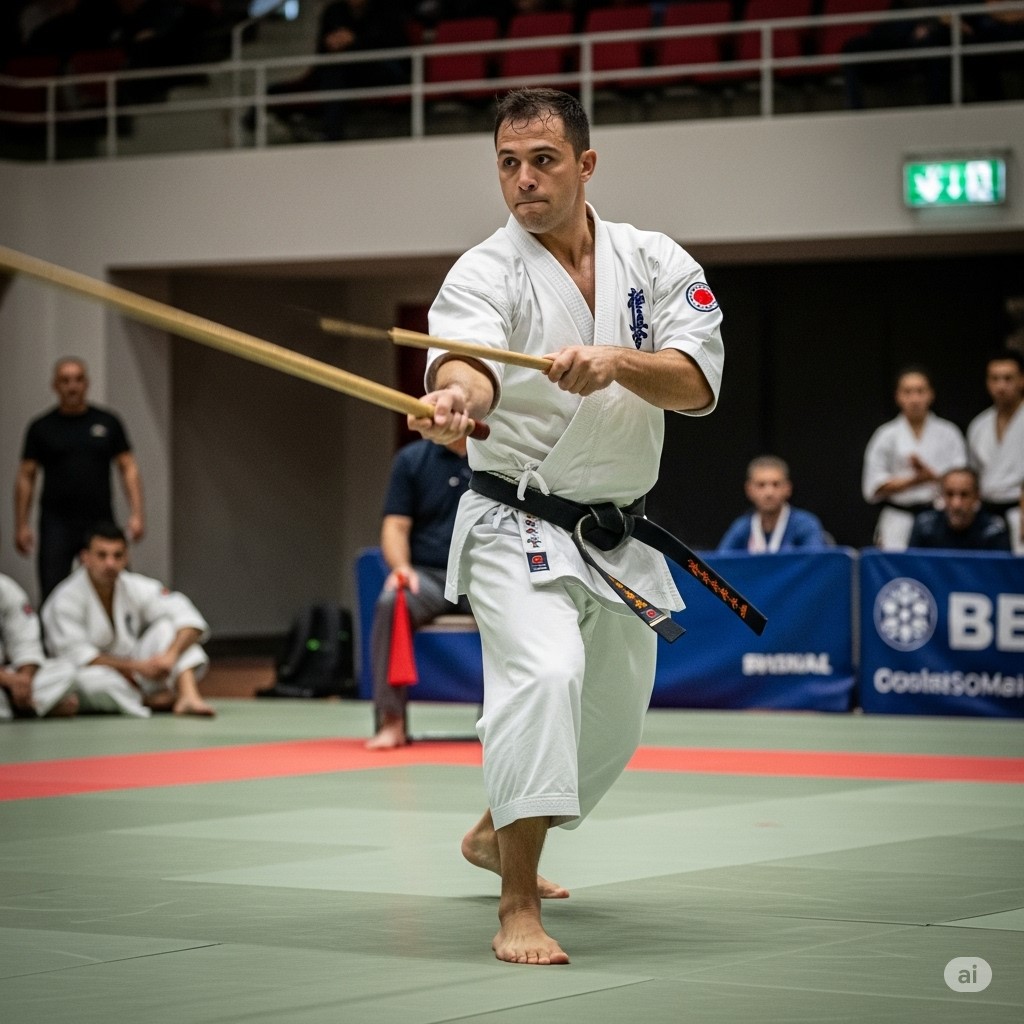
The Enduring Legacy and Global Impact of Okinawan Kobudo
Okinawan Kobudo is a traditional martial art that has captivated practitioners worldwide. This sport blends physical discipline, cultural heritage, and spiritual refinement. Practiced for centuries, it now serves as a bridge between Okinawa’s storied past and its modern global influence. Through detailed study and training, enthusiasts gain insight into both combat techniques and historical context. Okinawan Kobudo stands as a respected discipline with global appeal, amateur engagement, and even professional leagues.
Origins and Historical Development
The roots of Okinawan Kobudo trace back to the Ryukyu Kingdom. This island nation developed its unique culture due to its geographic isolation. Kobudo emerged alongside the better-known Karate, but with a focus on weapons. Farmers and fishermen originally created Kobudo using everyday tools for defense. This adaptation happened partly because of weapon bans imposed by occupying forces.
Over time, Kobudo evolved through generations. Masters passed their knowledge from teacher to student in oral traditions. In the 17th century, Okinawa saw a consolidation of these techniques. Families and villages preserved unique weapon styles. As trade increased with China and Japan, influences merged. Still, the core remained distinctively Okinawan.
In the 20th century, grandmasters like Shinko Matayoshi and Taira Shinken codified these techniques. Their efforts helped preserve the tradition during modernization. Their schools created standardized curricula. These efforts also introduced Kobudo to Japan’s mainland and beyond. Today, students learn forms (kata) and applications (bunkai) from these foundational systems.
Instruments of Okinawan Kobudo
Okinawan Kobudo features a wide range of traditional weapons. Each has a unique origin and application. The Bo, a six-foot staff, is among the oldest weapons. It exemplifies balance and fluid motion. The Sai, a metal truncheon, serves both defensive and offensive purposes. It often pairs with empty-hand techniques.
The Tonfa resembles a modern police baton. Its spinning strikes and blocks require coordination. The Nunchaku, popularized by Bruce Lee, has roots in rice flails. Mastery of the Nunchaku demands precise timing. The Eku, originally a boat oar, represents adaptability. Each weapon offers lessons in control, rhythm, and intent.
Global Popularity and Modern Presence
Okinawan Kobudo has grown from local heritage to global sport. Martial arts dojos across North America, Europe, South America, and Asia now offer Kobudo training. In the United States, Kobudo classes often complement Karate programs. Students cross-train to enhance coordination and understanding.
Europe has shown growing interest, especially in Germany, France, and the UK. These countries host annual Kobudo seminars. Master instructors travel internationally to conduct these events. South America, especially Brazil and Argentina, has developed robust communities. Australia and Canada also feature vibrant clubs.
The sport has thrived due to international federations and media exposure. Films and documentaries have highlighted traditional martial arts. They spark interest and preserve historical knowledge. Social media platforms help enthusiasts connect globally. As a result, cultural exchange has accelerated growth.
Youth and School Programs
Okinawan Kobudo is no longer limited to adult practitioners. Youth programs introduce children to weapons training in a safe and structured way. Schools integrate Kobudo with life lessons in respect, patience, and perseverance.
In Okinawa, children often begin martial arts training before age ten. Kobudo instruction becomes part of their physical education. Japanese schools with martial arts clubs also teach Kobudo as an extracurricular activity.
Outside Japan, youth programs have expanded. Dojos in the U.S., UK, and Canada offer Kobudo classes for children. Instructors adapt techniques to suit developing bodies. Safety gear and padded weapons ensure reduced risk.
Tournaments for youth occur on regional and national levels. These events judge kata performance, weapon handling, and sportsmanship. Young competitors gain confidence and discipline. They also build community ties through shared experiences.
Professional Leagues and Organizations
Although traditional in nature, Okinawan Kobudo has adapted to the professional realm. Several global organizations standardize training and organize competitions. The Okinawa Kobudo Doushi Rensei-kai and Ryukyu Kobudo Hozon Shinko Kai are notable examples. These groups set guidelines and promote international cooperation.
In Japan, professional Kobudo demonstrations often feature at national martial arts festivals. These events showcase elite skill levels and innovation. High-ranking practitioners earn certifications recognized worldwide. They participate in high-profile competitions and cultural exchange programs.
Western countries have also created Kobudo leagues. For example, the International Martial Arts Federation hosts global tournaments. The World Kobudo Federation supports dojos in over 30 countries. These organizations provide accreditation and professional development for instructors.
Professional-level training emphasizes mastery and pedagogy. Instructors must understand history, biomechanics, and teaching methodology. Advanced practitioners serve as ambassadors of Okinawan culture. They travel to conduct workshops and judge competitions.
Political and Social Significance
Okinawan Kobudo holds deep cultural and political meaning. It represents resilience and creativity. Under foreign rule, Okinawans preserved their traditions through martial arts. Kobudo became a form of silent resistance and cultural pride.
After World War II, martial arts helped rebuild Okinawan identity. Kobudo, in particular, reconnected citizens with their roots. It symbolized survival, unity, and purpose. Today, local governments support martial arts as cultural heritage. They provide grants and venues for training and events.
Socially, Kobudo brings people together. Practitioners form tight-knit communities. Respect, humility, and mentorship define these groups. They offer support across generations. Children find role models in senior students and instructors.
Globally, Kobudo fosters intercultural dialogue. Practitioners from different backgrounds train together. They learn not only techniques but also values. Workshops often include cultural presentations and language exchange. These connections deepen mutual respect.
Rules and Competitive Structure
Although originally non-competitive, Kobudo now includes formal contests. Events focus on kata, or pre-arranged forms. Competitors perform solo or in synchronized groups. Judges assess based on precision, timing, and expression.
Safety remains paramount. Only certified practitioners may judge or supervise tournaments. Participants use traditional or padded weapons. Age and rank divisions ensure fair competition.
Scoring follows established criteria. Judges look for posture, control, rhythm, and intent. Competitors must demonstrate understanding of the weapon’s application. Showmanship alone is not enough.
Events also feature bunkai demonstrations. These show practical applications of kata. Teams perform choreographed sequences simulating combat. This format reveals the practicality behind stylized movements.
Rules discourage excessive theatrics. Movements must reflect the original purpose of each weapon. Over-embellishment can lead to point deductions. This maintains the integrity of the art.
Time limits keep events organized. Each performance usually lasts one to three minutes. Efficiency and clarity matter. Missteps or weapon drops result in penalties.
Conclusion: A Timeless Martial Art
Okinawan Kobudo is more than just a sport. It serves as a cultural treasure and a medium for personal growth. From its humble origins to its global reach, the art continues to inspire. Practitioners young and old find meaning in its traditions.
The sport connects generations and nations. It blends discipline, culture, and community. Professional leagues elevate its status. Youth programs ensure its future. The global stage embraces its values.
By practicing and promoting Okinawan Kobudo, people honor a legacy of resilience and respect. Its influence will likely grow, touching lives and building bridges across cultures. Whether training in a small dojo or competing internationally, practitioners contribute to something enduring and profound.
Okinawan Kobudo remains a symbol of identity, unity, and timeless excellence.