Paralympic Football: A Powerful Sport Driving Global Inclusion and Opportunity
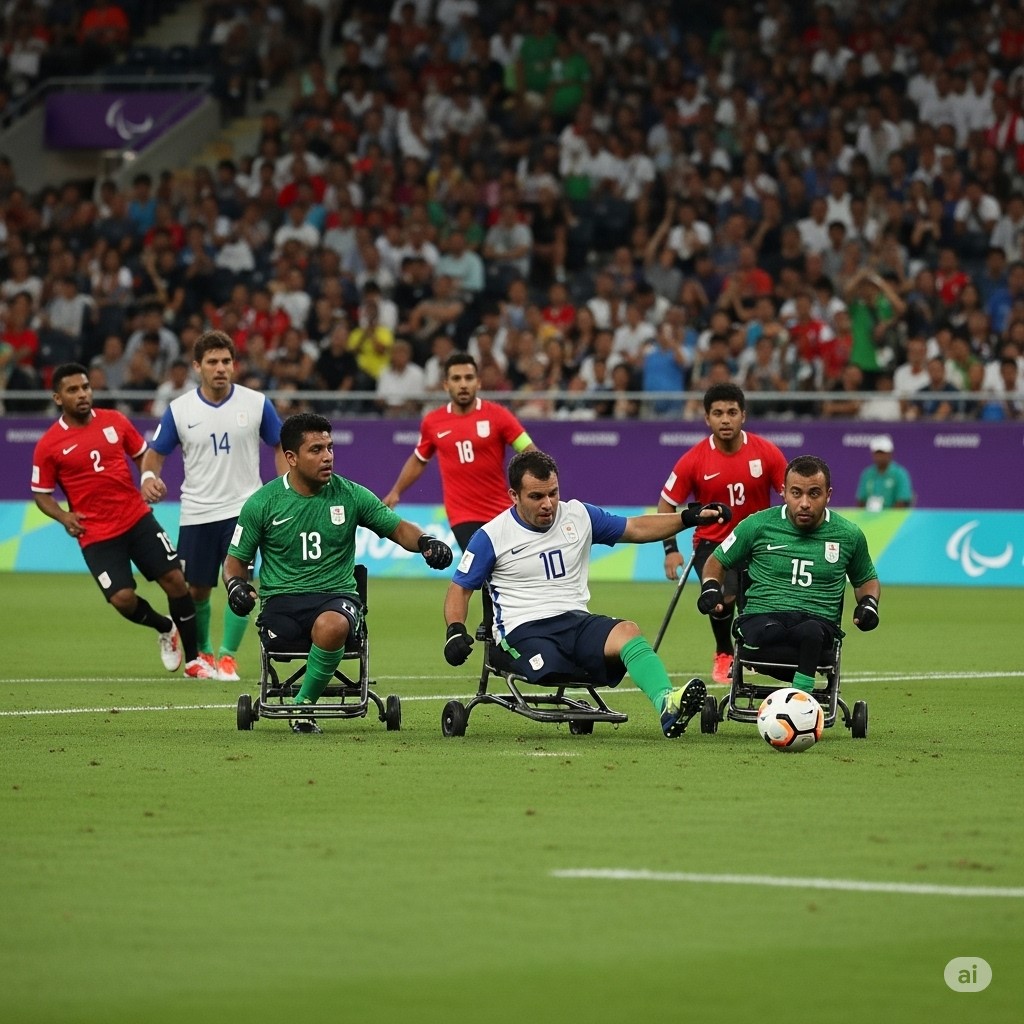
Paralympic Football is a dynamic and empowering sport. It brings athletes with physical disabilities into the global football arena. The sport continues to grow in recognition and popularity. With deep historical roots and a bright future, Paralympic Football has become a symbol of inclusion. It also showcases extraordinary athleticism and determination.
The Origins and History of Paralympic Football
The history of Paralympic Football dates back to the 1970s. Early versions were informal and locally organized. These matches allowed athletes with cerebral palsy or other physical impairments to enjoy competitive football.
In 1984, Paralympic Football made its official debut at the Paralympic Games. The sport featured 7-a-side football for athletes with cerebral palsy. It was first introduced at the New York and Stoke Mandeville Paralympics. This marked a major milestone in adaptive sports.
By the early 1990s, the sport gained international structure. The Cerebral Palsy International Sports and Recreation Association (CPISRA) formalized the rules. This step helped develop a consistent framework across countries. In 2005, the International Federation of Cerebral Palsy Football (IFCPF) was established. It took over the governance from CPISRA.
Paralympic Football also includes 5-a-side blind football. This version first appeared in the Paralympics in Athens in 2004. It specifically serves athletes with visual impairments. Originating in Brazil and Spain in the 20th century, blind football evolved into a professional, widely recognized discipline.
Global Popularity and Reach
Paralympic Football has grown beyond elite competitions. It now enjoys global appeal and participation. Countries across every continent host teams and training centers.
In Europe, nations like the United Kingdom, Russia, and the Netherlands have long-standing programs. They invest heavily in talent development and competition. Brazil, Argentina, and Mexico lead in the Americas. Their passionate fan bases have helped elevate the sport.
Africa has seen rapid growth as well. Nigeria, Egypt, and Morocco have emerged as powerhouses in recent years. In Asia, Iran, Japan, and South Korea are notable contributors. Australia leads development in Oceania.
FIFA and national football federations have recognized the value of Paralympic Football. These organizations often support adaptive programs and tournaments. Broadcasts and social media have increased the sport’s visibility. Inspirational stories of athletes overcoming challenges have boosted global interest.
Youth and Amateur Participation
Amateur and youth Paralympic Football programs are key to the sport’s growth. Across the world, schools and local clubs are forming teams. These teams allow young athletes to enjoy competitive football while building confidence and skills.
In the United States, groups like U.S. Youth Soccer and CP Soccer offer accessible programs. These include clinics, camps, and league matches. The United Kingdom runs programs through the Football Association (FA). Schools work closely with disability sport networks to introduce football to children with impairments.
European countries fund inclusive school sports programs. Germany, France, and Spain provide resources for training coaches. They also ensure that equipment and fields are adapted.
In South America, Brazil offers youth training camps and state-level competitions. These programs focus on early identification of talent. Coaches scout for athletes with potential and support them throughout development.
Asia is also embracing youth programs. Japan and South Korea have expanded football for the visually impaired. They include it in physical education and extracurricular activities.
Community-based teams are important as well. They often work in partnership with hospitals, therapy centers, and rehabilitation units. This network creates a supportive environment for young players.
Professional Leagues and Competitions
Although Paralympic Football does not yet have the same level of professional league structure as traditional football, it is evolving quickly. Several countries operate national leagues or club systems.
In England, the National CP Football League features club teams from around the country. Athletes compete at a high level with national team scouts attending. Clubs like West Bromwich Albion and Nottingham Forest run adaptive teams.
Russia has a well-established league system. The Russian Cerebral Palsy Football Championship showcases elite talent. Many national team players come through this league.
Brazil also supports structured league competition. Clubs partner with regional governments and the Brazilian Paralympic Committee. Events attract media coverage and large audiences.
Spain and Portugal have integrated Paralympic Football into their national federation frameworks. This provides legitimacy and funding.
Blind football leagues exist in countries like Argentina, Turkey, and China. These leagues use standard FIFA rules with modifications. Athletes are classified by degree of vision loss. Top-level blind football often features international athletes and serves as a feeder to Paralympic teams.
Continental championships also support professional development. Events like the IFCPF World Cup, European Championships, and Parapan American Games provide elite competition. They help raise standards and identify future stars.
Social and Political Significance
Paralympic Football holds deep social significance. It challenges stereotypes and promotes inclusion. The sport demonstrates that disability does not limit achievement.
Athletes serve as role models. Their success shows younger generations that perseverance leads to opportunity. Media coverage has increased, sharing inspirational stories with wide audiences.
Politically, the sport plays a role in disability rights advocacy. Nations invest in Paralympic programs to show commitment to equality. The United Nations has recognized sport as a tool for peace and inclusion. Paralympic Football fits perfectly into this framework.
It also helps influence policy. As adaptive sports gain visibility, governments create better access to education, employment, and healthcare for disabled citizens.
In post-conflict areas, the sport promotes healing and unity. Programs in Afghanistan, Rwanda, and Ukraine use football to rehabilitate wounded veterans and civilians. Paralympic Football brings people together, regardless of background or physical condition.
The sport has also inspired art, film, and literature. Documentaries and films have highlighted the journey of Paralympic athletes. These stories reach beyond sport to touch broader cultural themes.
Detailed Rules of the Game
Paralympic Football is played in two major formats: 7-a-side for athletes with cerebral palsy and 5-a-side for blind athletes.
7-a-Side Football (Cerebral Palsy)
- Played by athletes with neurological disorders affecting motor control
- Includes conditions such as cerebral palsy, stroke, and traumatic brain injury
- The field is 75m x 55m, with no offside rule
- Teams have 7 players including the goalkeeper
- Matches consist of two 30-minute halves
- Players are classified from FT1 (most impaired) to FT3 (least impaired)
- Each team must have at least one FT1 player on the field
- No more than one FT3 player may play at any time
- Throw-ins can be made with one hand
- Goal size is 5m x 2m
5-a-Side Football (Blind Football)
- Played by athletes with visual impairments
- Four outfield players are fully blind (classified as B1)
- The goalkeeper may be sighted or partially sighted
- Players wear eye masks to ensure fairness
- A guide stands behind the opposing goal to provide directions
- The ball contains noise-making devices for tracking
- Matches are two 20-minute halves
- The field is 40m x 20m with sideboards
- Tackling rules focus on safety and voice communication
- Teams must shout “voy” (Spanish for “I go”) when approaching an opponent
Both formats emphasize fair play and sportsmanship. Referees receive special training in adaptive rules and player classifications.
Looking Ahead
The future of Paralympic Football is full of promise. New countries are forming teams and training youth. Technology is improving equipment, especially in blind football.
Virtual training tools and analytics help coaches and players refine skills. Augmented reality may soon be part of training programs. Social media continues to bring visibility. Players now have platforms to share their stories and inspire others.
With growing support from governments, NGOs, and corporate sponsors, the sport is poised for expansion. More schools will offer programs. Professional leagues will increase in size and quality. International cooperation will help standardize and improve competition.
Paralympic Football is more than a sport. It is a global movement. It embodies courage, skill, and unity. As awareness increases, so will opportunity for athletes of all backgrounds.
Conclusion
Paralympic Football represents more than competition. It symbolizes the power of sport to transform lives and societies. From its humble beginnings to international recognition, it continues to break barriers. With global expansion, inclusive youth programs, and elite competitions, the sport thrives. Its rules are unique and adapted to celebrate every athlete’s abilities.
As Paralympic Football inspires and empowers, it calls on communities to support and celebrate difference. It reminds the world that every athlete, regardless of ability, deserves a chance to shine.