
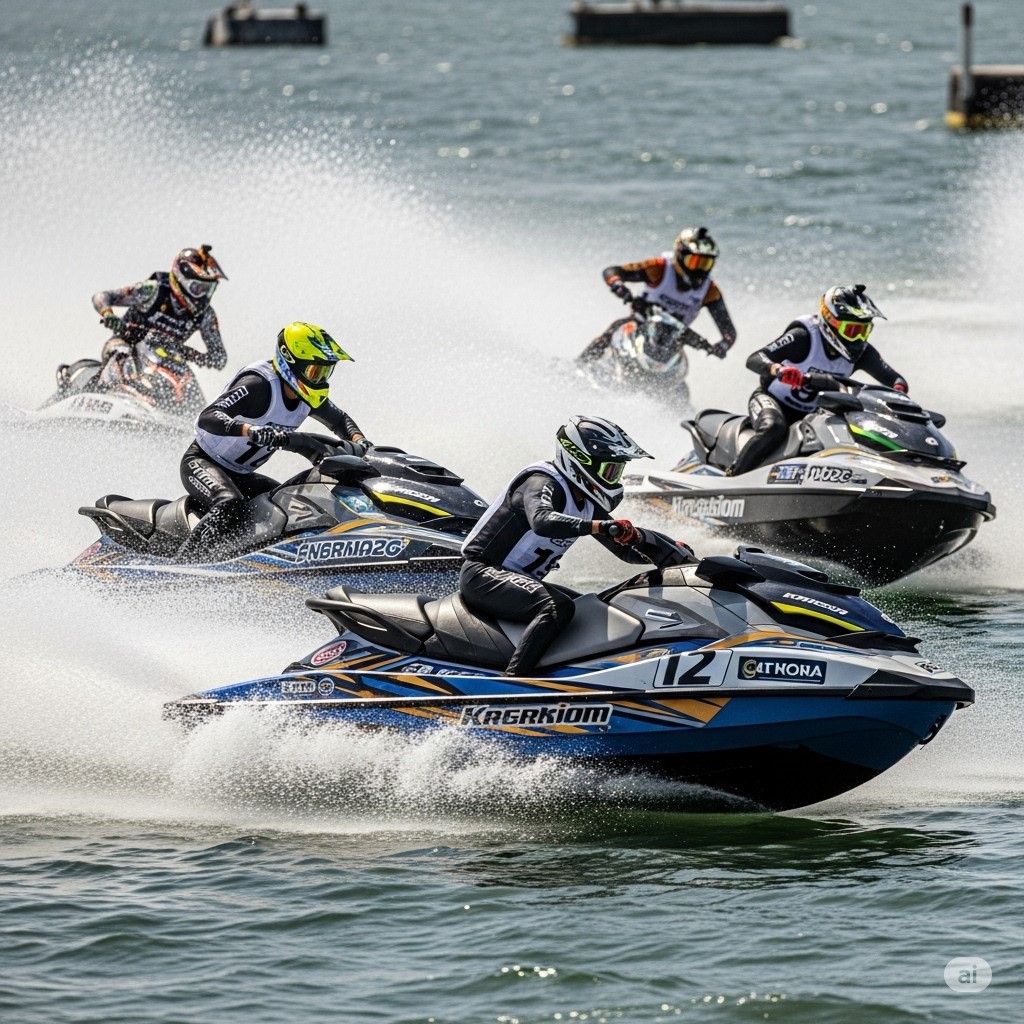
The High-Octane World of Personal Watercraft Racing
Personal Watercraft Racing is an electrifying motorsport that combines speed, skill, and aquatic adventure. Riders navigate high-performance watercraft through tight turns, waves, and challenging courses. This sport has grown rapidly over the decades, attracting thrill-seekers and fans worldwide. The rise of Personal Watercraft Racing showcases how a niche pastime evolved into a dynamic competitive sport. With passionate athletes, dedicated leagues, and a growing fan base, the sport continues to make waves across continents.
Origins and History of Personal Watercraft Racing
The roots of Personal Watercraft Racing trace back to the 1960s. Kawasaki introduced the first Jet Ski in 1972. Although originally designed for recreational use, it didn’t take long for thrill-seekers to test their machines in friendly races. By the 1980s, organized racing events began to take shape.
In the United States, early competitions were informal. Riders would gather at lakes or ocean shores, comparing speed and agility. However, with increased participation came the need for structure. The International Jet Sports Boating Association (IJSBA) was formed in 1982. It provided official rules, classifications, and a championship series. This brought credibility and consistency to the sport.
Throughout the 1990s, manufacturers like Yamaha and Sea-Doo entered the market. Their innovations led to faster and more maneuverable craft. With better equipment, the sport’s skill level rose. Spectator interest also increased, and Personal Watercraft Racing gained more media coverage.
By the early 2000s, it had transformed from a casual pastime into a respected sport. Today, it boasts professional athletes, global tournaments, and millions of fans. Its history is a testament to innovation and passion.
Global Popularity of the Sport
Personal Watercraft Racing has found fans on nearly every continent. The United States remains a stronghold, hosting national championships and training facilities. Florida and California, with their year-round warm climates, are major hubs.
In Europe, France and the United Kingdom have embraced the sport. Events like the European Championship attract racers from across the continent. In the Middle East, countries like the UAE and Kuwait host races on man-made lakes and coastal areas. These events often feature top international talent.
Australia is another hotbed for the sport. Its long coastlines and active water sports culture make it ideal. South Africa and Brazil also see growing participation. Even countries with colder climates, such as Russia and Canada, have found ways to engage in summer races.
Social media has helped boost global interest. Platforms like YouTube and Instagram showcase thrilling races and stunts. Livestreams of international competitions bring fans closer to the action. As access to high-performance watercraft improves, new markets continue to emerge.
Amateur Racing and Youth Participation
Amateur Personal Watercraft Racing serves as the sport’s backbone. It offers newcomers a way to experience competitive racing without turning professional. Local clubs and associations host weekend events at lakes, rivers, and coastal spots. These races range from sprint-style to endurance formats.
Youth involvement is steadily growing. Many associations offer junior classes for kids as young as ten. These races use smaller, less powerful craft, ensuring safety while teaching skills. Safety gear, including helmets and life vests, is mandatory.
In the United States, organizations like the American Power Boat Association (APBA) run youth leagues. School programs, especially in coastal areas, introduce students to watercraft safety and racing basics. These initiatives nurture future champions.
Internationally, similar efforts exist. In Australia, community-based programs train young riders. Europe’s national bodies also have junior divisions. Youth events often accompany major tournaments, giving young racers exposure to the sport’s culture.
As the sport grows, so does the infrastructure for amateur racers. From beginner clinics to local championships, there’s a clear path from novice to pro.
Professional Leagues and Competitions
Personal Watercraft Racing features several professional leagues globally. Each offers unique challenges and prestige. The IJSBA remains a central governing body. It oversees the World Finals, held annually in Lake Havasu City, Arizona. This event is the sport’s equivalent of the Super Bowl.
The Pro Watercross Tour, based in the U.S., hosts a series of national competitions. It draws top talent and offers substantial prizes. Racers compete in multiple categories based on watercraft type and rider experience.
In Europe, the UIM Aquabike World Championship is a premier event. Sanctioned by the Union Internationale Motonautique (UIM), it travels to various countries. Stops include Italy, China, and the UAE. These events attract global competitors and fans.
Asia also has an emerging scene. The Asian Jet Sports Boating Association (AJSBA) manages events in Thailand, Japan, and Indonesia. These races highlight regional talent and promote the sport’s growth.
Professional racers often train year-round. They rely on sponsorships, media exposure, and merchandise sales. The elite level demands not only speed but also strategic thinking, physical fitness, and technical know-how.
Social and Political Significance
Beyond the excitement, Personal Watercraft Racing holds social and political weight. It promotes water safety awareness. Organizations often partner with local authorities to educate the public about responsible watercraft use.
The sport also boosts local economies. Major events draw tourists, filling hotels and restaurants. Vendors sell equipment, apparel, and memorabilia. Communities benefit from increased visibility and revenue.
Environmentally, the sport has faced scrutiny. Critics argue that watercraft contribute to noise and water pollution. In response, manufacturers have developed cleaner, quieter engines. Racing organizations enforce strict environmental guidelines.
Politically, the sport serves as a platform for international cooperation. Events bring together participants from diverse cultures. These interactions foster mutual respect and understanding. Some countries use sport diplomacy to strengthen bilateral ties.
Socially, it builds communities. Racers, fans, and families form tight-knit groups. Events become annual gatherings that strengthen bonds. Youth participation teaches discipline, goal-setting, and teamwork.
Rules of Personal Watercraft Racing
Understanding the rules is crucial for participants and spectators. Most competitions follow guidelines set by the IJSBA or national bodies. Events usually have multiple classes. These depend on engine size, craft type, and rider experience.
Courses are marked with buoys. Riders must navigate these in a specific sequence. Missing a buoy or taking a shortcut leads to penalties or disqualification. Races typically use standing or rolling starts, depending on the event type.
Riders wear protective gear at all times. This includes helmets, goggles, gloves, and life vests. Craft must meet safety and technical standards. Inspections occur before and after each race.
False starts, rough riding, or unsportsmanlike behavior results in penalties. Officials monitor the race closely to ensure fairness. Lap counts vary depending on course length and class.
Points are awarded based on finishing positions. Over a season, these points determine overall standings. Some leagues also award points for sportsmanship and consistency.
Endurance races have additional rules. These include mandatory pit stops and fuel limits. Team events may involve rider changes. Communication between team members is essential.
The rules aim to ensure safety and fairness. They also encourage strategic thinking. Success depends not just on speed, but on clean navigation and tactical racing.
Conclusion
Personal Watercraft Racing is a fast-growing, thrilling sport with deep roots and a promising future. From its humble beginnings in the 1960s to its current global presence, the sport continues to evolve. Amateur and youth participation ensure its longevity. Professional leagues raise its profile and showcase elite talent.
Socially, the sport fosters community and teaches valuable life skills. Politically, it serves as a tool for diplomacy and economic growth. Strict rules maintain competitive integrity and safety.
The global stage is set for Personal Watercraft Racing to expand even further. With technological advances and increased visibility, its fan base will only grow. For those seeking speed, skill, and spectacle, this sport delivers in waves.