
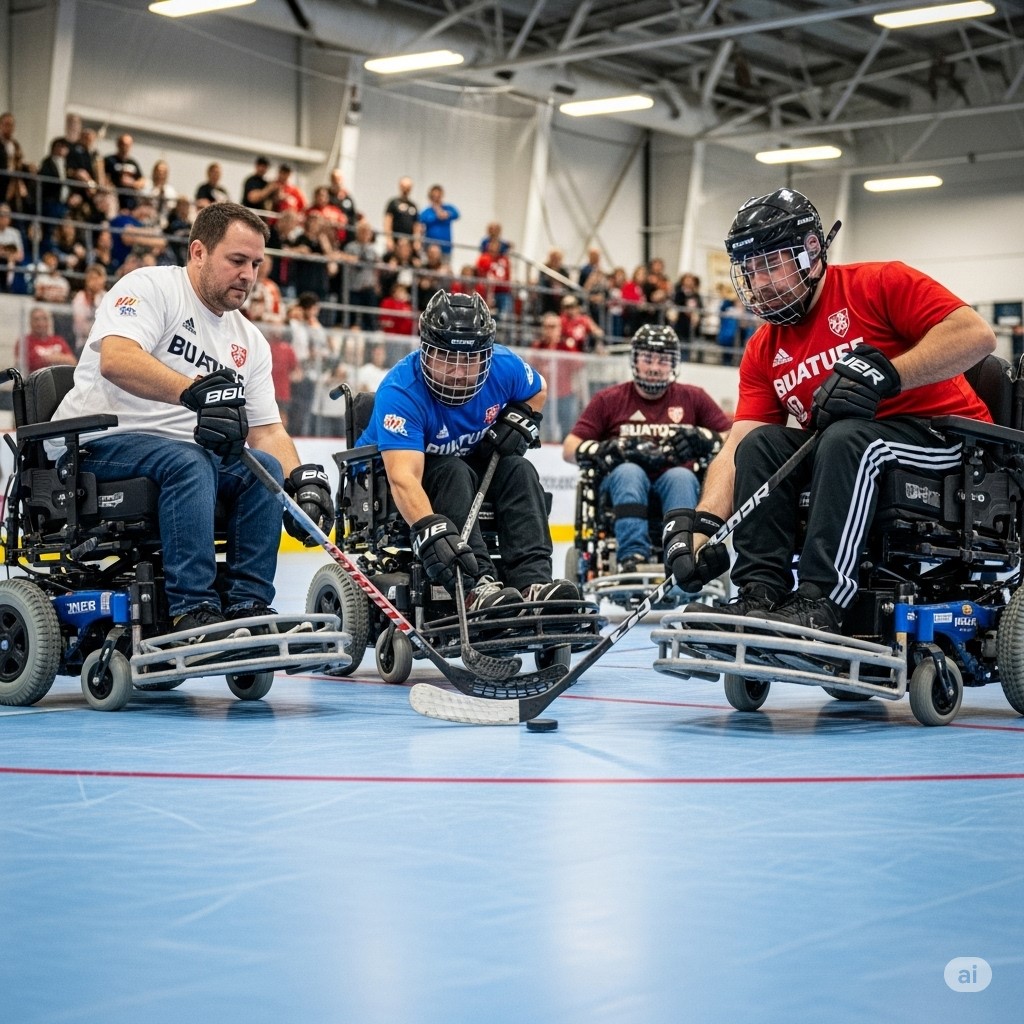
Power Hockey: A Growing Force in Adaptive Sports
Power Hockey is a dynamic and inclusive sport that brings competitive hockey to athletes with physical disabilities. Played in power wheelchairs, it blends strategy, speed, and teamwork. The sport has gained attention across continents and continues to evolve. Power Hockey allows athletes to showcase their skills, compete at high levels, and experience the thrill of the game. As interest in adaptive sports grows, Power Hockey has become a vital part of the movement. The sport creates opportunities and fosters community involvement, athletic development, and social integration.
The Origins and History of Power Hockey
The roots trace back to the early 1970s. In Canada and the United States, individuals with physical disabilities sought ways to engage in competitive sports. These early pioneers began adapting floor hockey for power wheelchair users.
By the 1980s, formal rules and organizations began to form. Toronto, Ontario, played a critical role in shaping the sport. The Toronto Power Wheelchair Hockey League (TPWHL) became one of the first organized leagues. This initiative sparked international interest and led to the development of similar leagues in Europe and the United States.
As more athletes joined the sport, standardized rules emerged. These helped unify different regional versions into a cohesive international structure. Over the years, governing bodies and tournaments solidified Power Hockey’s place in the world of adaptive sports.
Global Popularity and Reach of Power Hockey
Power Hockey has steadily grown in popularity around the world. North America remains a stronghold, with Canada and the United States hosting numerous teams and leagues. Europe has also embraced the sport, especially in countries like the Netherlands, Finland, Sweden, Germany, and Belgium.
The International Powerchair Hockey Association (IPCH) serves as the sport’s global governing body. Under its leadership, international competitions and World Championships have brought nations together. These events attract media coverage and fan support, raising awareness and inspiring new athletes.
Australia has also entered the Power Hockey scene. Local clubs and national efforts have introduced the sport to more athletes. Meanwhile, Asian countries like Japan and South Korea are exploring the sport’s development.
The sport’s inclusive nature has contributed to its growth. People with neuromuscular disorders, cerebral palsy, and other physical disabilities find a sense of belonging in the sport. The community-driven aspect of Power Hockey fosters cross-border friendships and cultural exchange.
Youth and Amateur Participation
At the grassroots level, it thrives in schools, recreation centers, and local clubs. Youth involvement begins with clinics and introductory programs. These initiatives aim to build confidence, skills, and enthusiasm among young athletes.
Schools with inclusive sports programs often include Power Hockey. These programs encourage teamwork, discipline, and self-expression. Children learn the rules, practice regularly, and eventually join leagues or school teams.
Local clubs play a major role in developing young talent. Coaches and volunteers offer training, mentorship, and support. Players grow through competition and social interaction. The experience helps them transition into higher levels of play.
Community events and regional tournaments provide exposure and motivation. These events create a pathway for youth to pursue Power Hockey as a lifelong sport. Inclusion of adaptive sports in education policies helps expand access and funding.
Professional Leagues Around the World
Power Hockey has evolved beyond amateur play. Today, several professional and semi-professional leagues operate globally. The European Powerchair Hockey Association (EPHA) coordinates many of these efforts.
In Europe, the Powerchair Hockey World Championship serves as the sport’s pinnacle event. National leagues feed into these international competitions. Finland’s SM-Liiga and the Dutch national league are notable examples. Teams train year-round and feature top-tier athletes.
Canada’s TPWHL remains a cornerstone of the North American Power Hockey scene. The United States has seen similar leagues grow, supported by national disability sports organizations. Sponsorships, media partnerships, and corporate involvement have elevated the sport’s profile.
Australia’s growing Power Hockey league structure mirrors its international counterparts. National championships and selection camps determine national teams. These teams compete on global stages, bringing more visibility to the sport.
Professional leagues help athletes refine their skills and pursue excellence. They offer structured competition, coaching, and development programs. The professionalism and commitment of these leagues strengthen the sport’s reputation.
Political and Social Significance of Power Hockey
Power Hockey holds profound political and social value. It highlights the importance of disability rights and inclusive policies. Governments and organizations use the sport to promote equality and accessibility.
By supporting Power Hockey, communities invest in health, well-being, and social cohesion. Athletes gain visibility, breaking stereotypes and challenging perceptions. They become role models, advocates, and leaders.
The sport fosters cross-cultural dialogue and international cooperation. Global tournaments often include educational and cultural exchange components. These aspects promote unity, respect, and diversity.
Politically, the sport influences policy and funding decisions. Successful Power Hockey programs demonstrate the need for adaptive infrastructure and support systems. Governments take note, often increasing investments in inclusive recreation.
Socially, Power Hockey brings people together. Families, volunteers, and fans create tight-knit communities. The sport reduces isolation and promotes empowerment. It offers a platform for voices often unheard in mainstream sports.
Rules and Gameplay Explained
It follows a specific set of rules designed for safety and fairness. It is played on a gymnasium-sized court. Teams consist of five players: four field players and one goalkeeper. All players use power wheelchairs.
The game uses a plastic ball and specialized sticks. Players classified based on mobility and functionality. This ensures balanced competition and fair play.
The match includes two 20-minute halves. The objective is to score goals by maneuvering the ball into the opposing net. Physical contact is limited to ensure safety. Referees enforce the rules and manage the flow of the game.
Each team uses different tactics. Offensive strategies involve passing, positioning, and speed. Defensive plays focus on blocking, intercepting, and marking opponents. Goalkeepers defend the net with precision and anticipation.
Substitutions occur during stoppages. Coaches develop game plans based on the players’ skills and classifications. Fair play and sportsmanship are strongly emphasized.
Infractions like charging, ramming, and obstruction result in penalties. A two-minute penalty reduces the team’s strength on the floor. Accumulated penalties may lead to ejection.
The classification system groups players into three categories: Class 1, Class 2, and Class 3. These categories reflect muscle control and mobility. Teams must maintain a balance among player classifications on the floor.
Matches are fast-paced and exciting. Quick transitions, strategic planning, and team chemistry determine outcomes. Fans enjoy the intensity and competitiveness.
Looking Ahead
The future of Power Hockey looks promising. Innovations in wheelchair technology improve performance and safety. Online platforms spread awareness and inspire new participants.
Partnerships with schools, hospitals, and disability organizations expand outreach. Government support and private sponsorships fuel growth. Global events continue to raise the sport’s profile.
More countries are expected to join the international Power Hockey community. Increased exposure will bring more fans, players, and investment.
Advocates and athletes work tirelessly to improve access, funding, and recognition. Their efforts ensure that Power Hockey remains inclusive, competitive, and inspiring.
As more people discover the sport, its positive impact will grow. Power Hockey not only entertains—it empowers. It proves that skill, strategy, and determination know no boundaries.
This adaptive sport exemplifies human resilience and unity. With continued support, Power Hockey will achieve even greater milestones in the years ahead.