
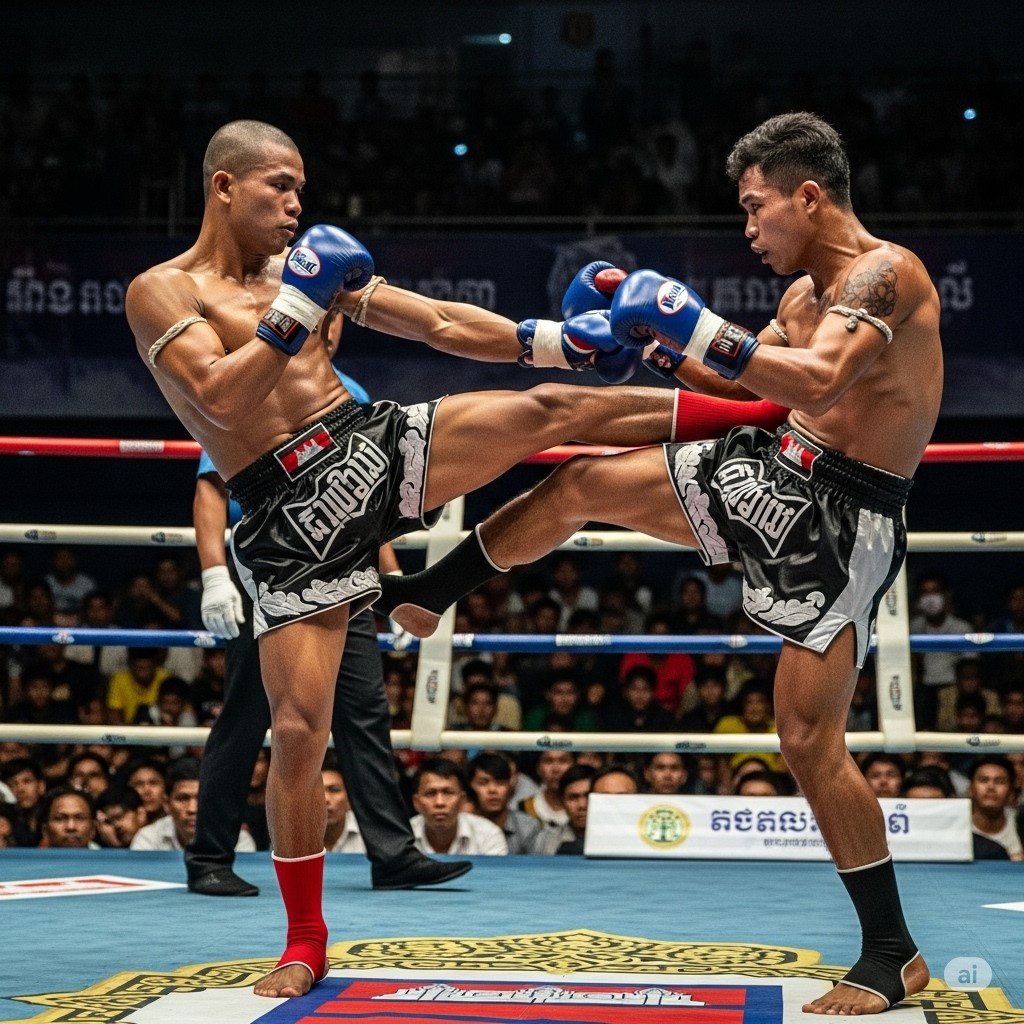
The Art and Power of Pradal Serey: Cambodia’s National Combat Sport
Pradal Serey is a striking martial art and Cambodia’s national sport. Known for its power and grace, it combines physical skill with cultural tradition. Unlike other martial arts, Pradal Serey focuses on stand-up striking. It uses punches, kicks, elbows, and knee strikes. This blog explores the sport’s origins, global growth, amateur and professional scenes, and social significance.
Origins and History of Pradal Serey
Pradal Serey has ancient roots in the Khmer Empire, which dominated Southeast Asia from the 9th to the 15th century. Carvings on the walls of Angkor Wat depict scenes of combat resembling modern-day Pradal Serey. These carvings suggest that a form of the sport existed over a thousand years ago.
The term “Pradal Serey” means “free fighting” in Khmer. It evolved as a battlefield technique before transitioning into a sport. During peacetime, Khmer soldiers practiced the art to maintain combat readiness. The techniques were passed down through generations.
In the 20th century, French colonialism influenced the sport. Western boxing rules were introduced. Gloves replaced rope-bound fists, and rings were used for bouts. Judges and timed rounds became standard. Despite this modernization, traditional rituals like the “kun kru” dance and ceremonial music remained essential parts of the sport.
Pradal Serey almost vanished during the Khmer Rouge regime in the 1970s. Many practitioners were executed, and traditional practices were suppressed. After the regime fell, efforts to revive the sport began. Today, it thrives in both traditional and modern forms.
Global Popularity and Reach
Though deeply rooted in Cambodia, Pradal Serey has spread worldwide. Martial arts enthusiasts from Thailand, the United States, France, and Australia practice it. Many gyms outside Cambodia now offer classes in Pradal Serey techniques.
It is often compared to Muay Thai, a neighboring martial art from Thailand. However, fighters and fans argue that Pradal Serey allows more elbow strikes and greater fluidity. As a result, the sport has attracted attention from mixed martial arts (MMA) practitioners.
Tournaments now take place in several countries. Events in Europe and North America showcase international fighters. These platforms allow Cambodian fighters to display their skills on a global stage. They also raise awareness of Cambodia’s rich cultural heritage.
Social media and streaming platforms have played a crucial role in this expansion. Fight videos and tutorials circulate widely. Fans around the world engage with the sport online. This digital presence boosts global recognition and promotes cross-cultural appreciation.
Amateur Pradal Serey: Youth and School Programs
In Cambodia, children often begin training in Pradal Serey at a young age. Many schools include it in physical education programs. Community centers and local gyms also offer training. This early exposure fosters discipline, confidence, and physical fitness.
Youth tournaments are held regularly across the country. These events build camaraderie and offer young athletes a path to professional careers. Fighters compete in age-appropriate brackets with strict safety guidelines.
Outside Cambodia, Pradal Serey clubs operate in cities with significant Cambodian populations. In the United States, cities like Long Beach and Lowell have youth programs. These programs help preserve cultural identity among Cambodian-American youth.
International non-profits have also supported youth training. Organizations like the Cambodian Children’s Fund promote the sport as a tool for empowerment. Through structured programs, they offer underprivileged children opportunities for personal development.
In recent years, schools in Europe and Asia have integrated Pradal Serey into martial arts curricula. Instructors teach the sport alongside karate, judo, and taekwondo. This inclusion reflects the growing respect for its techniques and cultural value.
Professional Leagues and Global Organizations
Several professional leagues promote Pradal Serey both in Cambodia and abroad. The Cambodian Boxing Federation governs most local events. It organizes regular national tournaments and oversees fighter rankings.
The TV5 Pradal Serey League is among the most popular domestic promotions. It airs weekly bouts and has developed a loyal fan base. Fighters often become national celebrities through these broadcasts.
Khmer Warrior Championship is another rising league. It features international fighters and follows modified rules to suit global audiences. By attracting foreign talent, it enhances the sport’s competitive landscape.
Globally, MMA promotions like ONE Championship and Bellator have welcomed Pradal Serey fighters. These platforms allow them to showcase their striking skills. Fighters like Chan Rothana and Khun Khmer practitioners gain visibility through such events.
Efforts are underway to unify global rules and rankings. International federations collaborate to standardize weight classes and judging criteria. This cooperation helps elevate the sport to Olympic consideration.
Several gyms across Europe, the U.S., and Australia host professional bouts. These events not only provide exposure but also create income for fighters. Sponsorships and endorsements are now common for top athletes.
Social and Political Significance
Pradal Serey plays a vital role in Cambodian identity. It is more than just a sport; it is a symbol of national pride. After years of conflict and oppression, the sport represents resilience and unity.
During festivals and national holidays, matches are part of the celebrations. Traditional music, rituals, and costumes highlight the cultural depth of the sport. These events reinforce community bonds and cultural heritage.
Politically, the government promotes Pradal Serey to enhance national image. The Ministry of Education, Youth and Sport actively supports training programs. Funding has increased for gyms and coaching certifications.
The sport also contributes to economic development. Gyms employ coaches, staff, and vendors. Events draw tourists and generate revenue. In rural areas, training centers provide jobs and reduce youth delinquency.
Socially, Pradal Serey promotes values like respect, discipline, and perseverance. Fighters often become role models in their communities. Success stories inspire the next generation.
Internationally, it serves as a soft power tool. Cultural exchanges and fight tours introduce Cambodia to global audiences. Through sport, it builds bridges between nations.
Rules and Techniques of Pradal Serey
The rules of Pradal Serey balance tradition with modern safety standards. Bouts usually consist of five three-minute rounds with two-minute breaks. Fighters compete in weight divisions similar to Western boxing.
Striking is the primary mode of attack. Fighters use punches, kicks, elbows, and knees. Clinching is allowed, and fighters can throw opponents using sweeps or trips.
Each fight begins with the “kun kru” ritual. Fighters perform a dance to honor their coaches and ancestors. This display shows respect and sets the tone for the bout.
Judges score bouts based on effective striking, aggression, and ring control. Elbows and knees score higher due to their impact. Fighters are penalized for illegal moves like headbutts, groin strikes, or attacks on the back.
Protective gear includes gloves, mouthguards, and groin protectors. In amateur settings, headgear is often required. Referees enforce rules strictly to ensure safety.
Fighters train extensively in technique, endurance, and strategy. Pad work, sparring, and conditioning form the core of training. Mental preparation is equally emphasized.
Corner teams play a crucial role. Coaches offer real-time advice and motivation. Medical staff provide care between rounds.
Pradal Serey matches often take place in open-air arenas. The atmosphere is lively, with music and cheering fans. Traditional instruments accompany the action, creating a unique cultural experience.
In professional settings, promotions often follow hybrid rules. These may allow or restrict certain techniques to align with international standards. Despite variations, the essence of the sport remains.
Final Thoughts
Pradal Serey is more than a combat sport. It is a living tradition, a cultural treasure, and a powerful tool for national unity. From its ancient origins to its modern global reach, the sport continues to evolve.
Youth and amateur programs nurture the next generation of fighters. Professional leagues provide a global stage. Political support and social impact strengthen its foundation.
As more people discover Pradal Serey, its future looks bright. With continued investment and international interest, it may soon join the ranks of globally recognized martial arts.
For those seeking a sport rich in history, discipline, and culture, Pradal Serey offers a compelling journey.