
The Ultimate Guide to Q-Zar: A Fast-Paced Laser Sport Changing the World
Q-Zar is more than just a game. It’s a sport that combines cutting-edge technology, fast action, and team strategy. Since its creation, it has evolved into a competitive and social experience enjoyed around the globe. This blog post explores the sport of Q-Zar in depth. We will cover its history, global reach, rules, amateur and professional scenes, and its social and political importance. Whether you’re a newcomer or a longtime fan, this guide provides everything you need to know about Q-Zar.
The Origins and History of Q-Zar
It began as an idea in the early 1980s. George Carter III invented the original laser tag system and opened the first center in Dallas, Texas. He called it Photon. This innovation introduced the concept of indoor laser combat to the public. Inspired by sci-fi films like Star Wars, Carter wanted to make a live-action experience.
Photon’s success sparked interest in similar laser-based sports. In the early 1990s, Q-Zar emerged as a new brand from the UK. A company named Quasar Manufacturing developed it. They refined the equipment and introduced lightweight vests and more accurate phasers. This gave players greater mobility and precision.
The game spread rapidly across Europe and North America. Q-Zar centers opened in malls and arcades, bringing high-tech fun to families and teens. The sleek branding and user-friendly equipment made it the most recognizable name in laser tag sports.
Over time, Q-Zar gained recognition as more than entertainment. Organized leagues and tournaments developed. The sport matured with standardized rules, ranking systems, and championship events. From a sci-fi dream to a global sport, it has come a long way.
Global Popularity and Presence
Today, it is played on every continent except Antarctica. The sport has a significant presence in North America, Europe, and Asia. In the United States, cities like Chicago, New York, and Los Angeles have thriving Q-Zar arenas. Canada also supports a strong community, especially in Toronto and Vancouver.
In the United Kingdom, it remains especially popular. Many original centers are still active. Local leagues and school programs have helped maintain its presence.
Germany, France, and the Netherlands feature regular tournaments and a dedicated fan base. Across Asia, countries like Japan, South Korea, and the Philippines have embraced Q-Zar. Newer centers are opening in India and the Middle East, especially in the UAE.
Australia and New Zealand also host major tournaments. Their youth programs continue to grow, driven by community support and tech-savvy enthusiasts.
The sport’s reach reflects its adaptability. Urban centers, small towns, and school gymnasiums can all host Q-Zar games. Accessibility and excitement have made it a global phenomenon.
How Amateur Q-Zar Is Played
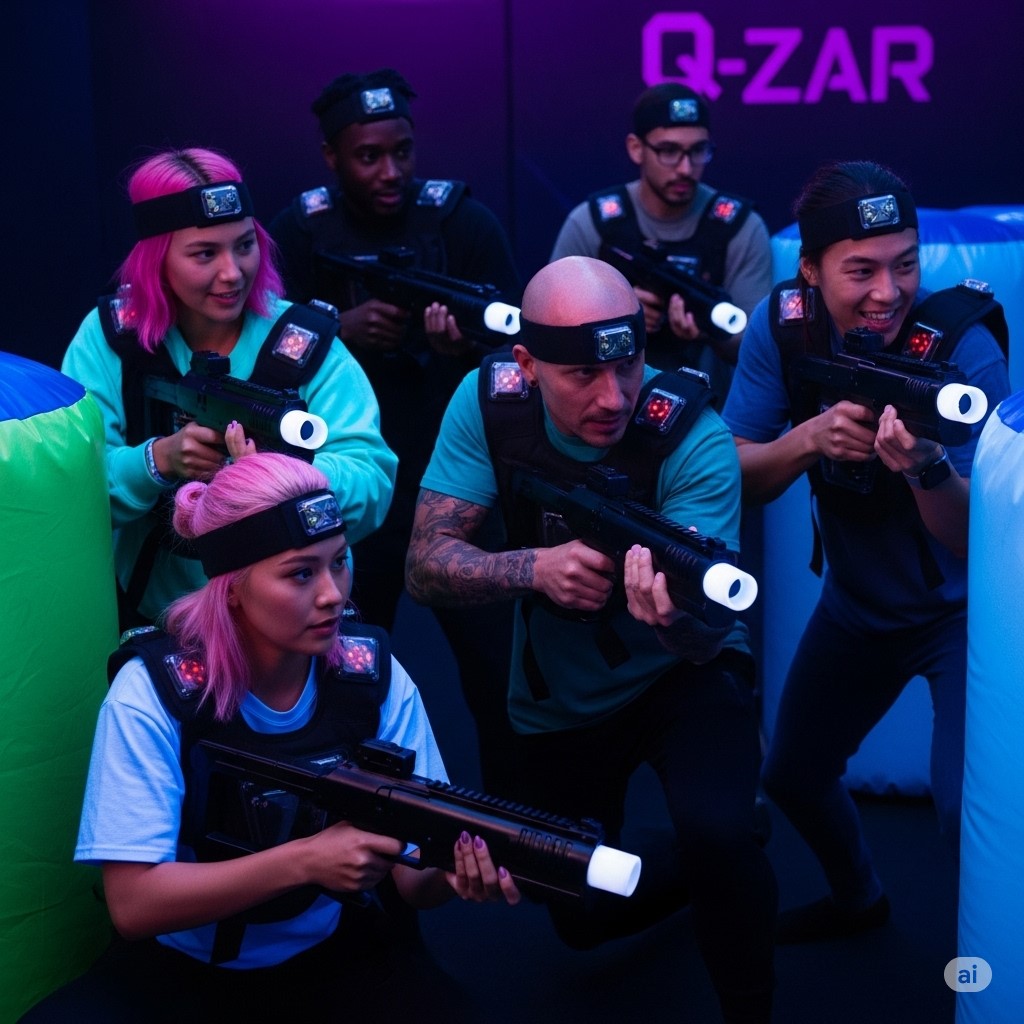
Amateur Q-Zar brings people of all ages together. Most games occur in recreational centers, schools, and local clubs. Teams typically consist of 4 to 10 players. The game is played in a darkened maze filled with glowing obstacles, music, and fog.
Players wear sensor vests and carry phasers. When a player tags an opponent, they score points. Each vest includes front and back sensors. Players must use tactics to avoid getting tagged.
Many schools offer it as an extracurricular activity. Physical education programs integrate it to teach teamwork, strategy, and coordination. Youth leagues also thrive in suburban communities.
Amateur tournaments often attract families and beginners. These events focus on fun and learning. Referees explain the rules and help manage the game. No previous experience is required, making it inclusive for all skill levels.
Local clubs often run training camps. These help players develop communication and team dynamics. Friendly rivalries build social bonds and foster local pride. It has become a positive outlet for youth.
Professional Q-Zar Leagues Worldwide
Professional Q-Zar leagues are gaining traction. In the United States, the National Q-Zar League (NQL) hosts annual championships. Top teams from across the country compete for titles and prizes.
Europe has the European Q-Zar Association (EQA). This organization governs tournaments and sets official rules. Teams from the UK, France, Germany, and Spain participate in seasonal leagues.
Asia is seeing rapid growth in competitive Q-Zar. The Asia-Pacific Q-Zar Federation (APQF) oversees rankings and international matches. Teams from Japan, South Korea, and the Philippines have dominated recent events.
Australia’s National Q-Zar Series (NQS) features televised finals. These events draw large audiences and major sponsors. The Australian league is known for its tactical gameplay and skilled athletes.
Most professional leagues follow strict rules. Games are officiated by certified referees. Teams train regularly, and matches are streamed online. Spectators enjoy the high-energy environment and the display of strategy and reflexes.
The sport is attracting investors, broadcasters, and e-sports platforms. As viewership increases, prize money and sponsorship deals are growing. This momentum pushes it closer to mainstream recognition.
Social and Political Significance of Q-Zar
Q-Zar is more than a sport. It has social and political impact. Communities use it to promote youth engagement, reduce violence, and foster cooperation. Schools implement Q-Zar programs to keep students active and connected.
In cities with high youth unemployment, it offers jobs and mentoring. Centers provide safe spaces for recreation. Local governments fund these programs to prevent crime and build social ties.
Cultural exchange also benefits. International tournaments bring diverse players together. This promotes understanding and shared experiences across borders. Teams often form friendships that extend beyond the game.
Gender inclusion is another key feature. It encourages participation regardless of gender identity. Mixed-gender teams are common, and leadership roles are equally accessible.
Politicians have endorsed Q-Zar as a tool for community building. Some countries include it in youth development plans. Others use it in rehabilitation programs. Its positive influence is undeniable.
Charity events and fundraisers often feature Q-Zar matches. These initiatives raise money for schools, medical research, and disaster relief. The sport unites people in meaningful causes.
Rules and Gameplay of Q-Zar
It follows specific rules to ensure fairness and excitement. Each game lasts between 10 to 15 minutes. Players wear vests with sensors and use phasers to tag opponents.
Points are scored by tagging enemy sensors. Each sensor zone—front, back, and shoulders—awards different point values. The team with the highest score at the end wins.
Players cannot block sensors or cover them. Doing so results in penalties. Running and physical contact are also prohibited to prevent injuries.
Games are played in mazes with walls, ramps, and hiding spots. Some maps include bases. Players score extra points by tagging the enemy base multiple times.
A hit deactivates a player’s vest temporarily. During this period, they cannot tag others or be tagged. This adds a strategic pause to the action.
Referees monitor all games. Infractions lead to time-outs or disqualification. Players must display good sportsmanship.
Team coordination is key. Successful teams use code words, split into roles, and plan routes. Offense and defense must work in harmony.
Tournaments use elimination brackets. Each team plays several matches. Scores determine advancement. Finals are played under stricter rules and longer durations.
Q-Zar’s rule system balances fun with competition. It rewards skill, strategy, and discipline.
The Future of Q-Zar
It is on the brink of greater popularity. New technology is improving gear and gameplay. Wireless systems, smart scoring, and VR integration are being tested.
Esports platforms are beginning to feature tournaments. This digital presence attracts new audiences. Younger fans engage through streaming and social media.
The sport’s accessibility ensures continued growth. Affordable equipment and adaptable arenas allow expansion in underserved areas. Education programs introduce the sport early.
Global federations are collaborating. They aim to create a unified world championship. This step would legitimize Q-Zar as an international sport.
As communities seek alternatives to screen-based entertainment, it offers physical activity and human connection. It’s not just a game—it’s a movement.
Conclusion
Q-Zar has transformed from a novel arcade game to a global sport. Its mix of technology, teamwork, and strategy attracts players from all walks of life. With deep roots and a bright future, it continues to evolve. Whether for fun, fitness, or competition, the sport offers something unique. Get involved, gear up, and join the exciting world of Q-Zar.