
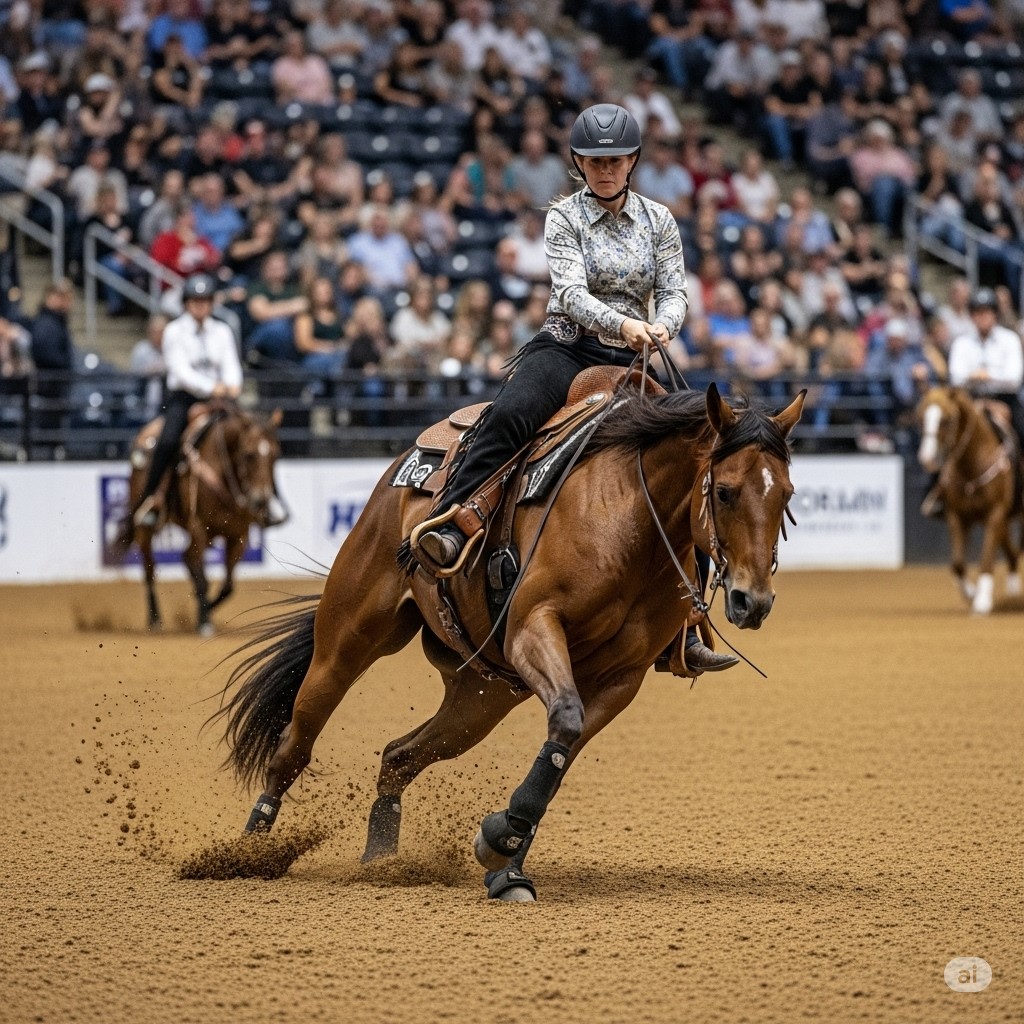
Reining: The Western Sport with Global Reach
Reining is a thrilling western riding competition where precision, control, and style take center stage. Riders guide their horses through a pattern of intricate movements at high speeds. This sport, rooted in tradition, has grown from its humble beginnings into an internationally recognized discipline. Today, Reining captivates riders and fans across the world. With a growing youth and amateur base, and a strong professional presence, the sport continues to thrive.
The Origins and History of Reining
The roots stretch back to the American West. In the early days of cattle ranching, cowboys required agile horses that could stop, turn, and maneuver quickly. These skills allowed ranchers to manage livestock efficiently across rugged terrain. Over time, these practical movements evolved into informal competitions among ranch hands.
By the mid-20th century, these contests became formal events. The National Reining Horse Association (NRHA) was founded in 1966 to standardize rules and promote the sport. The NRHA helped transform Reining into a structured competition. Riders were now judged on specific maneuvers performed within a set pattern. These maneuvers include spins, sliding stops, rollbacks, and lead changes.
During the 1980s and 1990s, it gained broader exposure. It became a featured event at major horse shows and fairs. The Fédération Équestre Internationale (FEI) recognized Reining in 2000 as the first western discipline in international competition. Since then, it has earned a spot in events like the World Equestrian Games.
Reining’s Global Popularity and Reach
Though it began in the United States, it has taken firm hold across the globe. Countries such as Italy, Germany, Brazil, Canada, and Australia have developed strong Reining communities. The European Reining Horse Association (ERHA) and the Italian Reining Horse Association (IRHA) are major players in the sport.
In Europe, Italy and Germany lead in terms of participation and horse breeding. Italian riders often rank among the top global competitors. Germany has hosted numerous FEI-sanctioned events and boasts several premier Reining facilities.
Canada remains a hotbed of Reining activity, particularly in Alberta and Ontario. Canadian riders frequently place well in international competitions. Meanwhile, Brazil has rapidly grown its Reining scene, investing in breeding programs and state-of-the-art arenas.
Australia has embraced the sport with enthusiasm. Reining Australia oversees a national program that includes training clinics, youth development, and competitions. The Middle East and parts of Asia are beginning to explore the sport as well.
Amateur and Youth Reining Worldwide
The heart of Reining lies not only with professionals but also with its amateur and youth competitors. Around the world, local clubs and associations nurture young riders through structured programs.
In the United States, the NRHA Youth Association provides a pathway for riders under 18. Youth compete in age-based classes and accumulate points toward scholarships and awards. Programs such as “Ride & Slide” introduce Reining to beginners in a supportive environment.
Canada and Australia offer similar youth divisions. Riders gain experience through clinics and junior competitions. These countries also support collegiate-level teams, providing a bridge between youth and adult competition.
In Europe, many clubs work directly with schools and pony clubs. Germany and Italy lead youth development efforts. Riders often start on ponies before graduating to full-sized horses. Many of these riders move on to compete in amateur or professional levels.
The amateur level thrives globally. Riders compete in non-pro divisions with strict guidelines to preserve fairness. They cannot receive remuneration for training or instructing. These divisions ensure that the spirit of competition remains intact.
Professional Leagues and Events in Reining
Professional Reining has grown into a major equestrian sport with its own elite circuit. At the top stands the NRHA, headquartered in Oklahoma City. The NRHA hosts the Futurity, Derby, and the NRHA Derby Non Pro, attracting top talent.
The FEI oversees international Reining events, including the World Equestrian Games. These competitions feature national teams and individual riders. The FEI World Reining Championships, held every two years, bring global recognition to the sport.
In Europe, the European Reining Futurity and Derby rank among the most prestigious events. Italy’s IRHA Futurity attracts riders from around the world. Germany’s Americana Show features a Reining competition with thousands of spectators.
Brazil hosts major events like the ABQM Cup and the Brazilian Reining Futurity. These competitions showcase top-tier horses and riders from across South America.
Australia’s premier event is the Equitana Reining Challenge. It draws competitors from all regions and helps promote the sport nationwide.
Prize money has reached impressive levels. Some events offer purses exceeding $500,000. Horses that perform well in these events often become valuable breeding stock.
Social and Political Impact of Reining
Reining has a deep social significance in communities where it thrives. It fosters camaraderie and mutual respect among participants. Riders often bond over shared experiences, whether at local clinics or international competitions.
The sport also supports rural economies. Breeders, trainers, veterinarians, and facility owners benefit from its popularity. Events draw visitors who spend on lodging, food, and gear. This economic ripple effect strengthens small-town economies.
In many areas, Reining helps preserve cowboy heritage. Cultural events often include demonstrations of Reining, reminding people of their equestrian roots. It serves as a living history lesson, particularly in the United States.
Politically, Reining has gained attention through its inclusion in international competition. Countries with strong equestrian traditions lobby for more support and funding. National equestrian federations often advocate for Reining as a way to expand their influence.
Youth involvement also gives the sport a community-building role. Programs aimed at at-risk youth introduce them to horses and discipline. Reining can serve as a positive outlet for personal growth and responsibility.
Rules and Judging in Reining
The rules are detailed and specific. Each run consists of a prescribed pattern of movements. Riders choose from among 15 standard patterns approved by the NRHA or FEI.
Common elements in these patterns include:
- Sliding stops: The horse gallops to a stop, using its hind legs to slide several feet.
- Spins: The horse pivots 360 degrees around a stationary hind leg.
- Rollbacks: A 180-degree turn executed immediately after a sliding stop.
- Circles: Horses perform large fast and small slow circles with flying lead changes.
Riders are judged on precision, control, and attitude of the horse. A perfect score is 70. Scores can be adjusted based on the execution of each maneuver. Points are added for excellence and deducted for errors.
Judges evaluate based on set criteria. They consider factors like smoothness, finesse, and degree of difficulty. Penalties are assessed for deviations such as off-pattern moves or delayed responses.
There is a strong emphasis on the horse’s willingness. Forced or rough handling results in penalties. This rule ensures humane treatment and showcases the bond between horse and rider.
Time limits apply to keep the competition moving. Riders typically complete a pattern in under five minutes.
Judges receive rigorous training and must pass certification programs. This ensures consistency and fairness across competitions.
Equipment and Attire in Reining
Tack and attire are regulated to maintain tradition and safety. Riders wear western hats, boots, and long-sleeve shirts. Chaps are common in higher-level events.
Horses use western saddles and bridles. The bit used must comply with association guidelines. Excessive leverage or unconventional equipment is not allowed.
Protective boots for horses are permitted to prevent injury during maneuvers. Grooming is important, and horses must appear well-kept.
Breeding and Training of Reining Horses
Not all horses are suitable for Reining. Breeding plays a key role in producing elite competitors. The American Quarter Horse is the most common breed in the sport.
Breeders select for traits such as athleticism, temperament, and trainability. Lineage matters, and top-performing sires often command high stud fees.
Training begins at a young age. Horses start groundwork before progressing to saddle work. Trainers focus on developing responsiveness and confidence.
By age three, horses begin competing in futurities. These events test young horses and forecast future champions. Derby classes feature older, more experienced horses.
Daily training includes drills to refine spins, stops, and lead changes. Rest and recovery are equally important to prevent injury.
The Future of Reining
Reining shows no signs of slowing down. Innovations in training, breeding, and judging help the sport evolve. Global expansion introduces it to new audiences.
Social media and streaming platforms bring competitions to a wider public. Fans can follow their favorite riders and horses from anywhere.
Youth programs ensure a steady pipeline of new talent. As schools and communities adopt equestrian activities, more young people discover Reining.
The inclusion of Reining in international games boosts its credibility. More countries invest in facilities and coaching.
Sustainability and animal welfare remain top concerns. Associations continually revise rules to reflect ethical practices.
Reining balances tradition with innovation. This harmony secures its place in the world of competitive sports.
Conclusion
Reining has grown from a ranch necessity into a sport with worldwide appeal. Its blend of athleticism, artistry, and tradition resonates with people of all ages. From school clubs to world championships, Reining unites riders and fans through shared passion. As the sport continues to grow, it remains anchored in the values that built it. Reining stands tall as a symbol of equestrian excellence and cultural heritage.




