
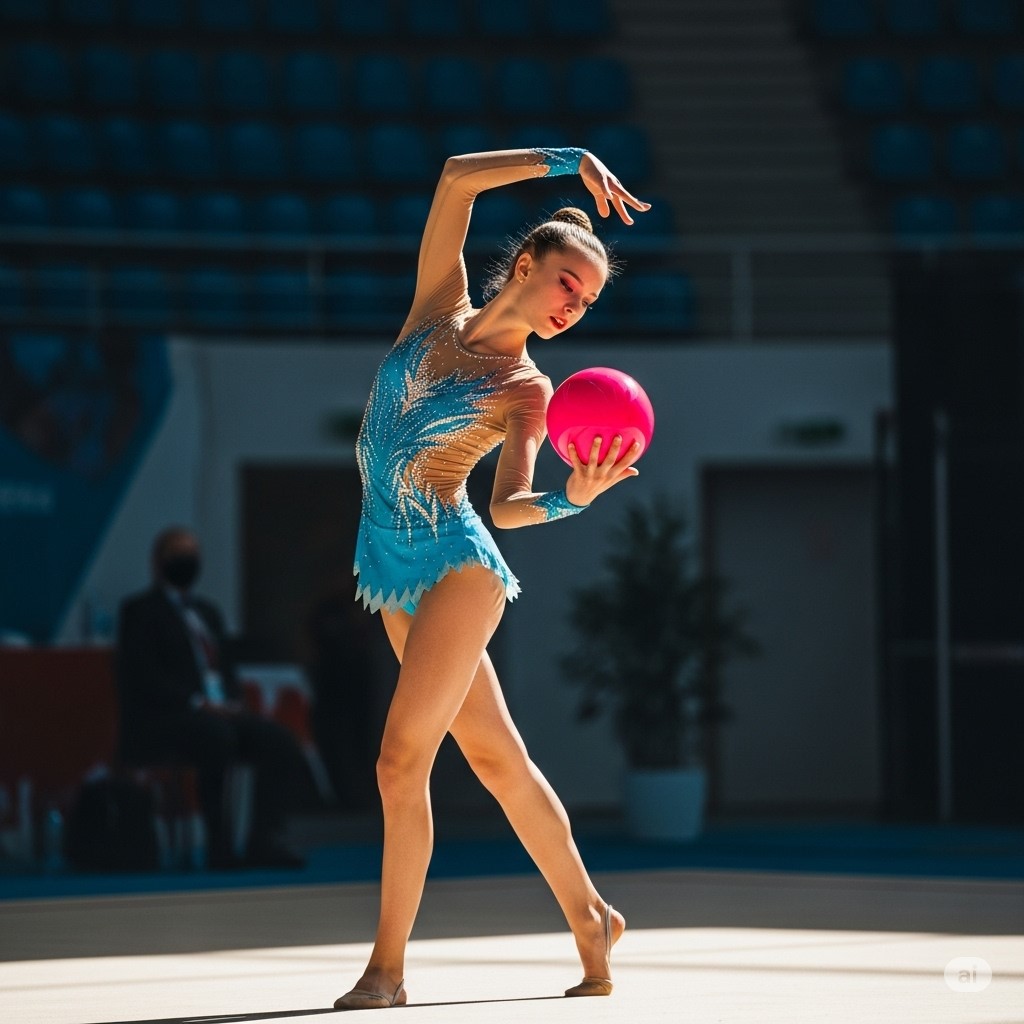
Rhythmic Ball Gymnastics: The Elegant Fusion of Art and Athletics
Rhythmic Ball Gymnastics is a sport that seamlessly blends grace, agility, and technical precision. It stands out in the gymnastics family due to its artistic flair and the use of apparatus. Among these, the ball is particularly captivating. This form of gymnastics has grown in recognition and popularity worldwide. As more athletes take up the discipline, its global presence continues to expand. Rhythmic Ball Gymnastics requires more than strength or flexibility; it demands creativity, discipline, and intense focus.
Origins and Historical Development
The roots of Rhythmic Ball Gymnastics trace back to the early 20th century in Eastern Europe. Countries like Russia, Bulgaria, and Ukraine led the way in developing the discipline. Originally, it began as a training method combining dance and calisthenics. Influences from ballet and modern dance shaped its unique movements.
In the 1940s, the Soviet Union formalized this method into a competitive sport. The first recognized competitions occurred in the 1940s and 1950s. By 1963, the first World Championships in rhythmic gymnastics took place in Budapest, Hungary. Although early events did not feature the ball as a primary apparatus, it soon became one of the sport’s defining tools.
By the 1980s, Rhythmic Ball Gymnastics had firmly taken its place in international competitions. It became an Olympic sport in 1984, though the ball apparatus was not featured in that debut. However, its inclusion in subsequent world competitions and Olympic cycles cemented its role. Today, the ball is central to many routines.
Global Popularity and Geographic Reach
The sport enjoys a strong following in Europe, particularly in Eastern nations. Russia has dominated the scene for decades, producing many world champions. Bulgaria and Ukraine have also developed elite training programs that regularly yield top athletes. Western Europe, especially Italy and Spain, has embraced the sport through robust club systems.
In Asia, countries like Japan, China, and South Korea have invested heavily in rhythmic gymnastics programs. These nations host major competitions and support youth development. Additionally, rhythmic gymnastics schools flourish in countries like Uzbekistan and Kazakhstan.
North and South America are catching up. The United States and Brazil have growing interest and participation. Canada supports several high-quality rhythmic gymnastics clubs. Although Africa has limited presence, nations such as Egypt and South Africa are making strides.
Australia and New Zealand have grassroots organizations promoting the sport. Their athletes increasingly compete on the international stage. Competitions are held globally year-round, showcasing the sport’s widespread appeal.
Youth Participation and Amateur Development
At the amateur level, Rhythmic Ball Gymnastics begins with basic coordination and flexibility training. Children often start between ages 4 and 7. Training typically includes ballet, conditioning, and apparatus handling.
School programs and recreational clubs introduce students to the sport. In Europe and Asia, state-sponsored clubs often serve as entry points. These institutions focus on identifying young talent. In the U.S. and Canada, private clubs fill this role. Coaches guide athletes through levels of increasing complexity.
Youth competitions take place at local, national, and international levels. Events like the Junior World Championships offer valuable experience. Many countries hold age-based championships starting from age 8. These events provide stepping stones to professional careers.
Educational institutions sometimes offer rhythmic gymnastics as part of physical education. However, most training happens outside of school hours. Parents play a significant role in supporting their children’s progress.
Professional Leagues and Global Organizations
Although there is no global “league” in the traditional sense, several organizations manage elite rhythmic gymnastics. The International Gymnastics Federation (FIG) governs the sport worldwide. FIG oversees rules, events, and athlete rankings.
The World Cup series is one of the highest levels of competition. Athletes accumulate points over a season to determine standings. The Grand Prix series, primarily held in Europe, is another premier circuit.
National federations manage teams and clubs within countries. For example, USA Gymnastics governs the sport in the United States. In Russia, the Russian Rhythmic Gymnastics Federation leads training and selection.
Many professional gymnasts compete for clubs, not just countries. These clubs participate in international tournaments. The sport does not follow a team-league format like soccer or basketball. Instead, athletes represent clubs or nations in tournaments.
Endorsements, sponsorships, and scholarships support professional gymnasts. Countries with strong systems often provide financial and educational support. This infrastructure helps athletes focus on training and competition.
Political and Social Significance
Rhythmic Ball Gymnastics holds political and cultural significance, especially in countries like Russia. Governments use success in the sport to showcase national strength and discipline. Olympic victories are celebrated as national triumphs.
Women dominate the sport, making it an arena for female empowerment. It promotes body confidence, discipline, and mental strength. Countries use it to advance gender equality in sports.
In post-Soviet states, the sport is part of cultural heritage. It reinforces national identity and pride. Political leaders often support athletes publicly. National training centers receive state funding and media attention.
Socially, the sport fosters community through clubs and competitions. It teaches teamwork, dedication, and resilience. Parents, coaches, and volunteers build supportive environments. These networks create lifelong bonds.
The aesthetic nature of the sport also influences fashion and media. Performances blend music, dance, and costume design. This fusion enhances its appeal to wider audiences.
Rules and Scoring System
Rhythmic Ball Gymnastics routines last 75 to 90 seconds. Athletes perform choreographed sequences using a ball. The ball must remain in motion and be an integral part of the routine.
Gymnasts perform rolls, throws, catches, and bounces with the ball. Each movement must synchronize with the music. Judges score routines on difficulty, artistry, and execution.
Difficulty includes body elements like pivots, balances, and jumps. It also considers how complex the apparatus manipulation is. Artistry evaluates originality, expressiveness, and musical interpretation. Execution focuses on technical precision.
The ball must not be held for too long. It must travel through space and interact with the athlete’s body. Dropping the ball results in point deductions.
Scores are calculated by a panel of judges. Each judge evaluates a different aspect. The final score combines these elements. High-level competitions use digital scoring systems for transparency.
Competitions are held individually or in group formats. Group routines involve five gymnasts performing synchronized movements. Precision and teamwork are essential in group events.
Uniforms must meet standards for safety and modesty. Costumes often include rhinestones and mesh, adding artistic flair. Music must be instrumental, with no lyrics allowed.
Conclusion
Rhythmic Ball Gymnastics is more than a sport. It is an artistic expression that challenges the mind and body. Originating in Eastern Europe, it has spread across continents.
Amateur and professional athletes alike dedicate years to perfecting their craft. From school gyms to Olympic arenas, the sport thrives. Political support and social impact further elevate its status.
With strict rules and a unique scoring system, it demands excellence. Rhythmic Ball Gymnastics continues to captivate audiences with its elegance and intensity. As more nations invest in the sport, its global presence will only grow stronger.
Through competitions, education, and cultural pride, Rhythmic Ball Gymnastics inspires future generations. The sport’s combination of beauty and discipline makes it a standout in the world of athletics.