
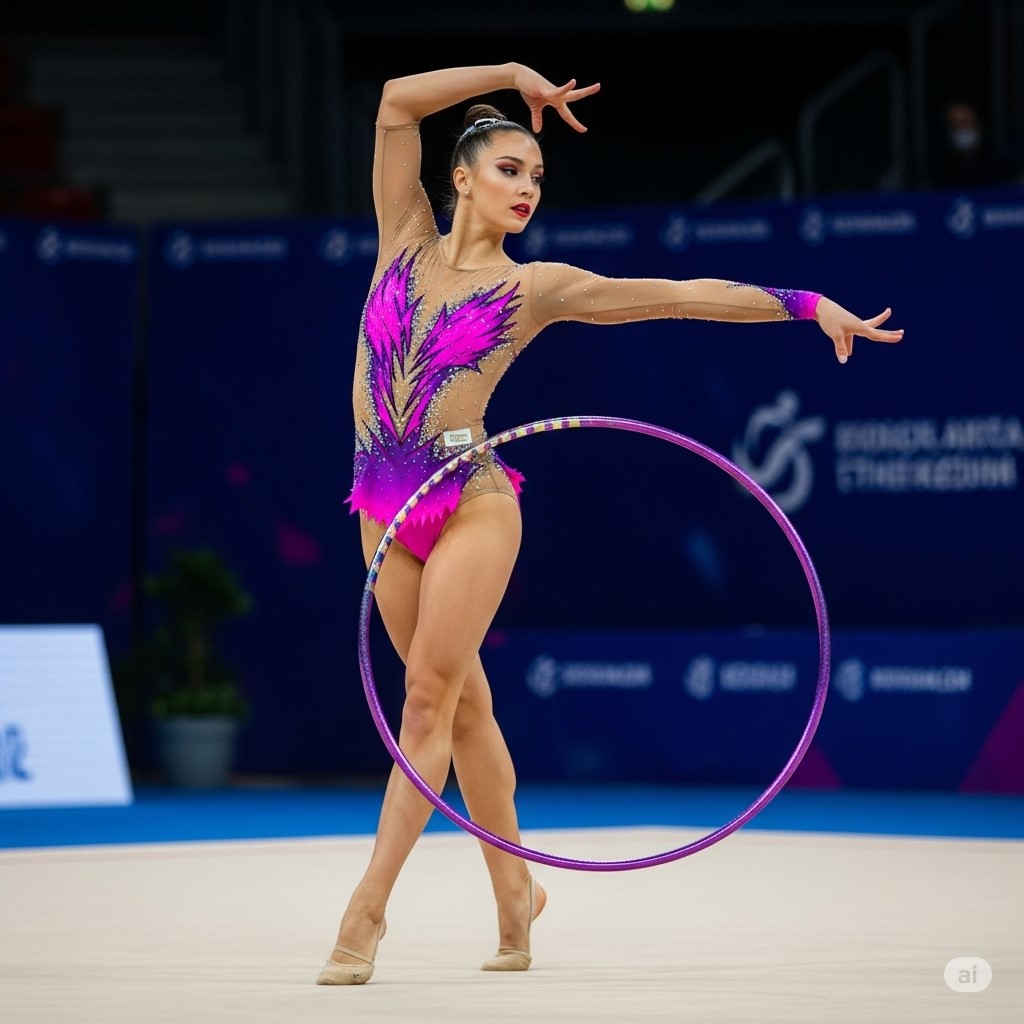
Rhythmic Hoop Gymnastics: A Graceful Fusion of Athleticism and Art
Rhythmic Hoop Gymnastics has grown into one of the most elegant and captivating sports in the world. This discipline blends strength, grace, coordination, and creativity. Athletes perform dynamic routines using a hoop, showcasing control and rhythmic movement to music. Rhythmic Hoop Gymnastics combines gymnastics and dance in a way that mesmerizes audiences worldwide.
The Origin and History of Rhythmic Hoop Gymnastics
The roots of Rhythmic Gymnastics date back to the 19th century. European physical educators developed exercises combining calisthenics, ballet, and musical movement. These programs aimed to improve physical fitness, posture, and expression. Pioneers such as Jean-Georges Noverre and François Delsarte emphasized expressive movement, laying the groundwork for modern rhythmic sports.
In the 1940s, Soviet coaches refined the early techniques into a more formal sport. The Soviet Union played a vital role in shaping Rhythmic Gymnastics. It introduced apparatuses like ribbon, ball, clubs, rope, and hoop. The hoop quickly became a favorite for its versatility and visual appeal. The first official competition took place in 1948 in the Soviet Union.
In 1963, the International Gymnastics Federation (FIG) recognized Rhythmic Gymnastics as a distinct sport. The first World Championships occurred the same year in Budapest, Hungary. Over time, the hoop evolved into a cornerstone apparatus. Athletes now perform leaps, pivots, balances, and tosses while manipulating the hoop with remarkable skill.
Global Popularity and Geographic Reach
Rhythmic Hoop Gymnastics has expanded far beyond its European origins. The sport enjoys immense popularity in Eastern Europe, especially in Russia, Ukraine, and Bulgaria. These countries have produced legendary gymnasts and dominate international competitions.
Asian countries like Japan, China, and South Korea have also embraced the sport. Their gymnasts consistently perform well in global events. Latin American nations, particularly Brazil and Mexico, have developed competitive programs. Canada and the United States are home to many promising athletes and dedicated training centers.
In Africa, rhythmic gymnastics is growing steadily. Countries like Egypt and South Africa invest in youth programs and national teams. Australia and New Zealand have strong gymnastics communities and regularly compete in international events. Europe remains the stronghold, but the sport thrives on all continents.
The global appeal lies in its aesthetic nature and accessibility. Unlike some sports, Rhythmic Hoop Gymnastics does not require expensive infrastructure. This allows schools, clubs, and community centers to host training sessions. Its visual elegance attracts new fans year after year.
Amateur Participation: Youth and School Involvement
Rhythmic Hoop Gymnastics is a popular choice for young athletes worldwide. Many children begin training as early as age four or five. Schools and clubs often offer introductory classes to develop coordination, balance, and rhythm. These foundational skills are essential for future success.
Youth competitions occur at local, regional, and national levels. These events promote healthy competition and help identify future elite gymnasts. Organizations such as USA Gymnastics and British Gymnastics run structured developmental programs. Young athletes progress through levels based on skill and experience.
In many countries, rhythmic gymnastics is included in physical education curriculums. Teachers use simplified routines to engage students and improve motor skills. Extracurricular clubs offer additional practice opportunities. In Japan and South Korea, school gymnastics programs are especially robust.
Parents and coaches emphasize discipline, teamwork, and artistic expression. These values benefit children in all areas of life. Participation fosters self-confidence and encourages a healthy lifestyle. Amateur Rhythmic Hoop Gymnastics builds a strong foundation for professional careers.
Professional Leagues and Elite Competitions
Professional Rhythmic Hoop Gymnastics revolves around elite individual and group competitions. The International Gymnastics Federation (FIG) oversees global rules and competitions. The World Championships and Olympic Games are the most prestigious events.
The FIG World Cup Series includes multiple events each year. These competitions attract top gymnasts from every continent. Athletes accumulate points to qualify for finals. The hoop event remains a highlight due to its intricate skills and dynamic performances.
Each continent has its own championships. The European Championships, Asian Championships, and Pan American Games feature elite rhythmic athletes. These events serve as qualifiers for world competitions and the Olympics.
In Russia, the Grand Prix Series is a premier professional league. This invitation-only competition showcases the world’s best gymnasts. Eastern European countries often dominate these events. Clubs from these nations invest heavily in training and development.
Some countries also organize national leagues. These competitions attract sponsorship and media attention. Gymnasts build fanbases and earn endorsements. The sport continues to professionalize and grow in visibility.
Social and Political Significance of the Sport
Rhythmic Hoop Gymnastics carries cultural and political significance in many regions. In Eastern Europe, the sport represents national pride and identity. Governments support training centers and fund elite programs. Success in international events boosts morale and unity.
Women dominate the sport, making it a symbol of female athleticism and empowerment. Gymnasts become national icons and role models. Their success challenges stereotypes and inspires young girls to pursue sports.
International competitions foster diplomacy and global cooperation. Athletes from diverse backgrounds interact and build friendships. Events like the Olympics promote peace and cultural understanding.
The sport also highlights social issues. Accessibility varies based on economic status and geography. Some countries lack resources to support training. Organizations like FIG promote inclusion and development programs in underserved regions.
Through community outreach, Rhythmic Hoop Gymnastics contributes to youth development. It instills discipline, confidence, and perseverance. These qualities benefit society beyond sports.
Rules and Structure of Rhythmic Hoop Gymnastics
The rules of Rhythmic Hoop Gymnastics are governed by the FIG Code of Points. Athletes perform routines set to music using a hoop. Performances are evaluated on difficulty, artistry, and execution.
Each routine must include specific elements. These include balances, pivots, leaps, and apparatus handling. The hoop must be in constant motion. Tosses, rolls, and rotations display mastery and creativity.
A typical routine lasts 75 to 90 seconds. Music selection plays a vital role. It must complement movements and enhance artistic expression. Gymnasts must demonstrate musicality and rhythm.
Judges score routines in three areas. The Difficulty (D) score assesses the complexity of elements. The Execution (E) score evaluates precision and technique. The Artistry (A) score rewards creativity and expression.
Penalties occur for mistakes like drops, loss of balance, or going out of bounds. Consistency and composure are essential for high scores. Each gymnast competes individually or as part of a group.
In group routines, five athletes perform synchronized movements. They must execute exchanges and formations flawlessly. Group routines demand teamwork, timing, and precision.
Gymnasts wear leotards that meet strict guidelines. Costumes must allow movement and reflect the music’s theme. The hoop’s size and weight must comply with FIG regulations.
Training involves hours of daily practice. Athletes focus on flexibility, strength, and technical skills. Mental preparation and choreography are also crucial. Coaches design routines that maximize each gymnast’s strengths.
Conclusion: The Allure of Rhythmic Hoop Gymnastics
Rhythmic Hoop Gymnastics combines athleticism, artistry, and grace in a unique way. Its history reflects decades of evolution and international collaboration. From school gyms to Olympic arenas, the sport inspires millions.
Young athletes find joy and purpose through participation. Professionals showcase incredible talent on the world stage. Nations celebrate their gymnasts as symbols of cultural pride.
As global interest continues to grow, so does the sport’s impact. Rhythmic Hoop Gymnastics will remain a cherished discipline for generations. Its blend of beauty and athletic skill makes it truly unforgettable.